How Does Wireless Phone Charging Work?
Energy transfer through changing magnetism
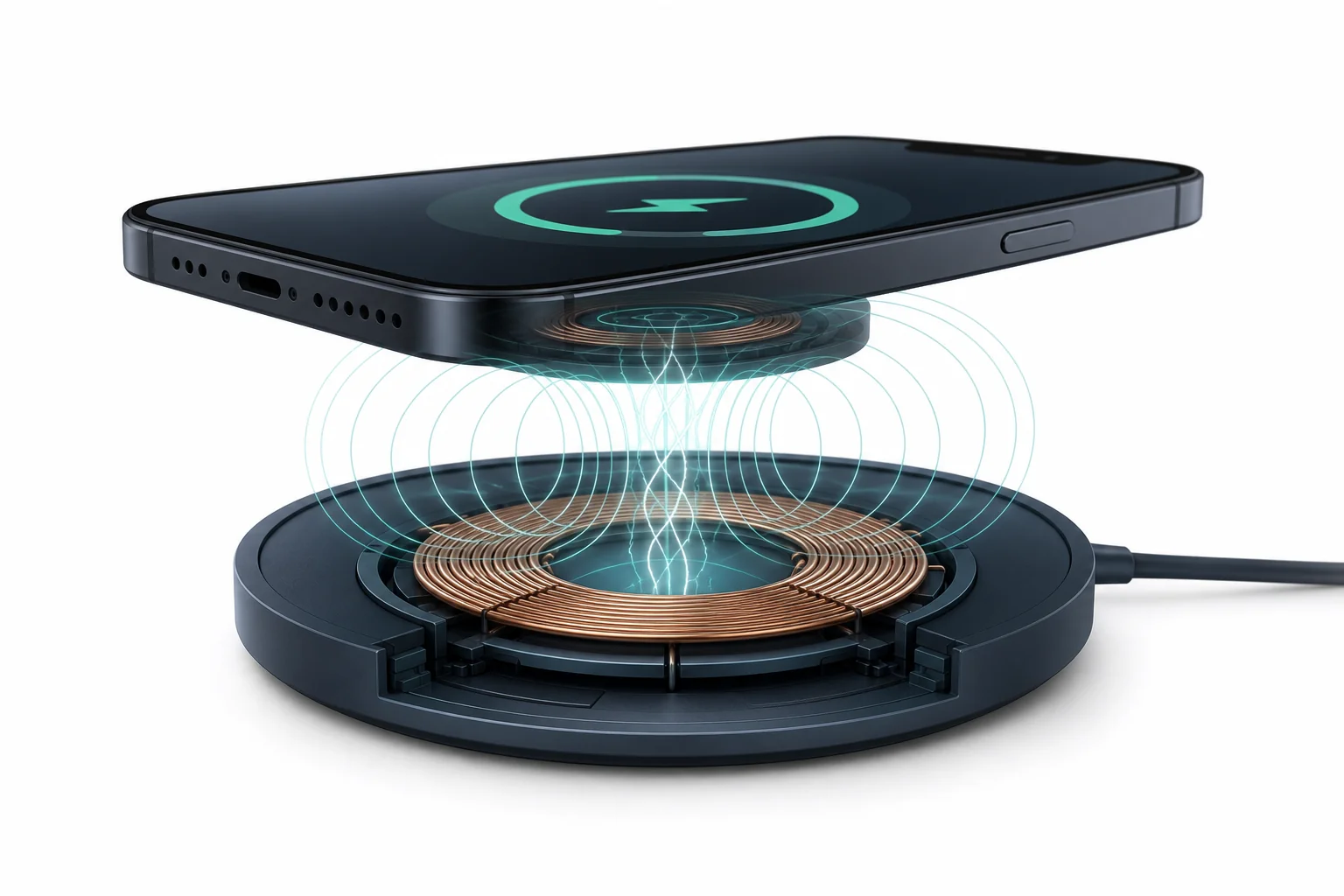
A wireless charger uses electricity in the pad to make a changing magnetic field. That changing field passes through a coil inside the phone and makes electricity there. The phone uses that electricity to charge its battery, with some energy lost as heat.
Wireless charging feels like a small trick because there is no plug going into the phone. The charger is still moving energy from the wall outlet to the battery. It just uses magnetic fields instead of metal contacts. Inside the charging pad is a coil of wire. Inside the phone is another coil. When alternating current moves through the pad coil, the magnetic field around it grows, shrinks, and flips direction many times each second. That changing field reaches the phone coil and pushes charges in that wire. The phone then changes that electrical energy into a form the battery can store. This process is electromagnetic induction. It is the same physics behind many generators and transformers. The main limits are distance, alignment, coil size, and heat. A small gap can work well. A large gap wastes much more energy.
Two coils, no plug
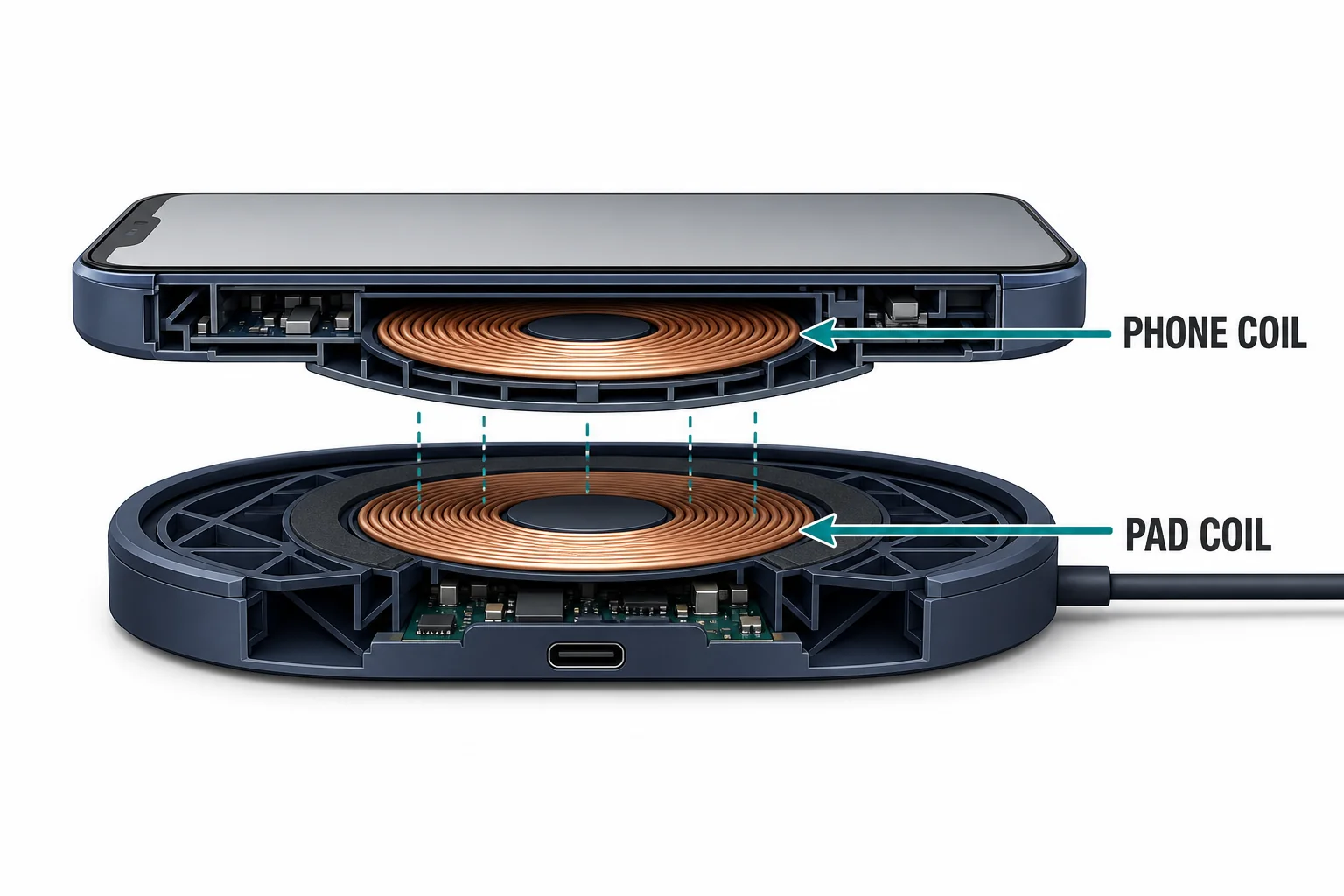
The phone is not powered by contact. It is powered by a linked magnetic field.
Changing current makes changing magnetism
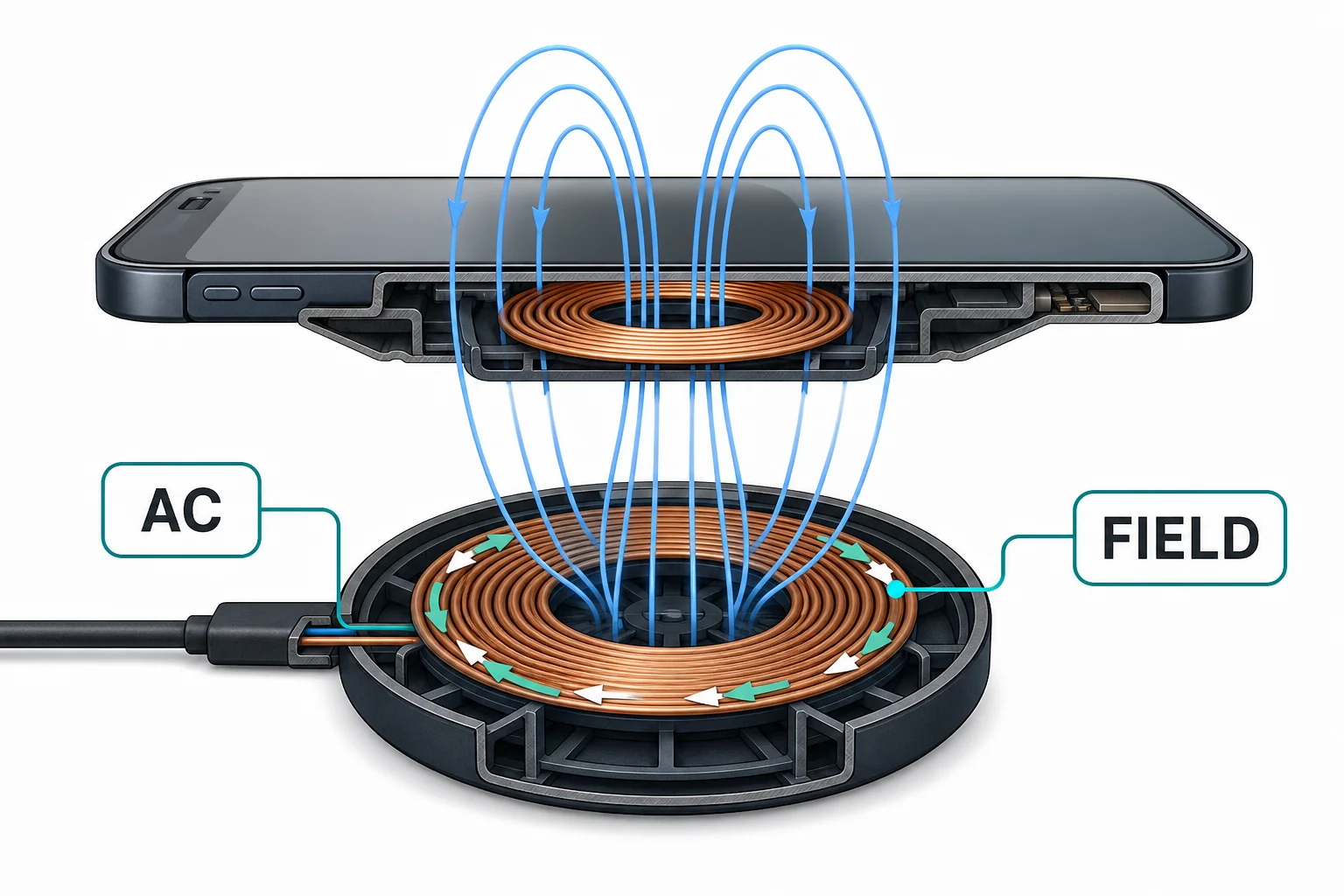
A changing current is what makes the magnetic field useful for charging.
Induction pushes charges
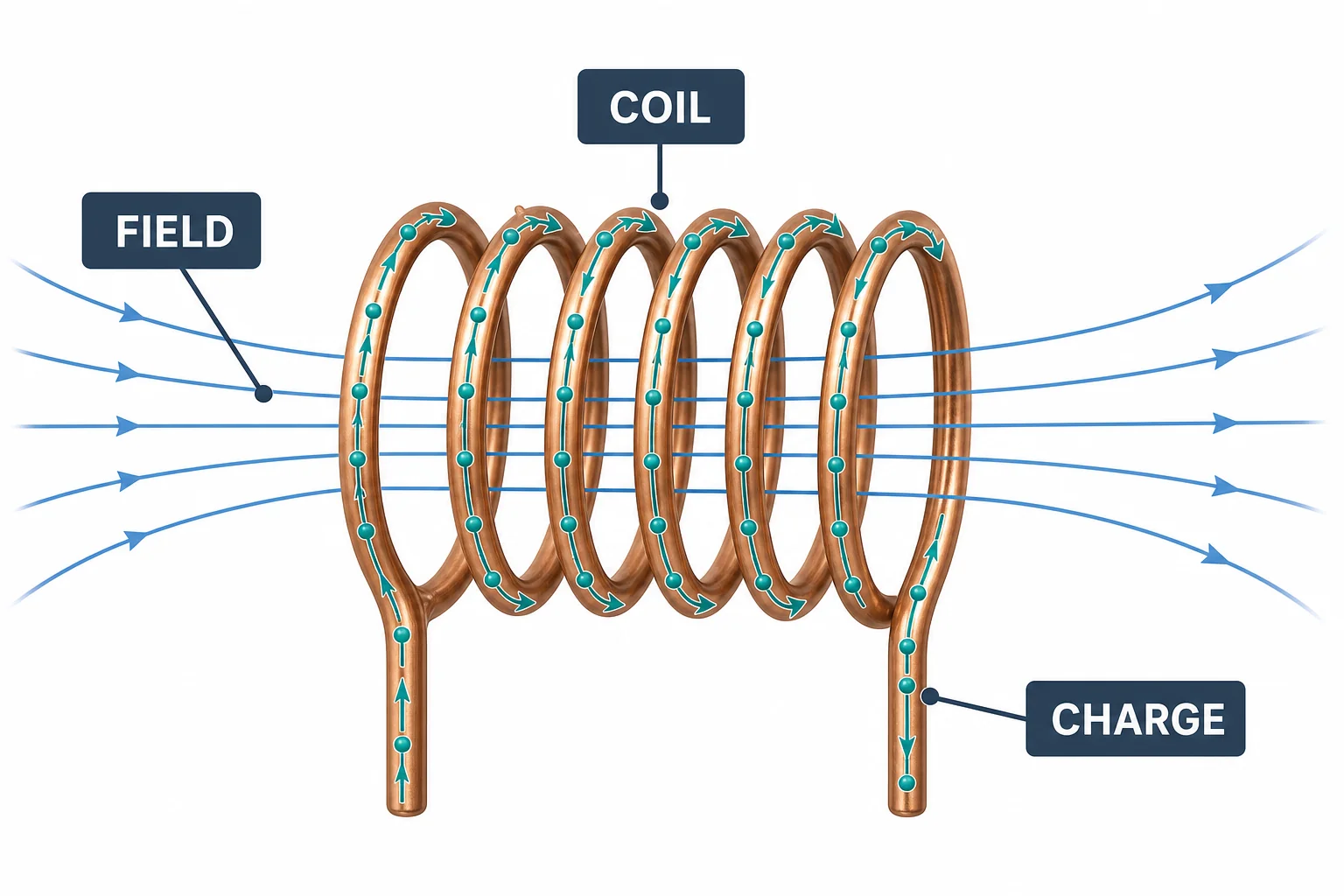
Induction turns a changing magnetic field back into electrical energy.
Distance and alignment matter
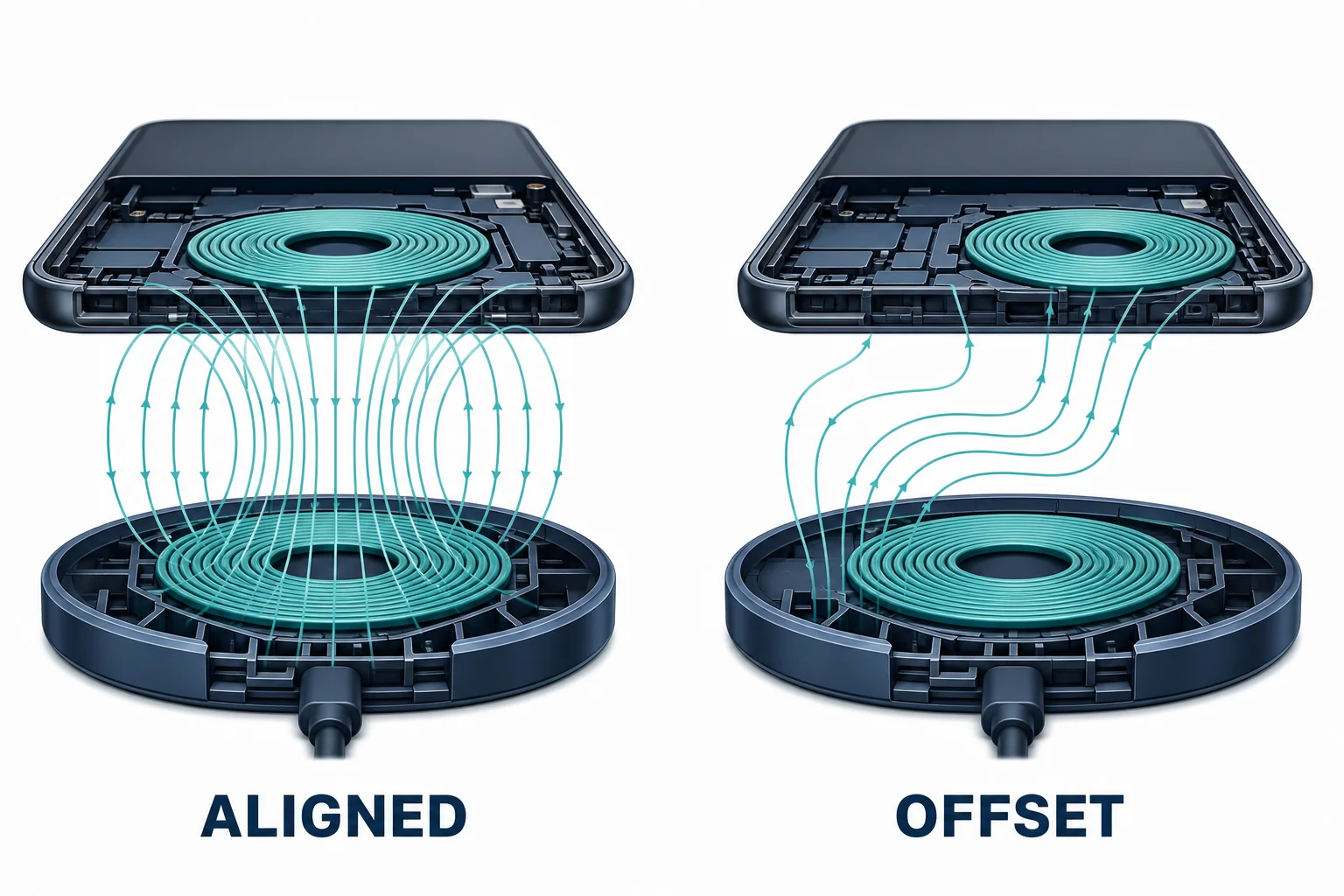
Efficiency drops when the magnetic field misses the phone coil.
Energy does not all reach the battery
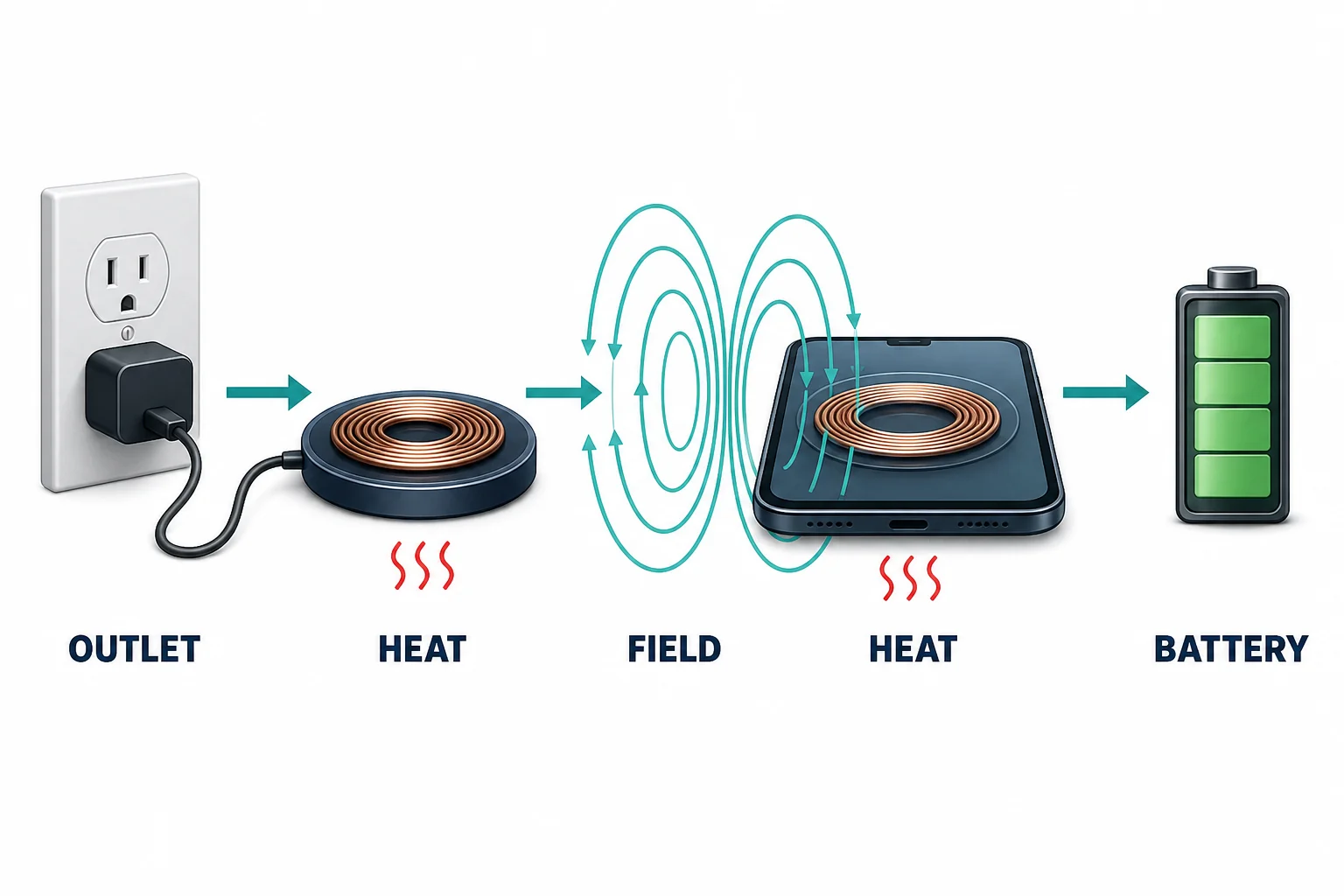
Charging is an energy conversion process, not energy created from nothing.
Vocabulary
- Electromagnetic induction
- The process in which a changing magnetic field produces a voltage in a conductor.
- Primary coil
- The coil in the charging pad that uses alternating current to create a changing magnetic field.
- Secondary coil
- The coil in the phone that receives energy from the changing magnetic field.
- Magnetic flux
- A measure of how much magnetic field passes through an area, such as the area inside a coil.
- Efficiency
- The fraction of input energy that becomes useful output energy instead of being lost, often as heat.
In the Classroom
Coil alignment test
30 minutes | Grades 9-12
Use two small coils, an AC signal source, and a voltmeter to measure induced voltage in the receiving coil. Students move the coils closer, farther apart, and off center, then graph how voltage changes.
Energy transfer map
20 minutes | Grades 9-12
Students make a flow diagram for a wireless phone charger. They label each energy form and identify where heat losses can occur.
Faraday's law model
35 minutes | Grades 10-12
Students compare coil turns, changing magnetic field strength, and induced voltage using a simulation or teacher demonstration. They connect each observation to the terms in Faraday's law.
Key Takeaways
- • Wireless charging uses two coils separated by a small gap.
- • Alternating current in the pad creates a changing magnetic field.
- • The changing magnetic field induces voltage in the phone coil.
- • Charging works best when the coils are close together and well aligned.
- • Some energy is lost as heat, so wireless charging is not perfectly efficient.