Why Does a Curveball Curve?
Spin turns air into a sideways push
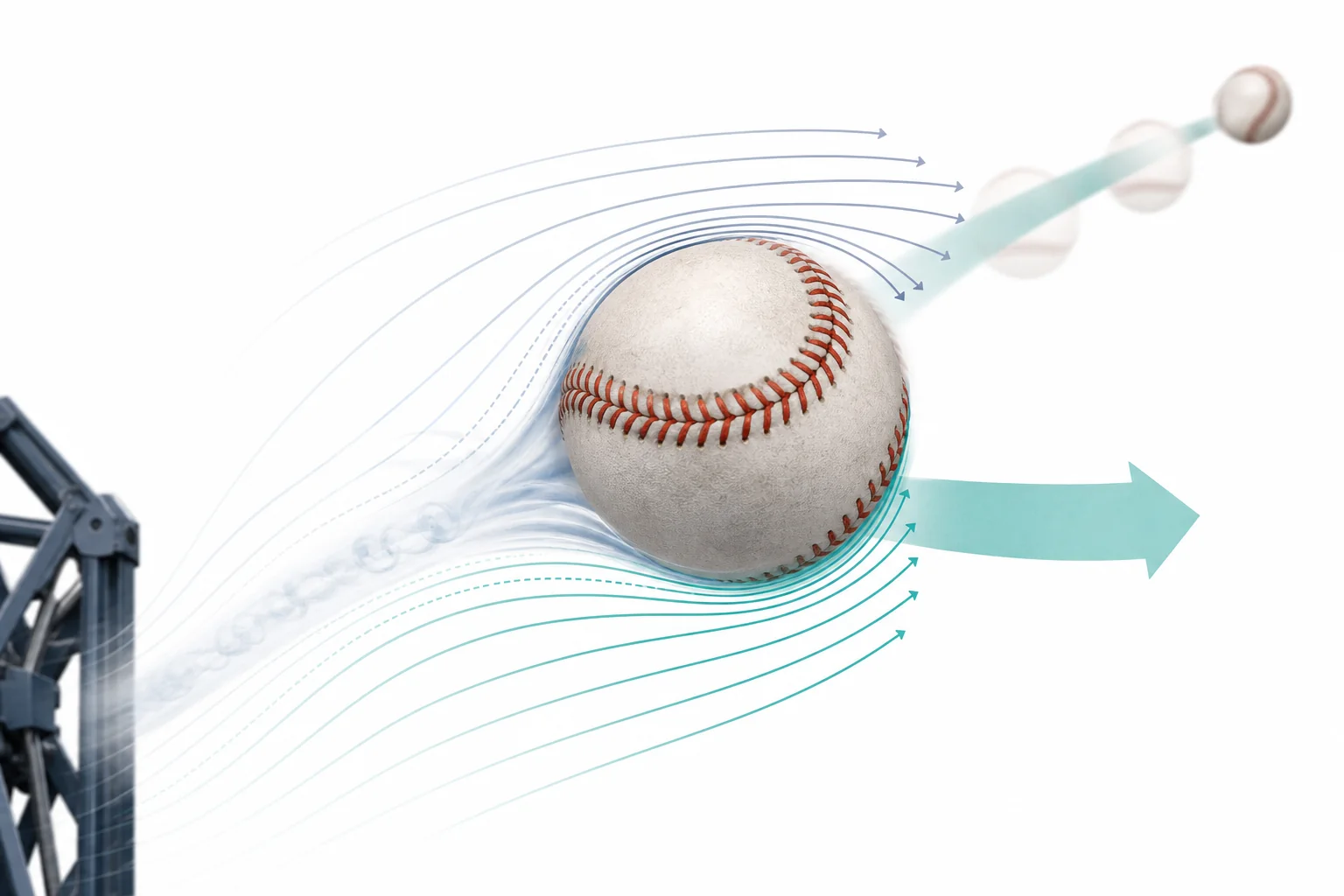
A curveball curves because the pitcher gives the ball a strong spin. As the ball moves, the spin makes air move differently on opposite sides. That uneven push changes the ball’s path before it reaches the plate.
A curveball starts like an ordinary pitch, but it does not keep going straight. The pitcher releases the ball with a tilted spin. During the short trip to home plate, the ball pushes through air. The air pushes back. Because the ball is spinning, the air does not push evenly on every side. One side gets a stronger push than the other, so the ball accelerates sideways. That small sideways acceleration lasts long enough to move the pitch several inches. The same idea helps explain why a soccer ball bends, why a tennis topspin shot drops fast, and why some golf shots slice. The physics is not magic. It is a force problem. The curve depends on speed, spin rate, spin direction, air conditions, and how long the ball is in flight. A curveball is a moving example of Newton’s laws at work.
The ball needs spin
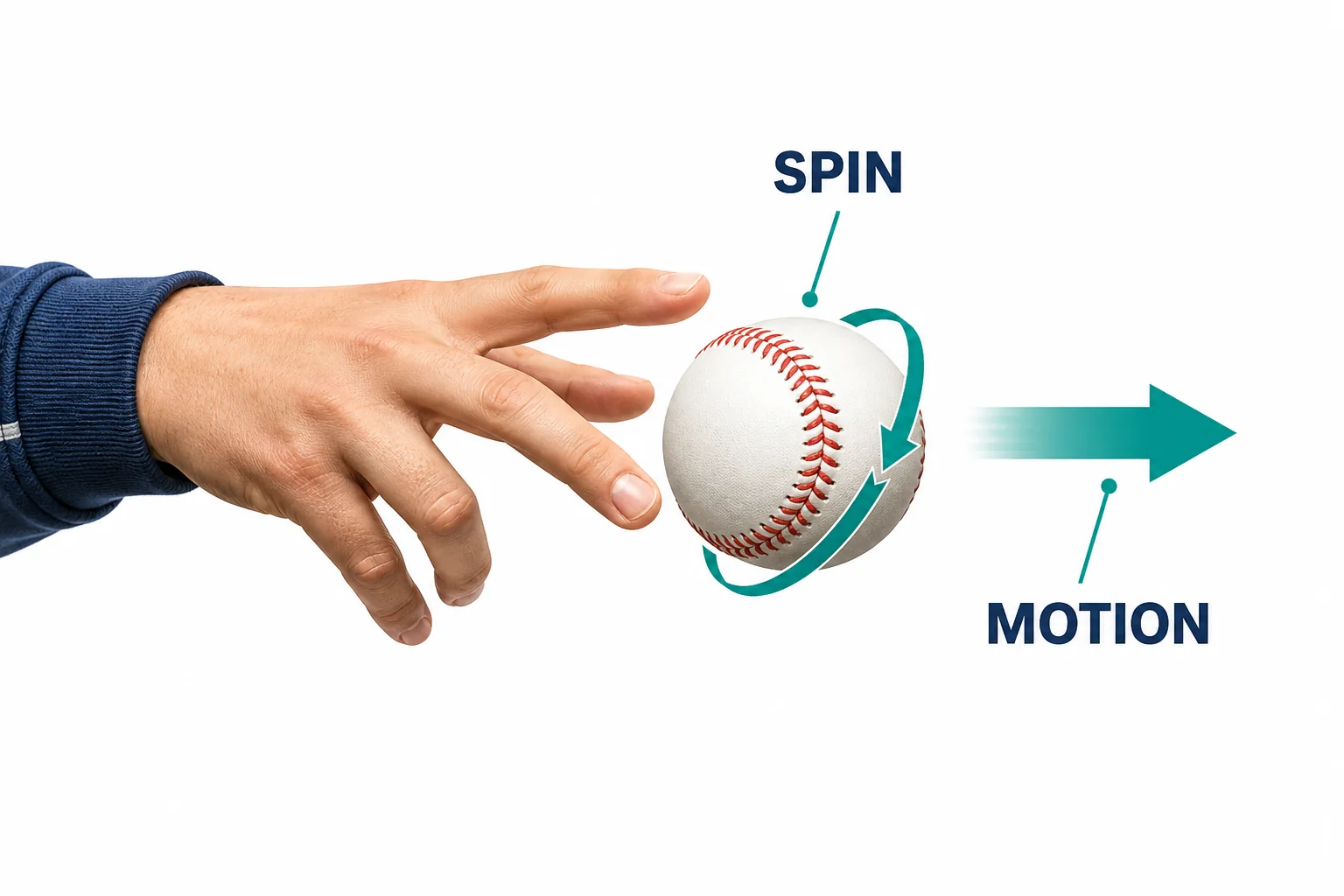
No spin means very little curve.
Airflow becomes uneven
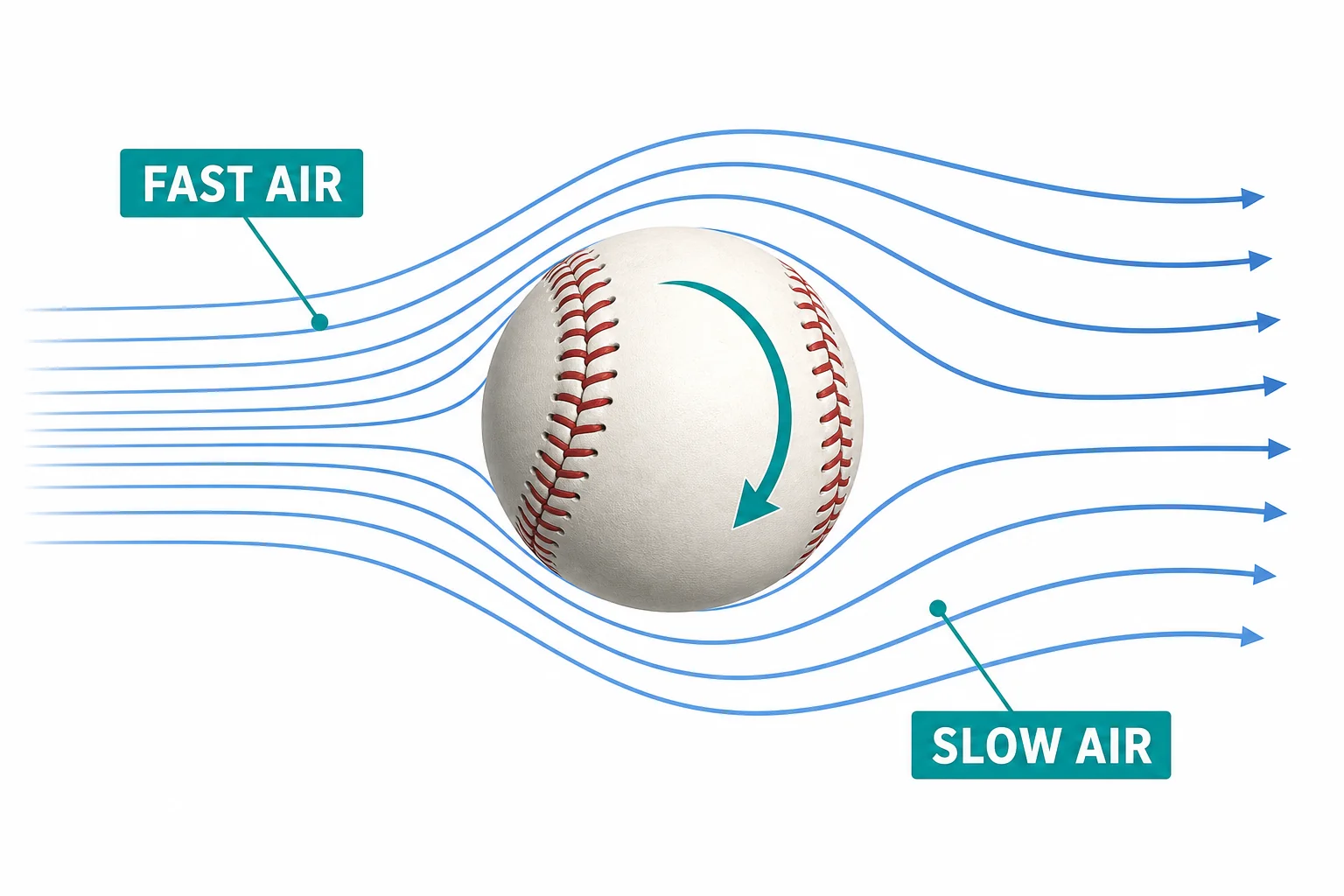
Uneven airflow is the link between spin and force.
The Magnus force pushes sideways
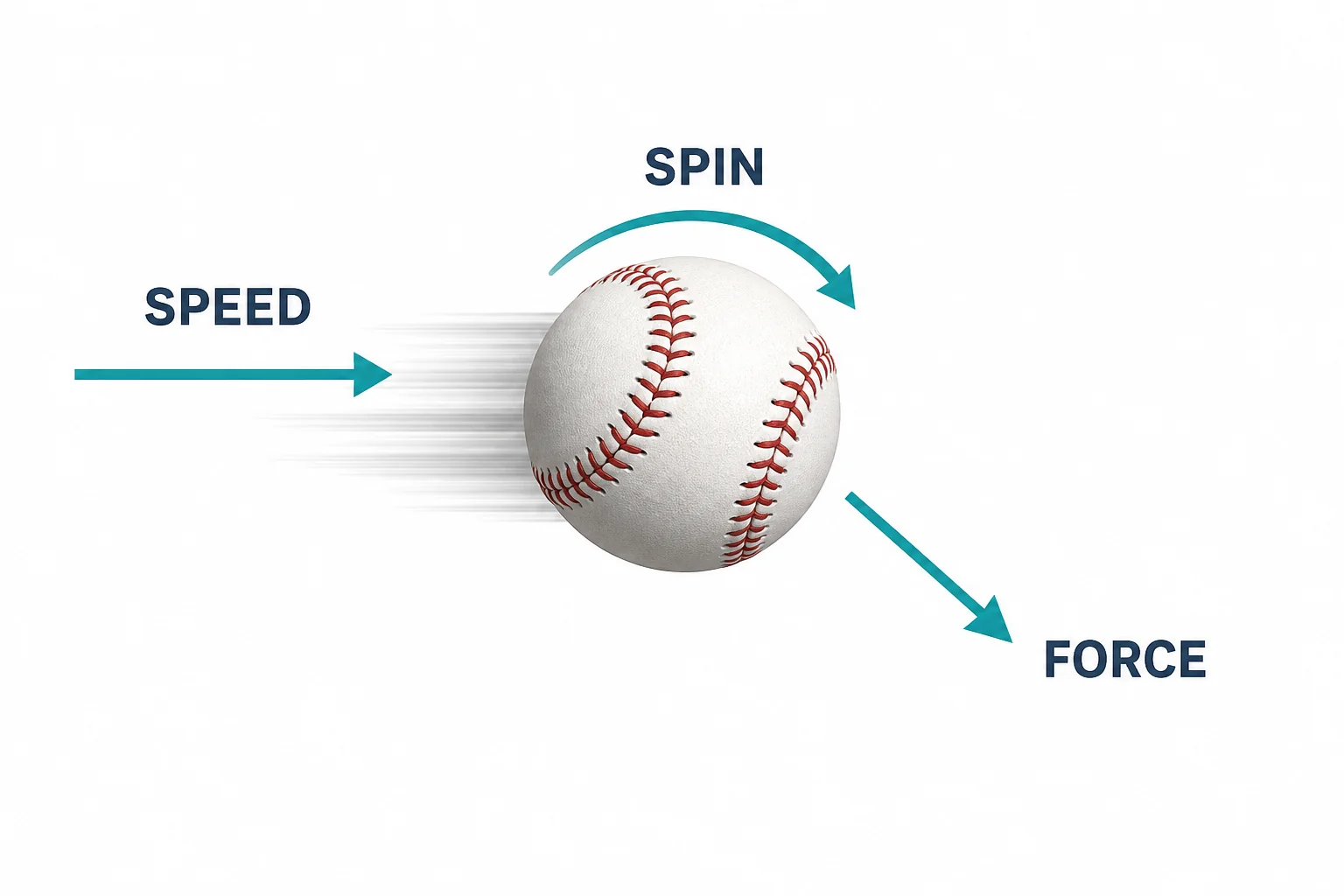
A curveball curves because a net force acts sideways.
Pressure is part of the story
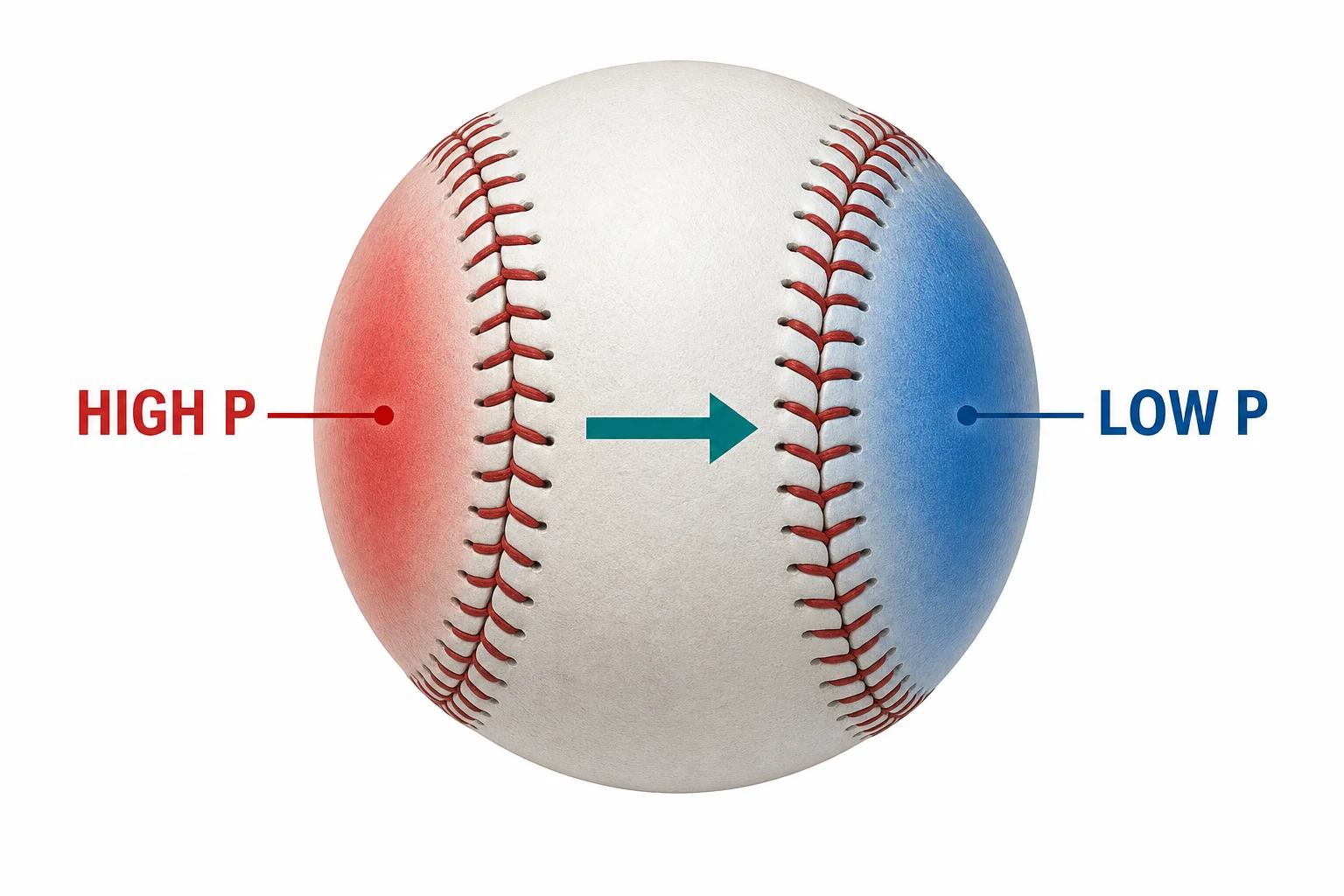
Pressure differences and momentum changes are two views of the same force.
The curve is not an illusion
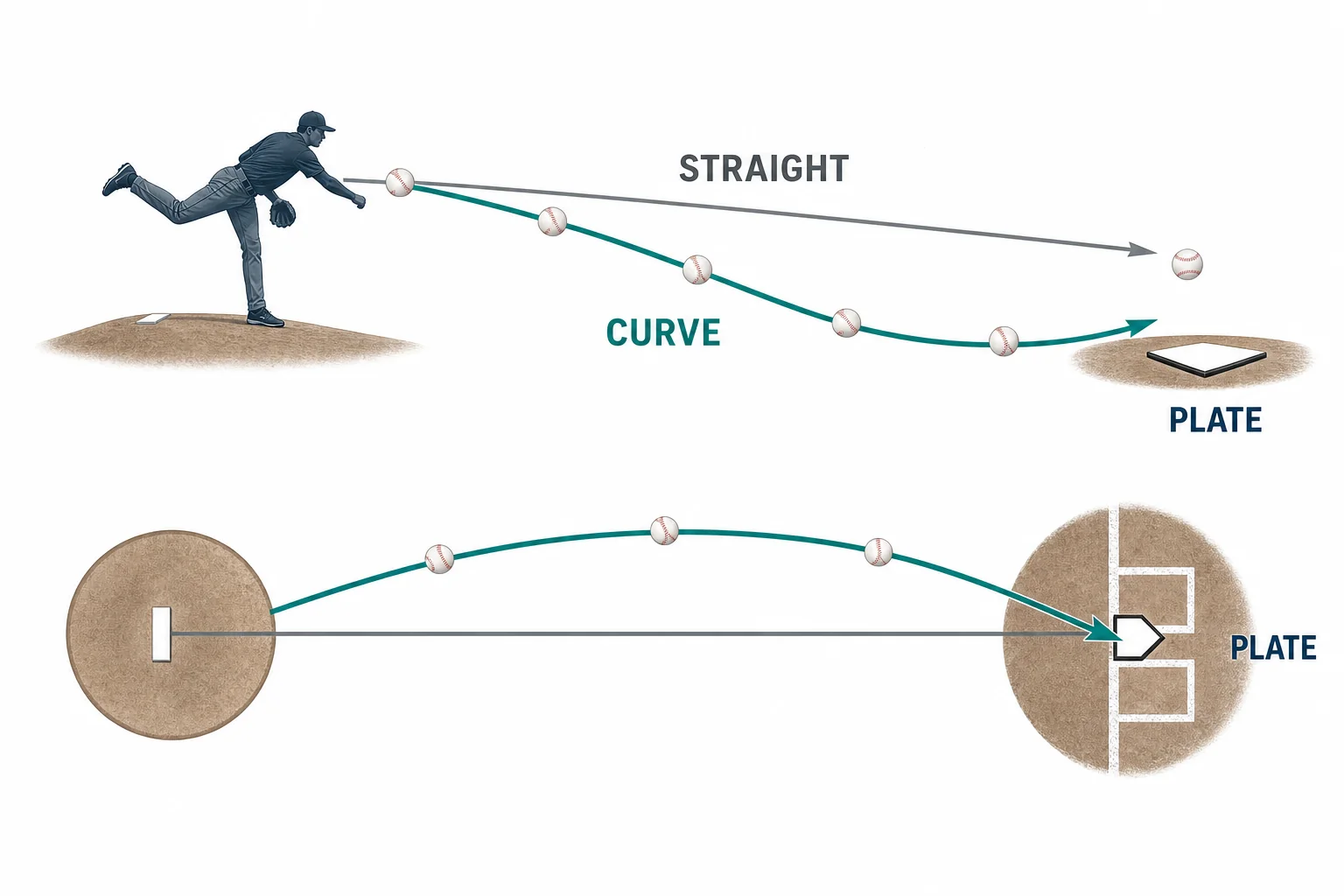
The batter may be fooled, but the path is physically curved.
Vocabulary
- Spin axis
- The imaginary line that a rotating ball turns around.
- Magnus effect
- The sideways or lifting force on a spinning object moving through a fluid such as air.
- Net force
- The total force on an object after all forces are combined.
- Acceleration
- A change in an object’s velocity, including a change in speed or direction.
- Drag
- A force from air resistance that acts opposite the motion of an object.
- Pressure difference
- A difference in pushing force per area from one side of an object to another.
In the Classroom
Track a spinning ball
30 minutes | Grades 9-12
Students record a spinning ball or foam ball moving through the air with a phone camera. They mark positions frame by frame and compare the path with a straight reference line.
Force diagram pitch cards
20 minutes | Grades 9-12
Students get cards showing different spin axes for a baseball. They draw the likely Magnus force, gravity, drag, and the expected path.
Newton’s second law curve model
35 minutes | Grades 9-12
Students use $F=ma$ to reason about how a small sideways force can change a ball’s position over time. They compare cases with larger spin force, longer flight time, and greater mass.
Key Takeaways
- • A curveball curves because spin makes the airflow around the ball uneven.
- • Uneven airflow creates a net force called the Magnus force.
- • The direction of the curve depends on the ball’s spin axis.
- • Newton’s second law explains why a sideways force causes sideways acceleration.
- • Gravity, drag, speed, spin, and air conditions all affect the final path.