Communication Device Lab
Send messages with flashes, beats, and cup-phone pulses. Record your patterns in a table, decode what each one means, and compare how far light and sound can travel.
Guided ExperimentLight and Sound Messages Investigation
Do you think light patterns from a flashlight will travel farther than drum beats? Write your prediction and explain why.
Write your hypothesis in the Lab Report panel, then click Next.
Pick a Device
Pattern Length
Tap to Set Signals
Try a Preset
Signal Summary
- Pattern Length
- 5
- On Signals
- 0
- Decoded
- Silence
- Range
- Across a room
Tap signal circles to turn them on or off. A flashlight sends light, a drum sends sound, and a cup phone sends vibrations through the string.
Controls
Reference Guide
How Light Carries Messages
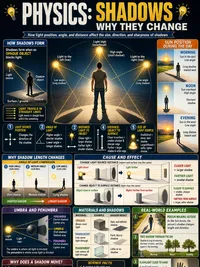
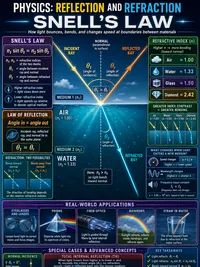
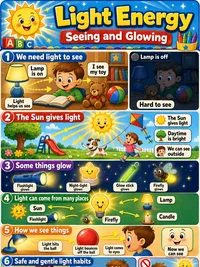
A flashlight sends light in a straight line through the air. You can flash it on and off to make a pattern that someone else can see.
Light travels very fast and can cross a whole room or a dark backyard. You need to be able to see the flashlight for the message to arrive.
How Sound Carries Messages
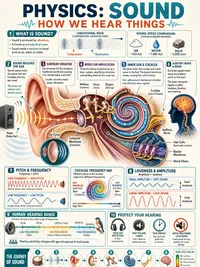
A drum makes the air around it shake. Those tiny air shakes are called sound waves, and they spread out in every direction.
A loud drum can be heard across a field even when nobody can see you. Soft drums only travel a short distance.
How a Cup Phone Works
A cup phone is two paper cups joined by a tight string. When you talk into one cup, the bottom of the cup shakes. Those vibrations travel along the string to the other cup.
The string must stay tight. A loose or twisted string will stop the vibrations and the message will not arrive.
Patterns and Codes
Every signal is built from on and off moments. A quick flash is different from a long flash, and three beats in a row feel different from one beat and a pause.
When you agree on a pattern ahead of time, your friend can decode what each signal means. That is how all codes work.