Practice explaining how sound is made, how it travels, and how pitch and volume can change.
Read each problem carefully. Write complete answers and show your thinking in the space provided.
Explore vibrations, pitch, loudness, and sound waves
Physics - Grade 4-5
- 1
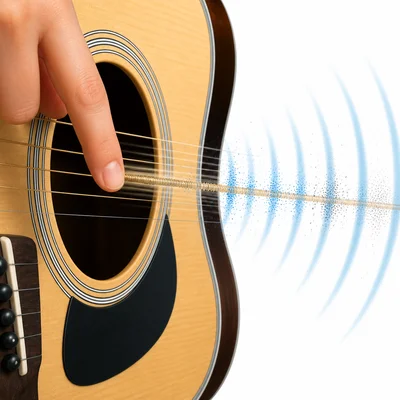
A guitar string makes a sound when it is plucked. Explain what is happening to the string and the air around it.
- 2
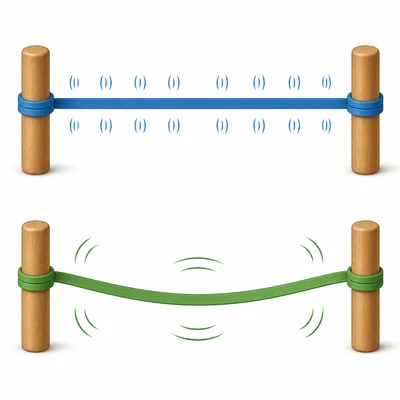
Circle the object that would make the highest pitch: a short, tight rubber band or a long, loose rubber band. Explain your choice.
- 3
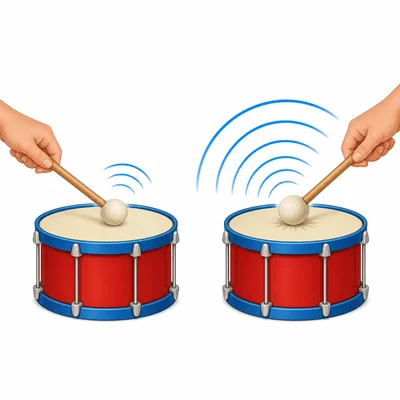
A student taps a drum softly, then taps the same drum harder. What changes: the pitch, the volume, or both? Explain your answer.
- 4

Sound can travel through air, water, and metal. Why can sound travel through these materials?
- 5

An astronaut in space cannot hear another astronaut speaking outside the spacecraft, even if they are close together. Explain why.
- 6
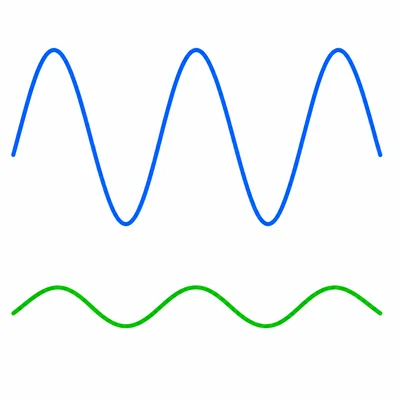
Look at two sound waves. Wave A has tall peaks and deep valleys. Wave B has short peaks and shallow valleys. Which wave has the greater volume, and why?
- 7
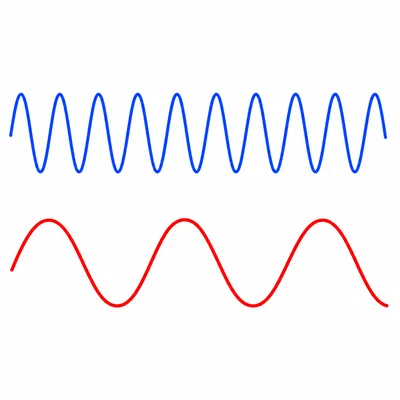
Look at two sound waves. Wave C has many waves close together. Wave D has fewer waves spread farther apart. Which wave has the higher pitch, and why?
- 8
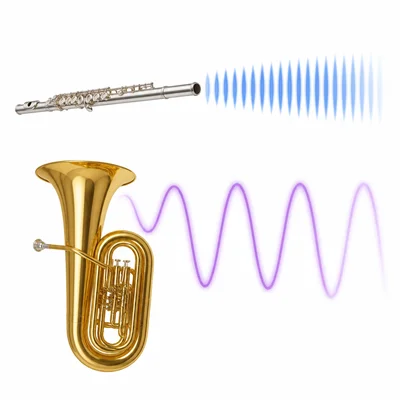
A flute plays a high note, and a tuba plays a low note. Compare the vibrations that make these sounds.
- 9

You press your ear gently against a table while a friend taps the other end. The tap sounds louder than when you listen through the air. Why might this happen?
- 10
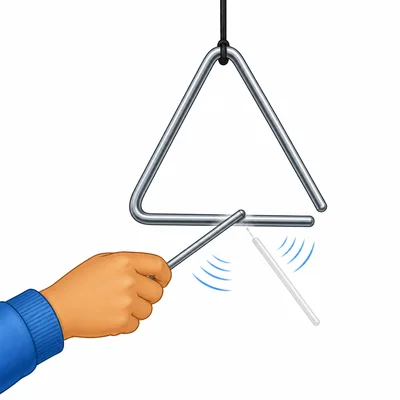
A teacher asks students to make a softer sound with a triangle instrument. What should the student change when striking the triangle?
- 11
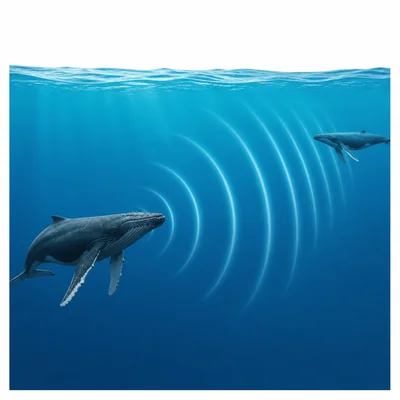
A whale makes low-pitched sounds that can travel long distances through ocean water. What medium is carrying the sound from the whale to another whale?
- 12
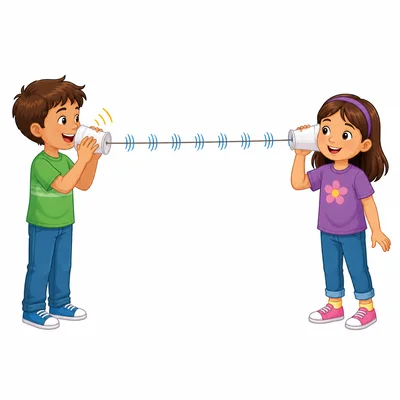
A class makes a cup-and-string telephone. One student speaks into one cup, and another listens at the other cup. Explain how the sound travels.
- 13

A siren gets louder as an ambulance comes closer to you. What is changing about the sound you hear, and why?
- 14
Fill in the blanks with the best terms: Pitch is how high or low a sound is. Volume is how _____ or _____ a sound is.
- 15
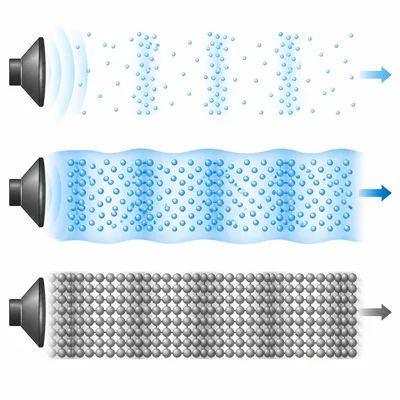
A student says, "All sounds travel at the same speed through every material." Is the student correct? Explain using what you know about sound.