Characterization Mapper
Track up to four characters across a story’s arc using the STEAL method. Capture how each character speaks, thinks, acts, looks, and changes from exposition to resolution. Compare two characters side by side or print the full map for class.
Characters
2 / 4STEAL Method
Five lenses authors use to characterize, Speech, Thoughts, Effect on others, Actions, and Looks.
What does the character say? Note specific quotes, dialect, tone, or recurring phrases.
What does the character think privately? Inner monologue, doubts, hopes, secret fears.
How do other characters react to this character? Do they admire, fear, follow, or avoid them?
What does the character do? Decisions, habits, choices under pressure.
Physical appearance, clothing, and how looks change across the story.
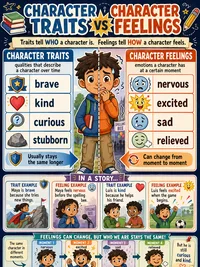
Personality Traits
4 selectedTap traits that describe this character. You can choose as many as you need.
One sentence on what drives this character. What do they want most?
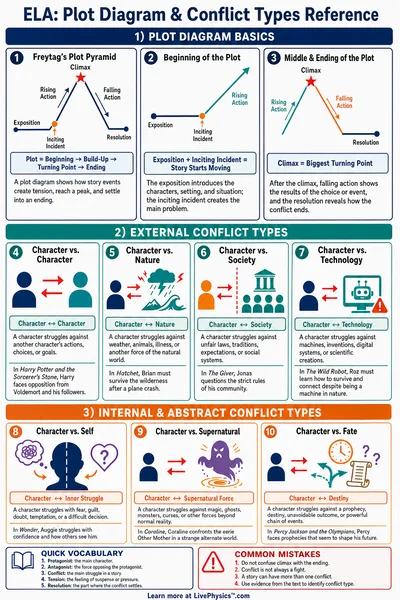
What is in this character's way? Note the type of conflict and who or what causes it.
Characterization Map
George Milton
Speech. "Guys like us, that work on ranches, are the loneliest guys in the world."
Thoughts. Resents the burden of caring for Lennie but cannot imagine life without him. Dreams of a small farm of their own.
Effect on Others. Lennie depends on him completely. Other workers respect his sharpness and protect his privacy.
Actions. Plans, schemes, and keeps Lennie out of trouble. In the end, makes a final mercy decision by the river.
Looks. Small, wiry, with sharp features and dark, restless eyes.
Traits. loyal, patient, cunning, compassionate
Motivations. To own a small farm where he and Lennie can live in peace.
Conflicts. Person vs. Society (rootless ranch life) and Person vs. Self (his duty to Lennie versus his own freedom).
Arc beats
- Exposition (strength 6/10). Walking with Lennie toward a new ranch, retelling the dream of the farm.
- Inciting Incident (strength 6/10). Arrives at the ranch, warns Lennie about Curley and the boss.
- Rising Action (strength 8/10). Befriends Slim, edges closer to making the farm real with Candy's savings.
- Climax (strength 4/10). Hears Curley's wife is dead and knows Lennie did it.
- Falling Action (strength 5/10). Tracks Lennie to the river, races the lynch mob.
- Resolution (strength 3/10). Sits with Slim afterward, hollowed out by what he had to do.
Lennie Small
Speech. "Tell me about the rabbits, George."
Thoughts. Repeats the dream of the farm to comfort himself. Cannot understand why soft things keep dying in his hands.
Effect on Others. Frightens strangers without meaning to. George shields him. Curley sees an easy target.
Actions. Works tirelessly. Pets soft things too hard. Crushes Curley's hand when provoked.
Looks. Huge and broad-shouldered, with large pale eyes and a shambling walk.
Traits. loyal, kind, naive, impulsive
Motivations. To tend rabbits on the farm he and George will own.
Conflicts. Person vs. Self (cannot control his strength) and Person vs. Society (a world that has no place for him).
Arc beats
- Exposition (strength 7/10). Drinks at the pool, asking George about the rabbits.
- Inciting Incident (strength 6/10). Meets Curley and Curley's wife, both flag him as dangerous.
- Rising Action (strength 7/10). Stays out of trouble at first, then crushes Curley's hand under George's order.
- Climax (strength 3/10). Accidentally kills Curley's wife in the barn.
- Falling Action (strength 2/10). Hides at the river, scolds himself in two imagined voices.
- Resolution (strength 1/10). Hears George tell the farm story one last time.
Characterization Reference
What is Characterization?
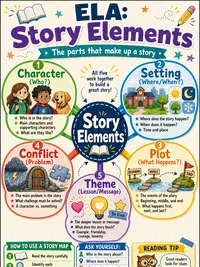
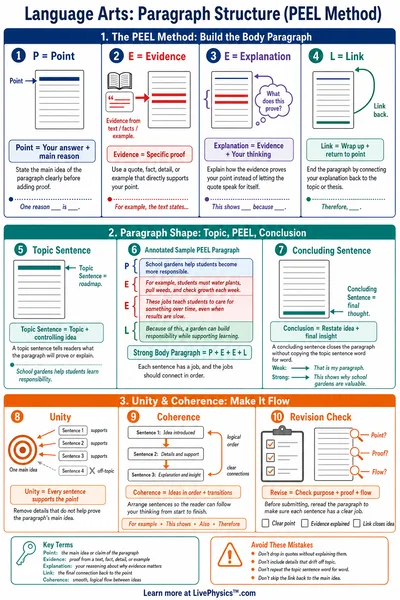
Characterization is the way an author builds the people in a story so readers feel like they know them. Strong characterization makes a character feel real, even when the plot is fantastical.
- Round vs. flat. Round characters have many traits and contradictions. Flat characters have one or two simple traits and serve a specific role.
- Major vs. minor. Major characters drive the plot. Minor characters reveal things about the major characters or the world.
- Why it matters. Readers connect to stories through characters, so authors use specific details to make each one feel distinct and believable.
STEAL Method Explained
STEAL is a five-lens framework for analyzing indirect characterization. Each letter points to a different kind of evidence in the text.
- Speech. What the character says, and how they say it. Word choice, dialect, and recurring phrases all count.
- Thoughts. Inner monologue and private reactions that other characters do not get to see.
- Effect on others. How other characters respond to this character. Do they trust, fear, follow, or avoid them?
- Actions. What the character does, especially under pressure or when the stakes are high.
- Looks. Physical description and how appearance shifts across the story.
Direct vs. Indirect
Authors reveal characters in two ways. Direct characterization tells you a trait outright. Indirect characterization shows behavior and lets the reader infer the trait.
- Direct. "She was the bravest girl in District 12." Quick and clear, but rarely memorable on its own.
- Indirect. Katniss volunteers as tribute to save her sister. The reader infers bravery from the action, which lands harder than being told.
- Best practice. Skilled writers lean heavily on indirect characterization and use STEAL to give the reader plenty of evidence to work from.
Static vs. Dynamic
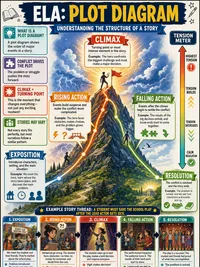
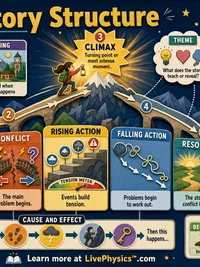
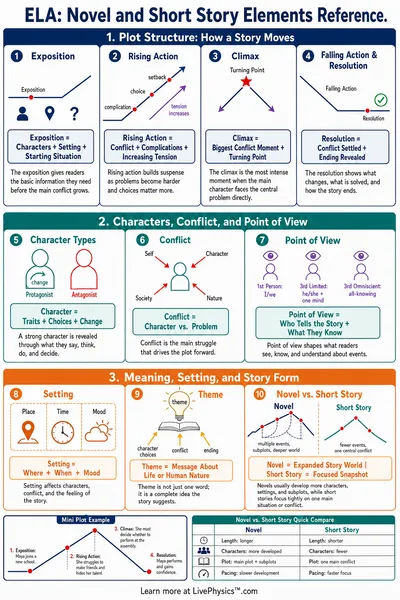
A character’s arc is the path they take from the start of the story to the end. The Arc Timeline view helps you visualize that change for each character in your set.
- Static. The character is essentially the same at the end as at the beginning. Their strength rating stays flat across the beats.
- Dynamic. The character grows, falls, or shifts over the course of the story. Their line rises or dips at the climax.
- Foil. Two characters whose traits contrast highlight each other. Use the Compare Two view to see foils in side-by-side detail.