Figurative Language Explorer
Browse 10 figurative language devices with definitions, examples, and memory tips. Switch to quiz mode to test yourself with multiple-choice questions. All interaction runs in your browser.
10 devices
Click any card to expand examples and test yourself.
Reference Guide
Comparison Devices
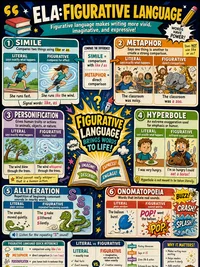
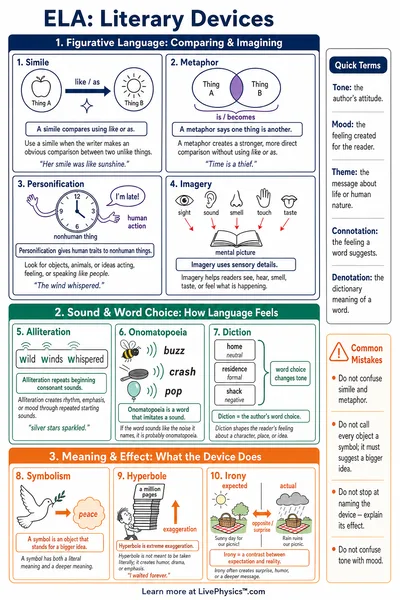
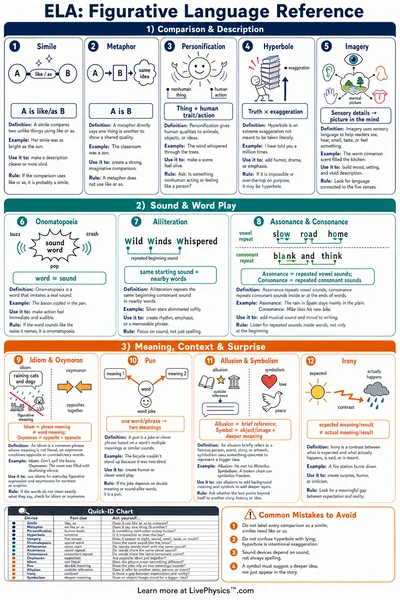
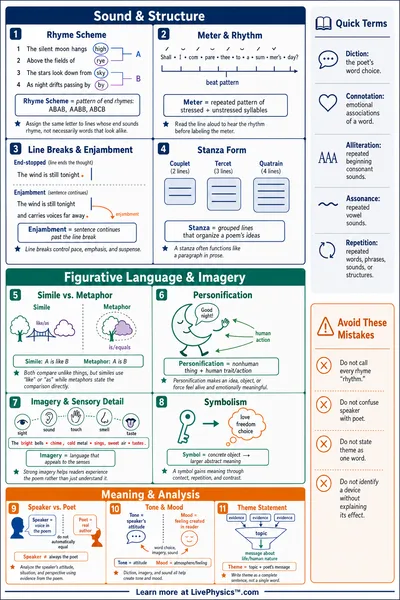
Similes and metaphors both compare two unlike things. The difference is how the comparison is made.
- Simile uses "like" or "as" to signal the comparison. Example, "He ran as fast as a cheetah."
- Metaphor states the comparison directly, without "like" or "as". Example, "Life is a roller coaster."
Both devices help readers form vivid mental images by linking an unfamiliar idea to something already understood.
Sound Devices
Alliteration and onomatopoeia both work through sound, but in different ways.
- Alliteration repeats a consonant sound at the start of closely placed words. Example, "Sally sells seashells."
- Onomatopoeia uses words whose pronunciation imitates a real sound. Example, "The bacon sizzled."
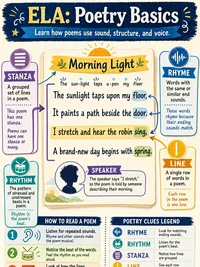
Writers use sound devices to create rhythm, reinforce mood, and make lines easier to remember.
Emphasis Devices
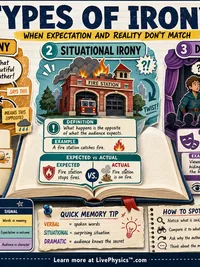
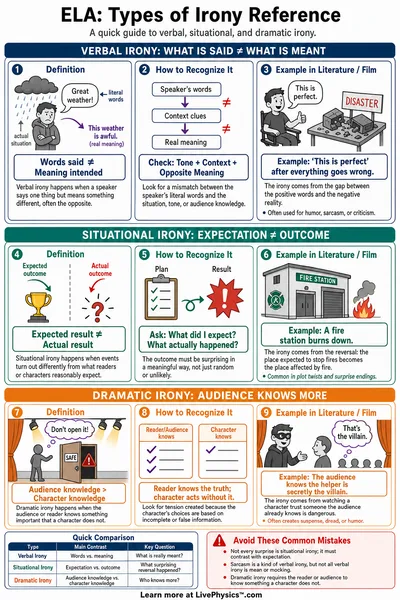
Hyperbole and irony both play with the gap between what is said and what is meant.
- Hyperbole exaggerates wildly for effect and is never meant literally. Example, "I have told you a million times."
- Irony creates meaning through contrast - between words and intent (verbal) or between expectations and outcomes (situational). Example, A fire station burning down.
Imagery and Mood
Imagery, foreshadowing, personification, and idioms each shape how a reader experiences a text.
- Imagery appeals to the senses to place the reader inside a scene.
- Foreshadowing plants early clues that build suspense and reward rereading.
- Personification gives non-human things human qualities, making them relatable.
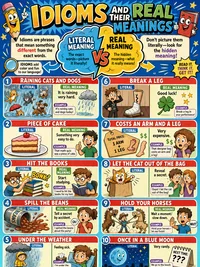
- Idioms carry cultural meaning that goes beyond the literal words.