Understanding Text Structure Identifier
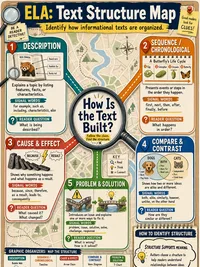
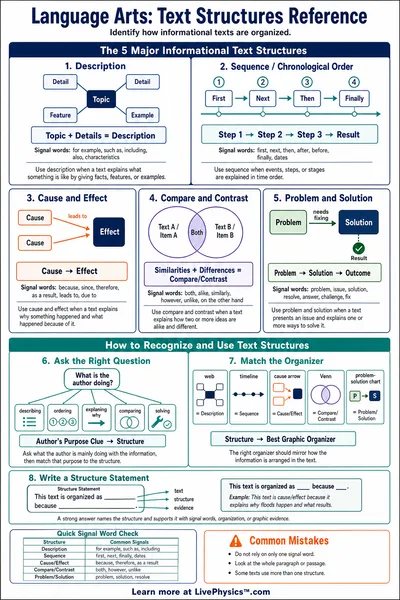
Text structure is the plan an author uses to arrange ideas. It helps readers predict what kind of information will come next and decide which details matter most.
A passage can contain several patterns, but one pattern usually does the main organizing work. Focus on the relationship between the main ideas, not only on one sentence or one clue word.
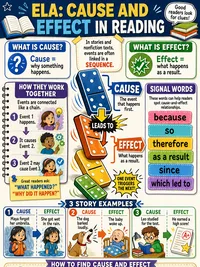
When a writer explains why something happened and what followed, the connection needs evidence. Two events happening near each other does not always mean one caused the other.
This matters in science articles, history lessons, and news reports, where writers may describe several factors behind an event. Notice whether the text gives a reason, a result, or both, and check that the link between them makes sense.
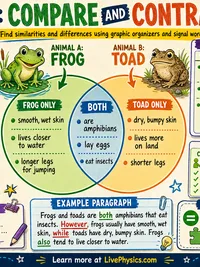
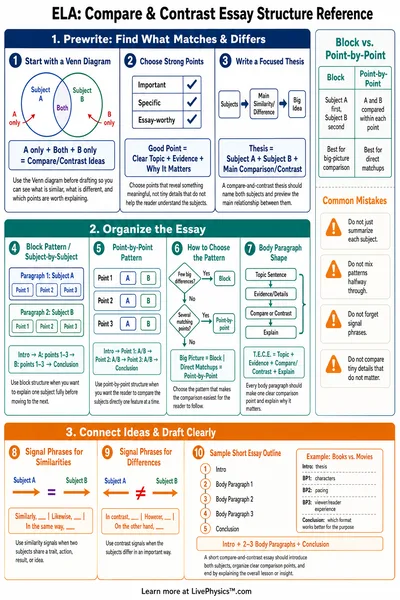
Comparison writing often uses the same categories for each subject. A writer might discuss size, habitat, diet, and behavior for two animals.
This can be arranged one category at a time or by covering one subject before the other. Description writing is different because it builds a clear picture of one topic through features, examples, facts, or details without making comparison the central purpose.
Order matters when a text explains a process or tells how events developed over time. In instructions, skipping one step can make the task fail. In history or biography, time order can show how earlier choices shaped later events.
A problem and solution pattern asks readers to identify the difficulty clearly, then examine the response. The proposed answer may solve only part of the problem, so strong readers look for limits, evidence, and possible consequences.
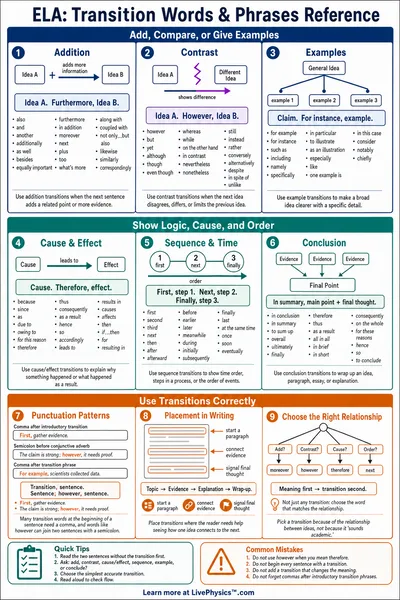
Signal words are useful, but they are not proof by themselves. Words like because, similarly, first, and therefore can appear in many kinds of writing. Try making a quick map of the passage in your own words.
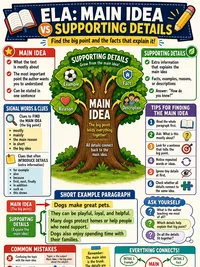
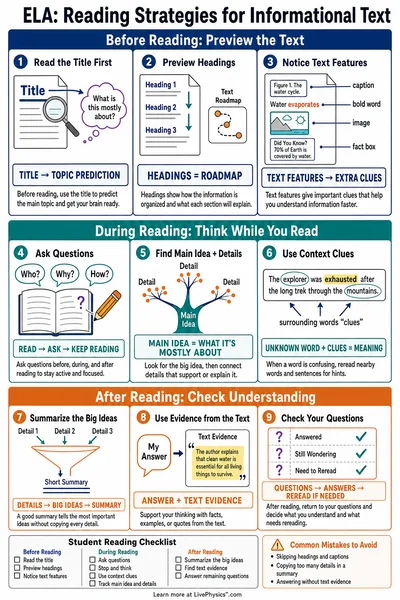
Write the main idea, then label how each supporting detail connects to it. This habit helps with textbook chapters, test passages, research articles, and everyday reading because it turns a group of facts into an understandable plan.