Theme Identifier
Identify and articulate themes in literature. Browse 14 universal themes with example quotes from public domain works, take a quote-to-theme matching quiz, or assemble a complete theme statement for your essay.
Tap any theme to see its definition and four example quotes from public domain literature.
Working with Literary Themes
What is a Theme?
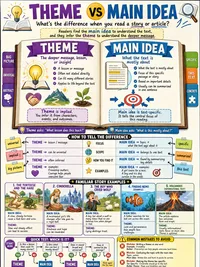
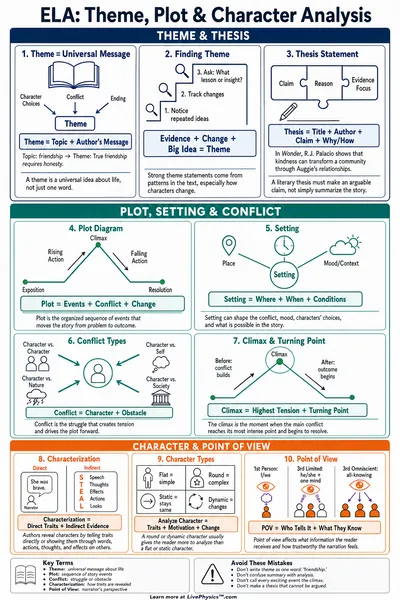
A theme is the central idea or insight about life that a literary work explores. Themes are universal. They show up across different books, authors, and time periods because they speak to shared human experience.
- Universal. A theme applies beyond the single story. Power, love, identity, and mortality recur in literature from ancient times to today.
- Implied. Themes are rarely stated outright. You infer them from characters, conflicts, symbols, and outcomes.
- Arguable. Two careful readers can disagree about a work's theme and both defend their reading with evidence.
Themes vs Topics
A common mistake is naming a topic and calling it a theme. A topic is one word, like "love" or "freedom." A theme is a complete idea about that topic. The author's stance on the topic is what turns it into a theme.
- Topic. Love. Power. Identity. These are starting points, not destinations.
- Theme. "Love demands sacrifice that strangers cannot measure." This is a claim about the topic, written as a sentence.
- Test it. If your "theme" is one or two words, you have a topic. Add the author's stance to lift it into a theme.
Universal Themes List
These 14 themes appear across centuries of literature. Most novels, plays, and films can be matched to at least one. Often a single work explores two or three at once.
- Coming of Age
- Good vs Evil
- Identity
- Love and Sacrifice
- Power and Corruption
- Freedom and Confinement
- The American Dream
- Man vs Nature
- Fate vs Free Will
- Friendship and Loyalty
- Prejudice and Justice
- Redemption
- Mortality
- Technology and Humanity
Writing a Theme Statement
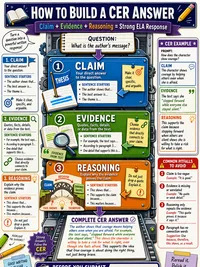
A strong theme statement names the work, the theme, the author's stance, and the evidence. The template "In Work, the author suggests that stance by showing evidence" gives you all four in one sentence.
- Be specific. Replace generic words with concrete language. "Suffering" becomes "the cost of silent grief."
- Avoid moral lessons. A theme is what the work explores, not what you wish readers would learn from it.
- Tie it to evidence. Every theme statement should point at a specific moment in the text that proves the stance.