Weather & Water Cycle Explorer
Follow water as it travels through the water cycle, predict the weather by adjusting temperature, humidity, wind, and clouds, learn four main cloud types, and compare seasonal patterns in different climates. Everything runs right in your browser.
Try a preset
The Water Cycle
Click each stage in the diagram to learn about it.
Reference Guide
The Water Cycle
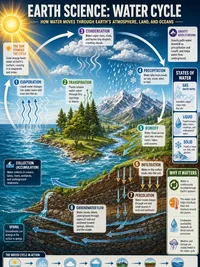
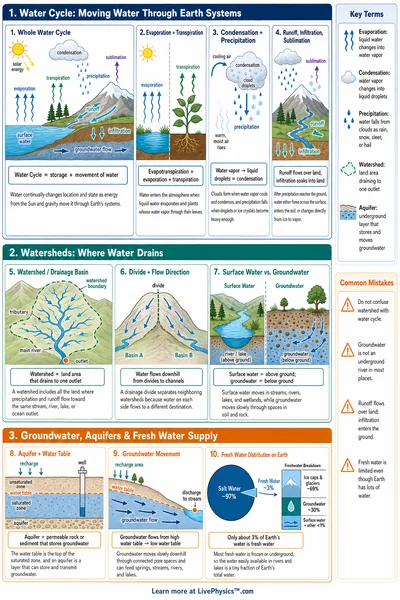
Water moves in a never-ending loop between the sky, land, and oceans. This loop has four main stages.
- Evaporation turns liquid water into invisible water vapor using heat from the sun
- Condensation cools the vapor back into tiny droplets that form clouds
- Precipitation drops water back to Earth as rain, snow, sleet, or hail
- Collection gathers water in oceans, rivers, lakes, and underground
After collection, the sun heats the water again and the whole cycle starts over.
Predicting Weather
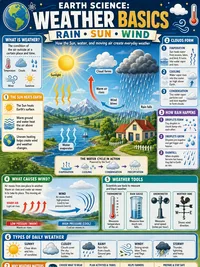
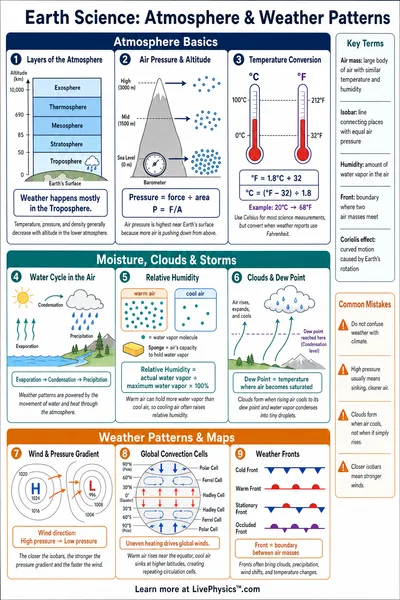
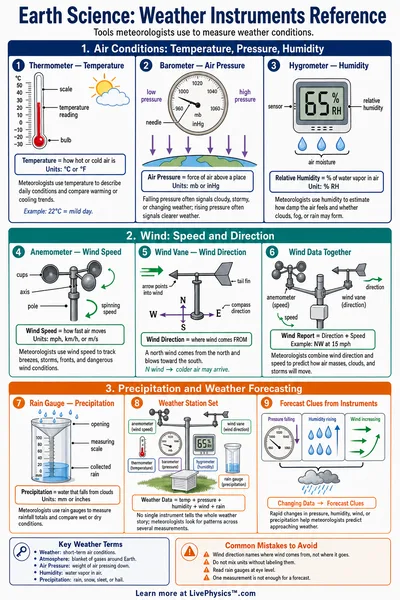
Temperature, humidity, wind, and clouds work together to create weather patterns.
- Temperature tells us how hot or cold the air is
- Humidity measures how much water vapor is in the air
- Wind speed shows how fast the air is moving
- Cloud cover describes how much of the sky clouds fill
High humidity plus heavy clouds usually means rain. Cold temperatures with high humidity can bring snow. Strong winds with lots of moisture may lead to storms.
Cloud Types
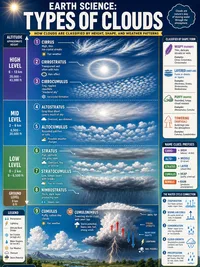
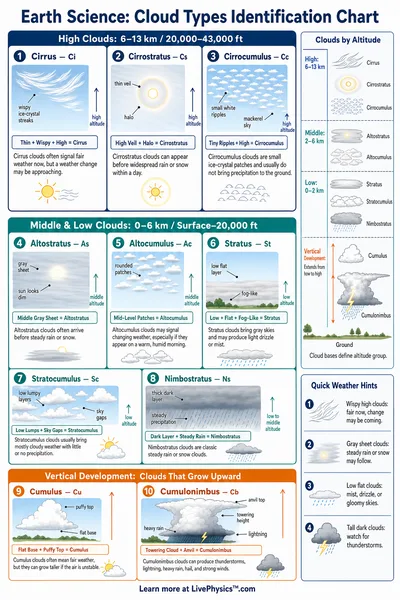
Scientists group clouds by their shape and how high they are in the sky.
- Cumulus are puffy, white clouds that usually mean fair weather
- Stratus are flat, gray blankets that can bring light drizzle
- Cirrus are thin, wispy clouds way up high
- Cumulonimbus are tall, dark storm clouds that bring thunder, lightning, and heavy rain
Looking at the clouds can help you guess what weather is coming next.
Seasons and Climate
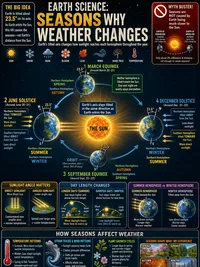
Temperature and rainfall change through the year, and the pattern depends on where you live.
- Temperate places have cold winters and warm summers with four clear seasons
- Tropical places stay warm all year but have a wet season and a dry season
Climate describes the typical weather in a place over many years. Weather is what happens day to day, while climate is the long-term average.