Practice explaining how telescopes collect light, form images, and help astronomers study objects in space.
Read each problem carefully. Use complete sentences when explaining your thinking. Show your work for any calculations.
Exploring lenses, mirrors, light, and images in telescope design
Astronomy - Grade 6-8
- 1
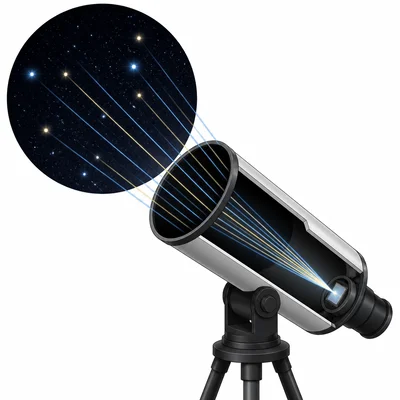
A telescope helps astronomers see faint objects in the night sky. Explain why collecting more light is important for observing distant stars and galaxies.
- 2
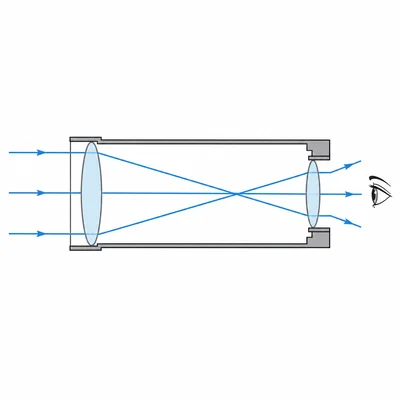
Label the main light path in a simple refracting telescope: light enters through the objective lens, forms an image, and is magnified by the eyepiece. Describe what each lens does.
- 3
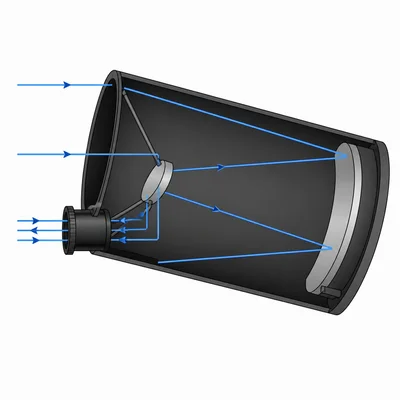
A reflecting telescope uses a curved mirror instead of a large front lens. Explain how the mirror helps form an image.
- 4
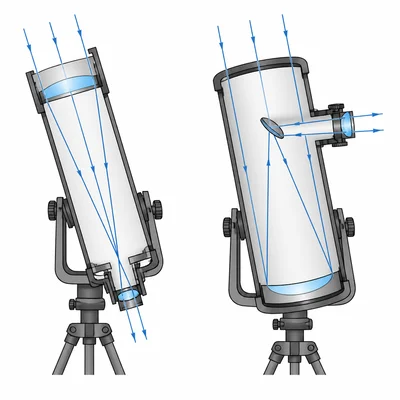
Compare refracting and reflecting telescopes. Give one similarity and one difference.
- 5
A telescope has an objective lens with a focal length of 800 mm and an eyepiece with a focal length of 20 mm. Magnification equals objective focal length divided by eyepiece focal length. What is the magnification?
- 6
A student says, "The best telescope is always the one with the highest magnification." Explain why this statement is not correct.
- 7
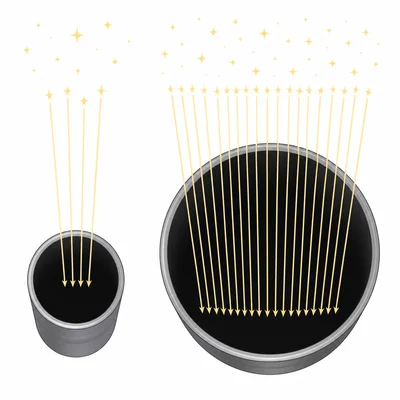
Two telescopes are used on the same night. Telescope A has a 5 cm opening, and Telescope B has a 20 cm opening. Which telescope can collect more light, and why?
- 8
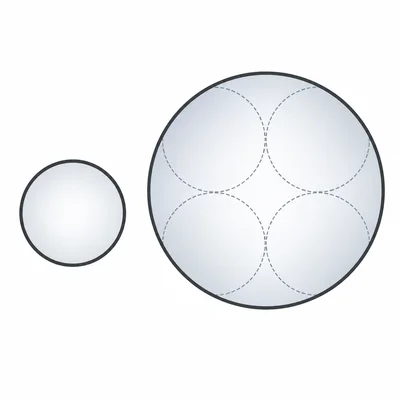
The light-collecting power of a telescope is related to the area of its opening. If one telescope has twice the diameter of another telescope, about how many times more light can it collect?
- 9
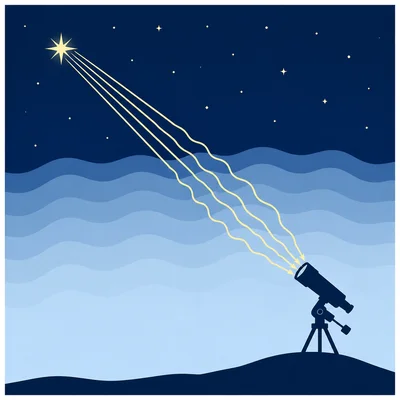
Explain why stars can look blurry or twinkly when viewed through a ground-based telescope.
- 10
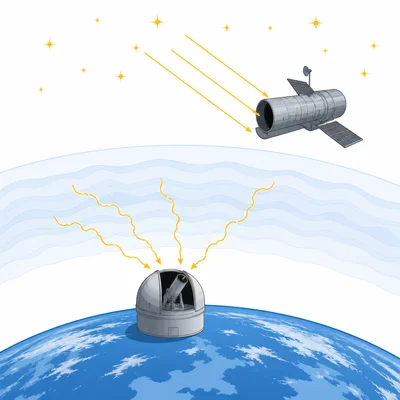
Why can a space telescope like the Hubble Space Telescope often take clearer pictures than a similar telescope on the ground?
- 11
Visible light is only one part of the electromagnetic spectrum. Name one other type of electromagnetic radiation that astronomers study with telescopes, and explain why it is useful.
- 12
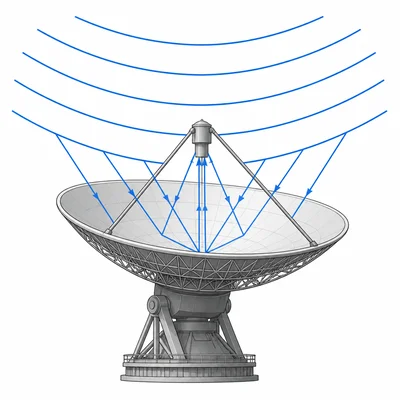
Radio telescopes often use large dish-shaped antennas. Explain what the dish does to incoming radio waves from space.
- 13
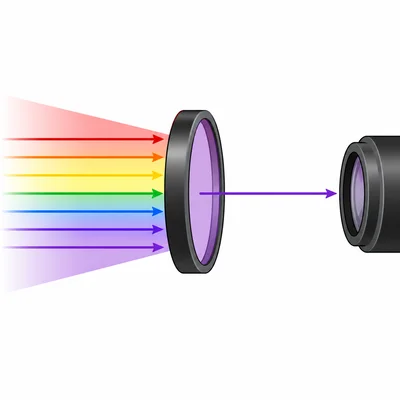
Some telescopes use filters that allow only certain colors or wavelengths of light to pass through. Explain one reason an astronomer might use a filter.
- 14
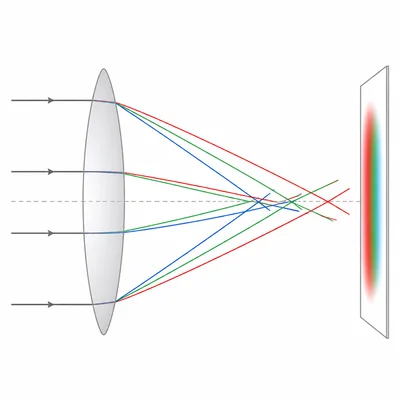
Chromatic aberration is a problem that can happen in some lens-based telescopes because different colors of light bend by different amounts. Describe how this might affect an image.
- 15
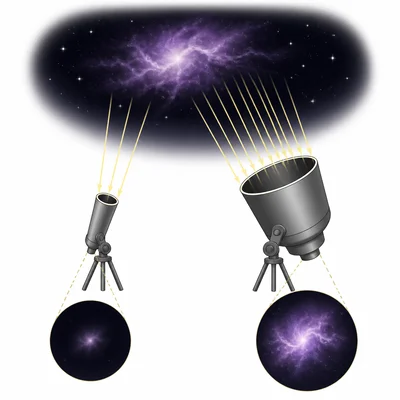
A class is choosing a telescope for viewing faint nebulae from a dark location. They can choose a small telescope with high magnification or a larger telescope with a wider aperture and moderate magnification. Which should they choose, and why?