Practice explaining reflex arcs, reaction time, neuron structure, action potentials, synapses, and factors that affect nerve signal transmission.
Read each problem carefully. Use complete sentences when explaining ideas, and show calculations where needed.
Exploring how the nervous system detects, processes, and responds to stimuli
Biology - Grade 9-12
- 1
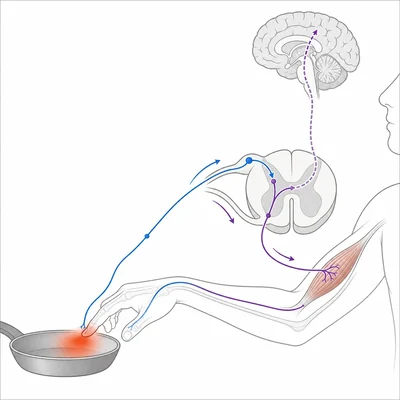
A student touches a hot pan and pulls their hand away before they are fully aware of the pain. Explain why this response is considered a reflex.
- 2
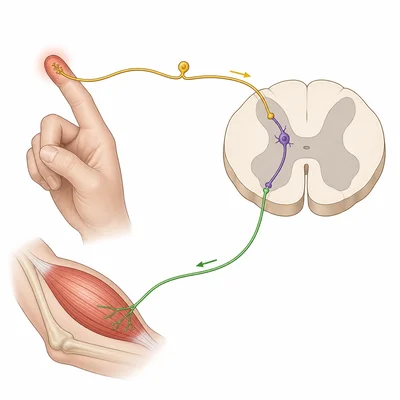
List the correct order of structures in a basic reflex arc: motor neuron, effector, receptor, sensory neuron, integration center.
- 3
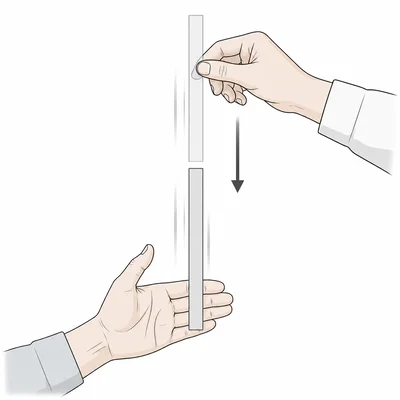
A ruler drop test is used to estimate reaction time. A ruler falls 20 cm before a student catches it. Use the formula t = square root of 2d/g, where d = 0.20 m and g = 9.8 m/s². Calculate the student's reaction time.
- 4
Explain the difference between a reflex and a voluntary reaction.
- 5
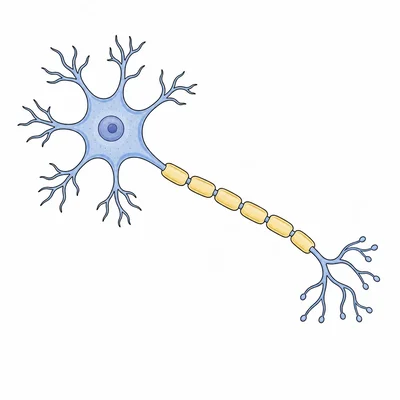
Identify the main function of each neuron part: dendrites, cell body, axon, myelin sheath, and axon terminals.
- 6
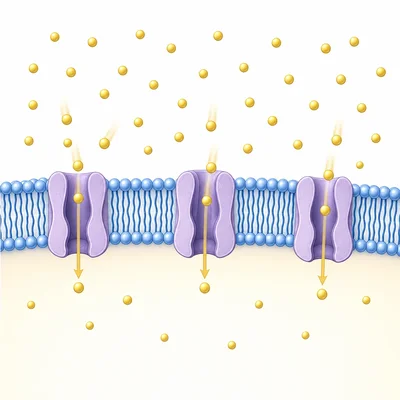
During an action potential, sodium ions move into the neuron and the inside of the cell becomes more positive. What is this phase called, and why does it happen?
- 7
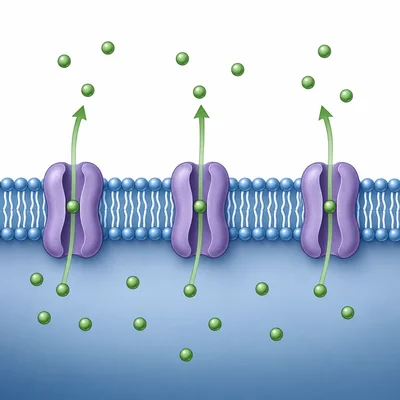
After an action potential, potassium ions move out of the neuron. Explain how this helps restore the resting membrane potential.
- 8
A neuron has a resting membrane potential of about -70 mV. Explain what this value means.
- 9
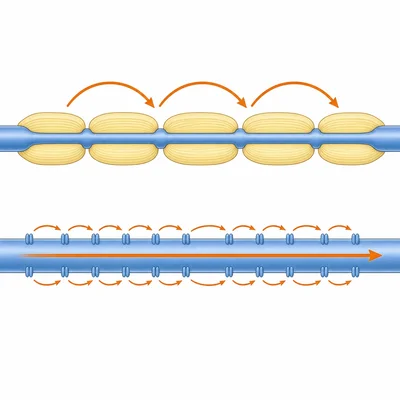
Explain why myelinated axons transmit nerve signals faster than unmyelinated axons.
- 10
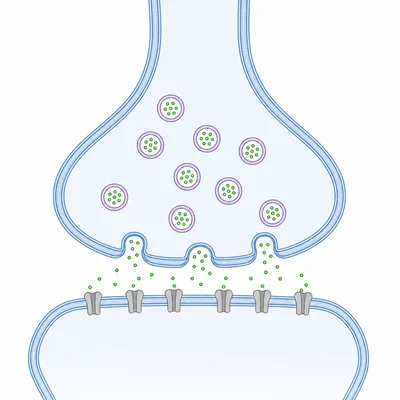
At a chemical synapse, describe how a signal passes from one neuron to another.
- 11
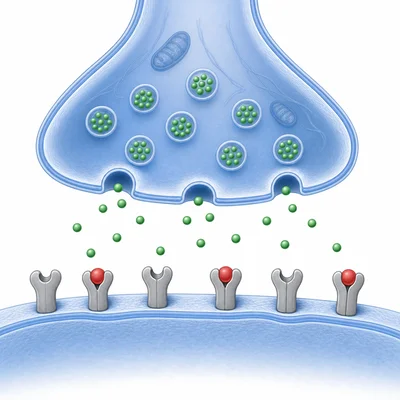
A drug blocks receptors for a neurotransmitter on the postsynaptic neuron. Predict how this could affect nerve communication.
- 12
A person is tired and distracted during a reaction time test. Predict how this might affect their measured reaction time and explain why.
- 13
In an experiment, Student A has reaction times of 0.21 s, 0.24 s, 0.20 s, 0.23 s, and 0.22 s. Calculate the mean reaction time.
- 14
A scientist measures reaction time using both visual and auditory stimuli. The average auditory reaction time is shorter than the average visual reaction time. Give one biological reason this could happen.
- 15
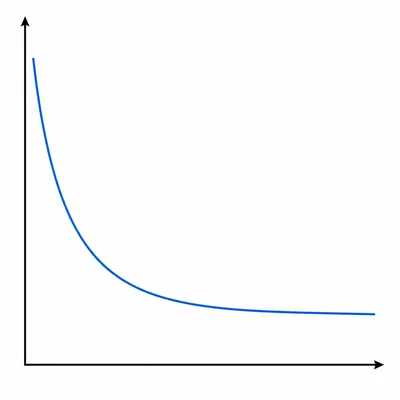
A graph shows that reaction time improves over the first several practice trials and then levels off. Explain what this pattern suggests about learning and nervous system performance.