Practice explaining ionic bond formation, writing ionic formulas, comparing lattice structures, and connecting lattice energy to properties.
Read each problem carefully. Show your work in the space provided, including charges, formulas, and reasoning when needed.
Electron transfer, crystal lattices, and properties of ionic compounds
Chemistry - Grade 9-12
- 1
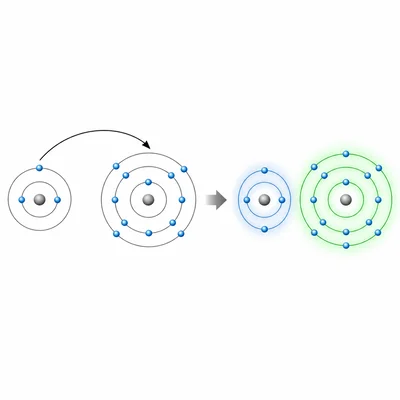
Explain how an ionic bond forms between sodium and chlorine atoms. Include what happens to the electrons and name the ions that form.
- 2
Write the correct chemical formula for the ionic compound formed from magnesium ions, Mg2+, and oxide ions, O2-. Explain why this formula is neutral.
- 3
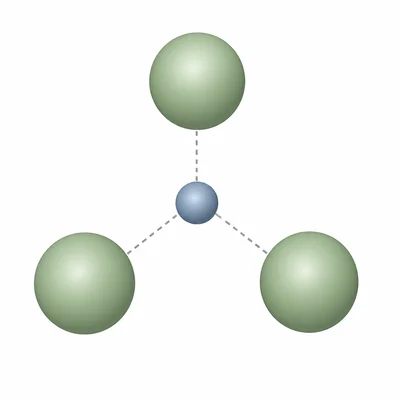
Write the correct chemical formula for the ionic compound formed from aluminum ions, Al3+, and chloride ions, Cl-. Explain how you balanced the charges.
- 4
A compound has the formula CaF2. Identify the ions present and state the charge on each ion.
- 5
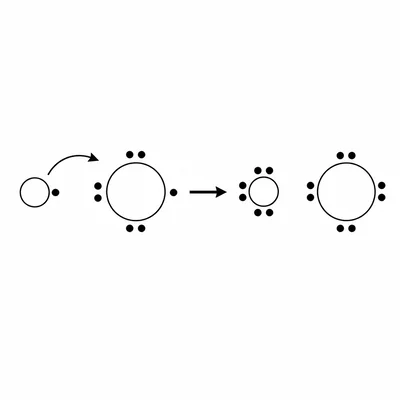
Draw or describe the Lewis dot process for forming lithium fluoride, LiF. State which atom loses an electron and which atom gains an electron.
- 6
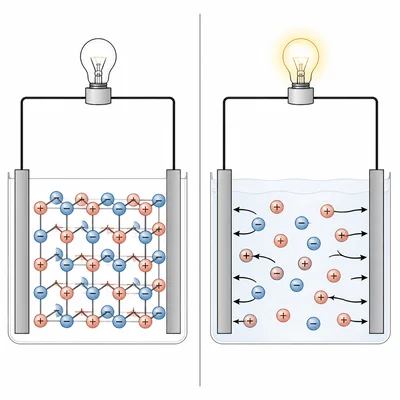
Explain why solid sodium chloride does not conduct electricity, but molten sodium chloride does conduct electricity.
- 7
Compare the lattice energy of NaCl and MgO. Which compound would you expect to have the larger lattice energy, and why?
- 8
Rank these ionic compounds from lowest to highest expected melting point: NaF, MgO, KBr. Explain your ranking using ion charge and ion size.
- 9
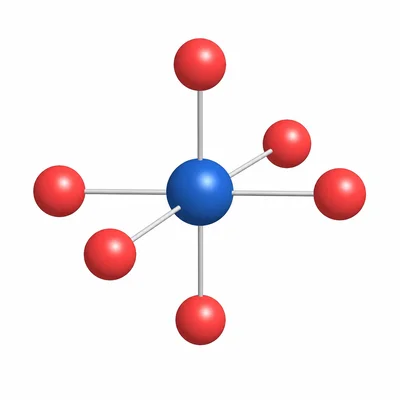
In a sodium chloride crystal lattice, each Na+ ion is surrounded by 6 Cl- ions, and each Cl- ion is surrounded by 6 Na+ ions. What is the coordination number for each ion?
- 10
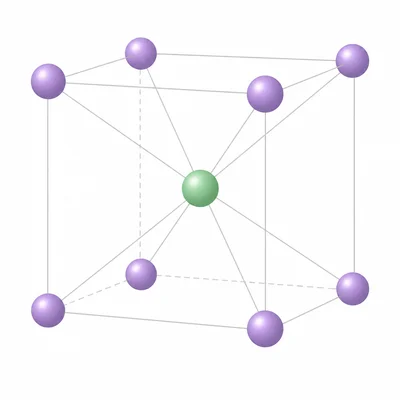
Cesium chloride has a crystal structure in which each Cs+ ion is surrounded by 8 Cl- ions. How does this coordination number compare with sodium chloride, and what does it tell you about the lattice arrangement?
- 11
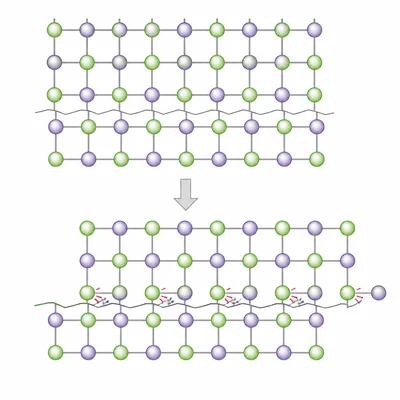
Explain why ionic compounds are usually brittle rather than flexible.
- 12
A student says, "Ionic compounds are made of molecules." Correct this statement using sodium chloride as an example.
- 13
Write the formula and name of the compound formed from potassium ions and sulfate ions, SO4 2-. Explain how the charges are balanced.
- 14
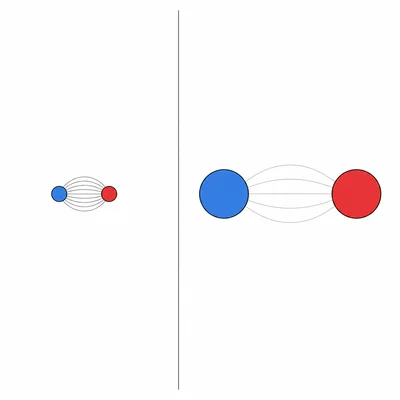
Use Coulomb's law ideas to explain why LiF generally has stronger ionic attractions than KI.
- 15
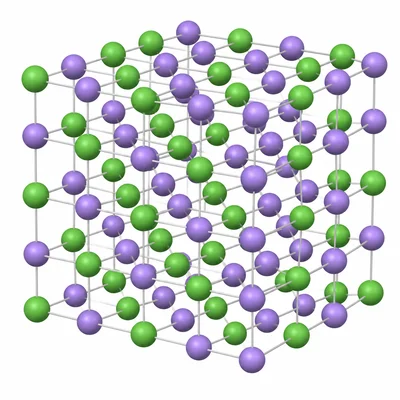
A diagram shows alternating positive and negative ions arranged in a repeating pattern. Describe two features that identify the structure as an ionic lattice.