Practice identifying and designing sense-plan-act algorithms for robots in common situations.
Read each problem carefully. For each robot scenario, identify what the robot senses, how it plans, and what action it takes. Show your reasoning in the space provided.
Designing robot decisions using sensing, planning, and action
Computer Science - Grade 6-8
- 1
A classroom delivery robot needs to bring a note to Room 204. It uses a camera to read room numbers in the hallway. Describe one Sense step, one Plan step, and one Act step for this robot.
- 2
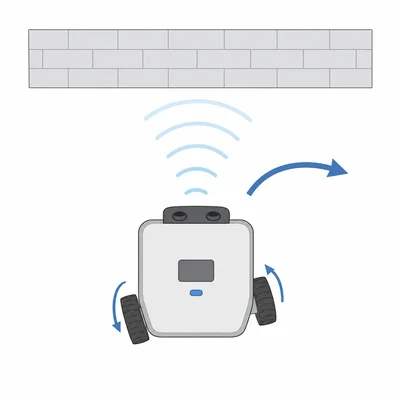
Label each part of this robot behavior as Sense, Plan, or Act: The robot detects a wall 20 centimeters ahead. The robot decides to turn right because the path ahead is blocked. The robot rotates its wheels to turn right.
- 3
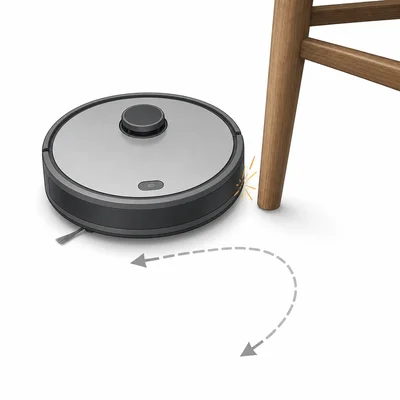
A robot vacuum bumps into a chair leg. It backs up, turns, and continues cleaning. What information did the robot sense, and why was that information useful?
- 4
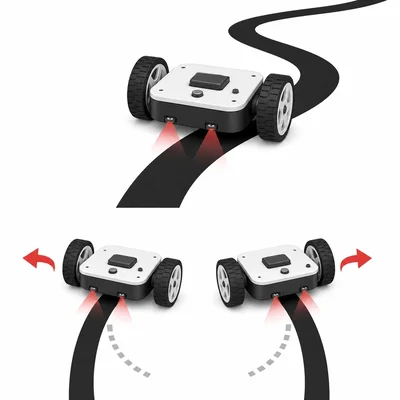
Write a simple sense-plan-act algorithm for a robot that follows a black line on a white floor. Include at least two possible sensor readings and actions.
- 5
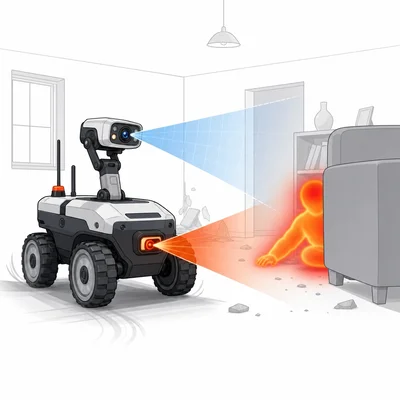
A rescue robot has a heat sensor, a camera, and wheels. It is searching a room for a person. Give one example of how each sensor or part could be used in the sense-plan-act cycle.
- 6
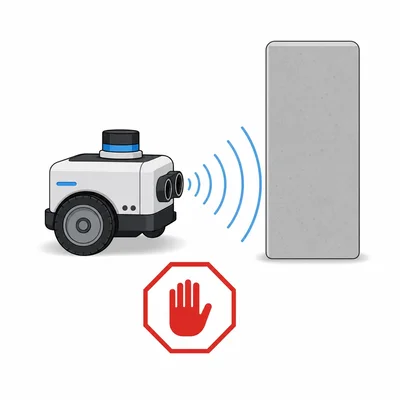
A robot is programmed with this rule: If the distance sensor reads less than 10 centimeters, stop. Otherwise, move forward. Identify the Sense, Plan, and Act parts of the rule.
- 7
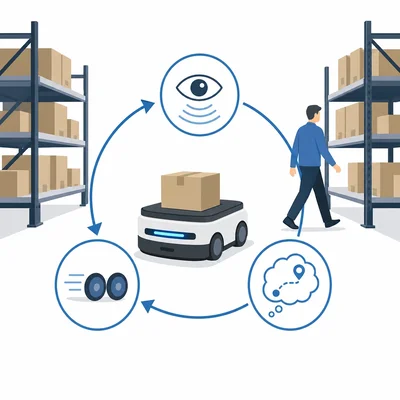
A warehouse robot must avoid crashing into people. Explain why the robot should sense, plan, and act repeatedly instead of only doing the cycle once.
- 8
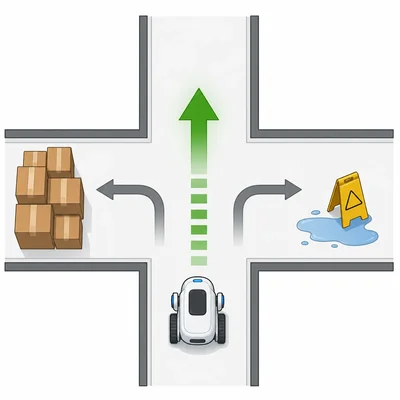
Look at this situation: A robot is at a hallway intersection. The left hallway is blocked by boxes, the forward hallway is clear, and the right hallway has a wet floor sign. What should the robot sense, plan, and act?
- 9
A student writes, "The robot plans by moving forward." Explain what is wrong with this statement and rewrite it correctly using sense-plan-act vocabulary.
- 10
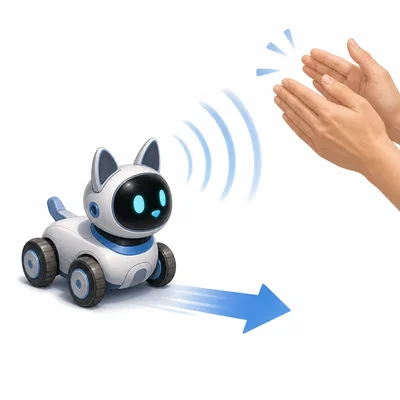
A robot pet hears a loud clap and rolls toward the sound. Name the sensor data, the decision, and the action in this example.
- 11
Create pseudocode for a robot that turns on a light when a room is dark. Use the words IF and ELSE in your answer.
- 12
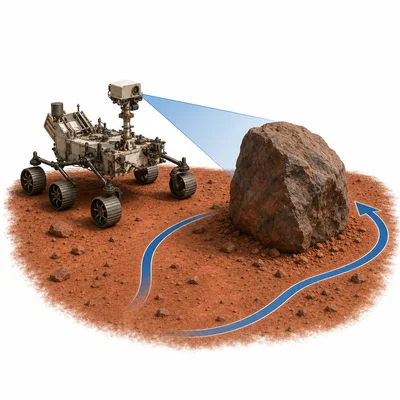
A Mars rover receives a picture of a large rock in front of it. It decides to drive around the rock instead of over it. Why is planning important in this situation?
- 13
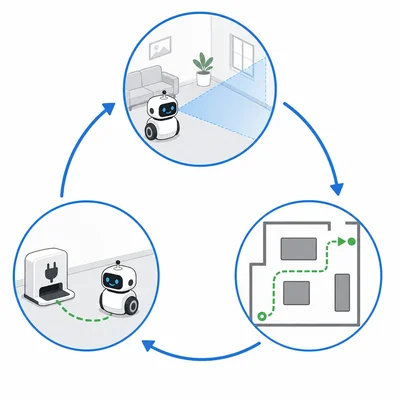
Sort these robot tasks into the correct order for a sense-plan-act cycle: choose the shortest safe path, scan the room with a camera, drive to the charging station.
- 14
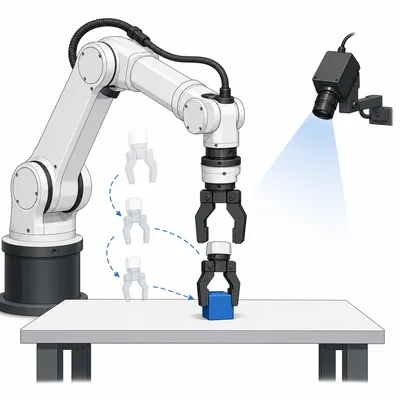
A robot arm in a factory uses a camera to find a blue block, calculates how to grab it, and closes its gripper around the block. Describe the sense-plan-act cycle in this example.
- 15
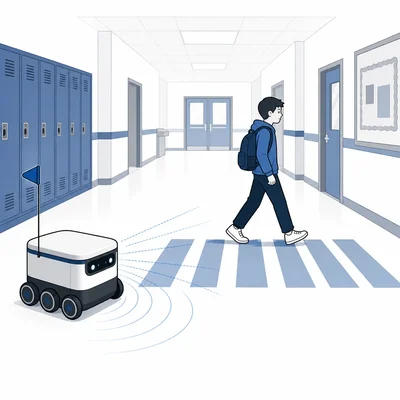
Design a sense-plan-act rule for a school robot that must stop at crosswalks in the hallway. Your rule should include what the robot senses, how it decides, and what it does.