Practice identifying minerals by using the Mohs hardness scale, scratch test results, and common mineral properties.
Read each problem carefully. Use the Mohs hardness scale and the scratch test evidence to support your answers. Show your work in the space provided.
Using scratch tests to compare mineral hardness
Earth Science - Grade 6-8
- 1
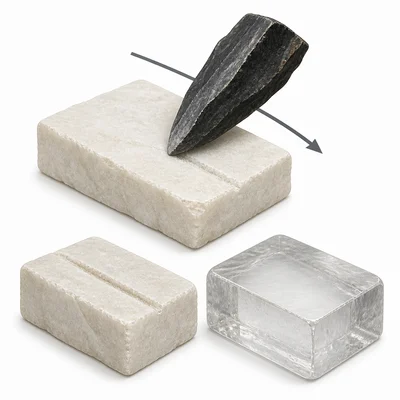
A student tests an unknown mineral. It scratches gypsum but does not scratch calcite. Based on the Mohs hardness scale, what range of hardness could the mineral have?
- 2
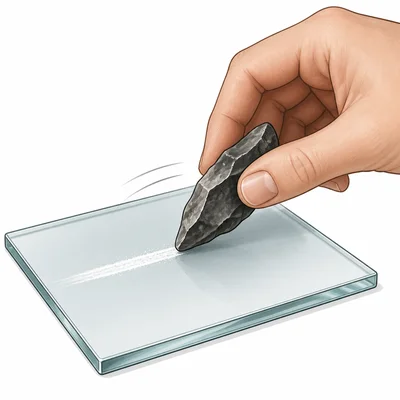
An unknown mineral scratches glass. Glass has a hardness of about 5.5. What can you conclude about the mineral's hardness?
- 3
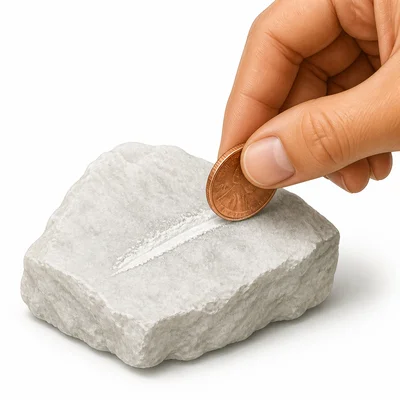
A mineral can be scratched by a copper penny. A copper penny has a hardness of about 3. What does this tell you about the mineral?
- 4
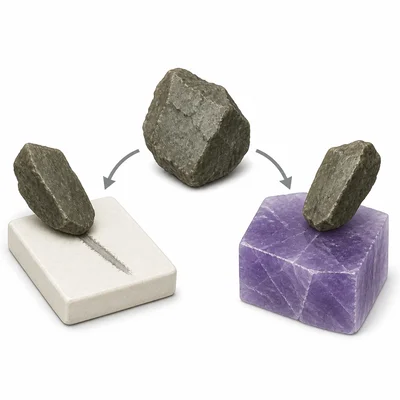
Use these test results to identify the most likely mineral: The unknown mineral scratches calcite, does not scratch fluorite, and has no metallic luster. Calcite has hardness 3, and fluorite has hardness 4.
- 5
Order these minerals from softest to hardest using the Mohs hardness scale: quartz, talc, apatite, gypsum.
- 6
A student claims that a mineral with hardness 6 can scratch quartz, which has hardness 7. Is the student correct? Explain.
- 7
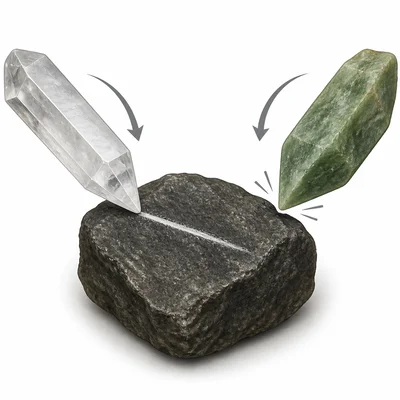
An unknown mineral is scratched by quartz but not by apatite. Quartz has hardness 7, and apatite has hardness 5. What is the possible hardness range of the unknown mineral?
- 8
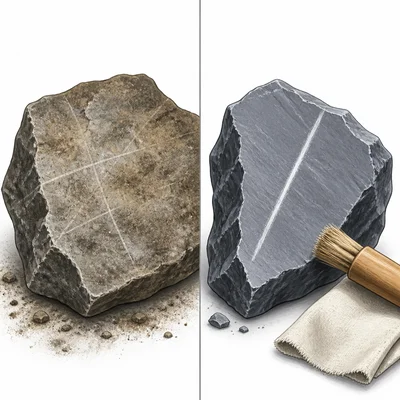
Why should you use a fresh, clean surface when doing a scratch test on a mineral?
- 9
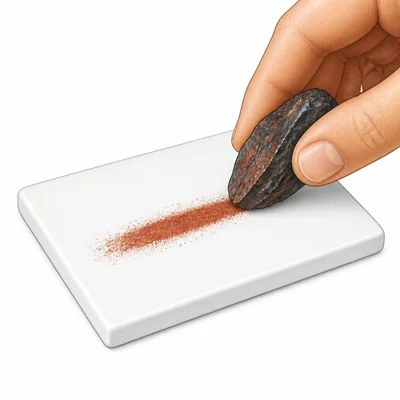
A mineral leaves a powder mark on a porcelain streak plate but does not scratch the plate. The streak plate has a hardness of about 7. What does this show about the mineral's hardness?
- 10
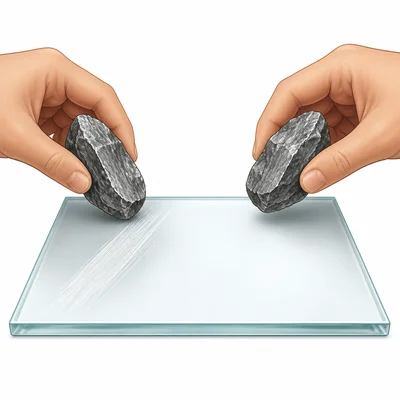
Two minerals look very similar, but Mineral A scratches glass and Mineral B does not. What property can help tell them apart, and which mineral is harder?
- 11
Use the data table to identify which mineral is likely quartz: Mineral W is scratched by a fingernail, Mineral X scratches glass, Mineral Y is scratched by a copper penny, and Mineral Z is scratched by calcite. Quartz has hardness 7.
- 12
Explain why the Mohs hardness scale is useful but does not give the exact hardness of every unknown mineral.