Practice explaining sustainability, calculating ecological footprint concepts, and evaluating choices that affect resource use and environmental impact.
Read each problem carefully. Show your work when calculations are needed, and explain your reasoning in complete sentences.
Analyzing resource use, waste, and sustainable choices
Environmental Science - Grade 9-12
- 1
Define sustainability in your own words. Include both environmental and human needs in your definition.
- 2
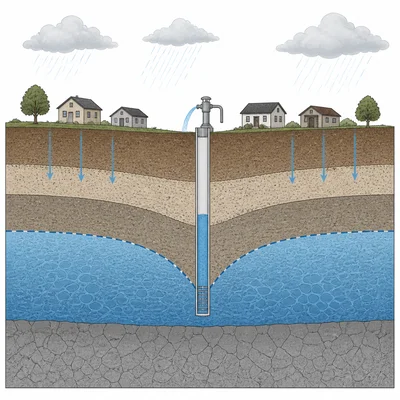
A community uses groundwater faster than rainfall can refill the aquifer. Explain why this is not sustainable.
- 3
List three major categories of human activity that contribute to a person's ecological footprint.
- 4
A student drives 20 miles to school each day in a gasoline car. Name two ways the student could reduce the transportation part of their ecological footprint.
- 5
A household uses 900 kilowatt-hours of electricity in one month. If each kilowatt-hour produces 0.4 kilograms of carbon dioxide, how many kilograms of carbon dioxide are produced?
- 6
A family replaces old light bulbs and reduces monthly electricity use from 900 kilowatt-hours to 720 kilowatt-hours. What percent decrease in electricity use did they achieve?
- 7
Explain how eating more plant-based meals can reduce an ecological footprint.
- 8
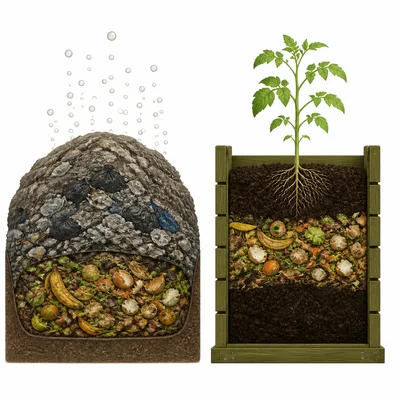
A city sends most food scraps to a landfill. Explain one environmental problem this can cause and one sustainable alternative.
- 9
Two products are available: Product A is cheap, single-use, and wrapped in plastic. Product B costs more, is reusable, and has minimal packaging. Which product is likely more sustainable over time, and why?
- 10
A school cafeteria serves 500 lunches per day. If switching to reusable trays prevents 0.03 kilograms of waste per lunch, how much waste is prevented in one 180-day school year?
- 11
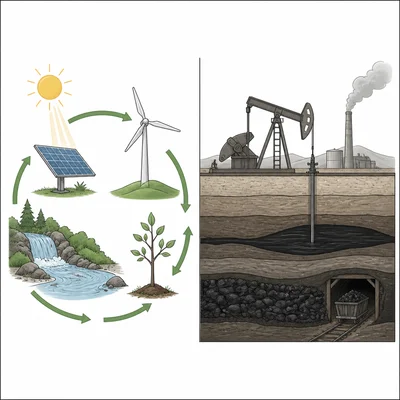
Describe the difference between renewable and nonrenewable resources. Give one example of each.
- 12
A town wants to reduce its ecological footprint. Propose one policy related to energy, transportation, or waste, and explain how it would help.