Practice understanding the benefits of exercise, types of physical activity, safe workout habits, and ways to build a balanced fitness routine.
Read each problem carefully. Write complete answers and explain your thinking when asked.
Building fitness, safety, and healthy habits
Health - Grade 6-8
- 1
List three physical benefits of regular exercise for middle school students.
- 2
List two mental or emotional benefits of exercise and explain how each one can help a student during the school day.
- 3
Match each activity to the main type of fitness it improves: jogging, push-ups, stretching, and holding a plank. Use these categories: cardiovascular endurance, muscular strength, flexibility, and muscular endurance.
- 4
A student wants to improve cardiovascular endurance. Choose two activities from this list and explain why they are good choices: walking the dog, sprinting once for 5 seconds, swimming laps, playing video games, riding a bike for 20 minutes.
- 5
Look at the weekly activity chart. Monday: 20 minutes walking. Tuesday: 30 minutes basketball. Wednesday: 0 minutes. Thursday: 25 minutes biking. Friday: 15 minutes stretching. Saturday: 40 minutes soccer. Sunday: 0 minutes. What is the total number of minutes of physical activity for the week?
- 6
The same weekly activity chart shows 130 total minutes of activity. If the student's goal is 60 minutes per day, how many total minutes would the student need in a 7-day week, and how many more minutes are needed to meet the goal?
- 7
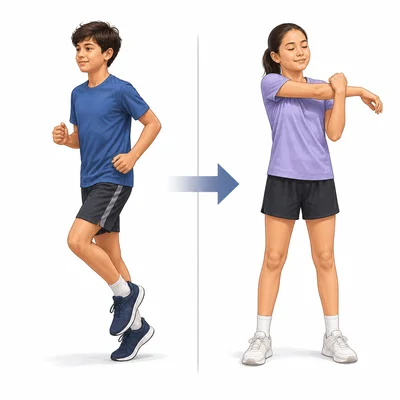
Explain the difference between a warm-up and a cool-down. Give one example of each.
- 8
A student starts running as fast as possible without warming up and then stops suddenly without cooling down. Describe two possible problems with this plan.
- 9
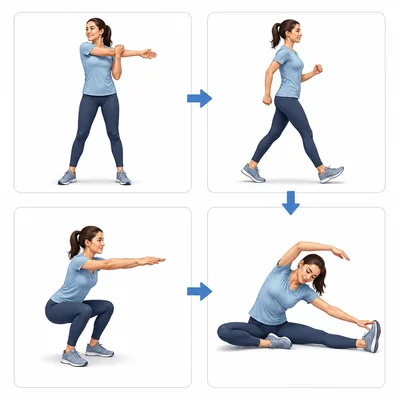
Create a balanced 30-minute workout for a beginner. Include a warm-up, a main activity, strength or flexibility work, and a cool-down.
- 10
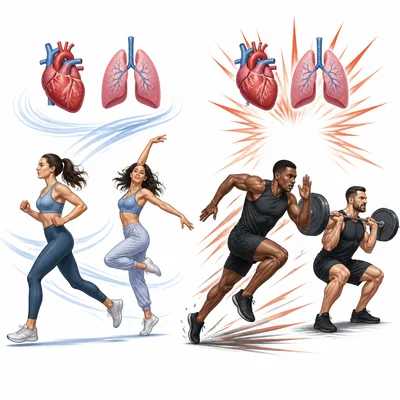
Identify whether each exercise is mostly aerobic or anaerobic: dancing for 20 minutes, lifting a heavy weight for a few repetitions, jogging for 15 minutes, and doing a 10-second sprint.
- 11
A student says, "If exercise is healthy, I should work out as hard as I can every day with no rest." Explain why this is not a safe plan.
- 12
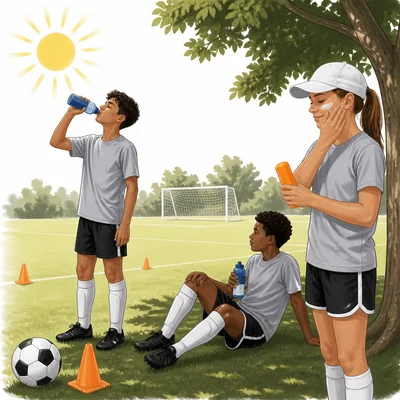
Read this situation: It is hot outside, and a soccer practice lasts 90 minutes. Name three safety steps the players should take before or during practice.
- 13
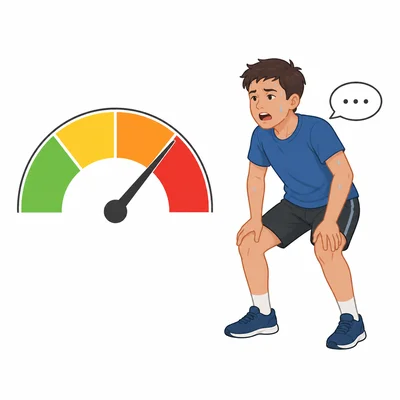
Use the perceived exertion scale from 1 to 10, where 1 means very easy and 10 means maximum effort. A student rates an activity as 8, is breathing hard, and can only say a few words at a time. What does this suggest about the intensity of the activity?
- 14
A student wants to be more active but dislikes team sports. Suggest three physical activities that do not require joining a team.
- 15
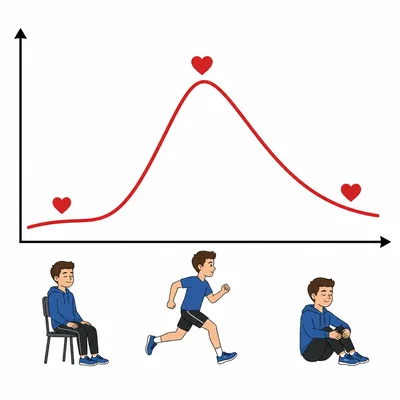
Look at this simple heart rate graph showing resting heart rate, exercise heart rate, and recovery heart rate. Explain why heart rate rises during exercise and why it lowers during recovery.