Practice evaluating limits algebraically using direct substitution, factoring, conjugates, standard trigonometric limits, and end behavior.
Read each problem carefully. Show the algebraic steps you use to evaluate each limit.
Using substitution, factoring, rationalizing, and limit laws
Math - Grade 9-12
- 1
Evaluate the limit as x approaches 3: 2x^2 - 5x + 1.
- 2
Evaluate the limit as x approaches 3: (x^2 - 9)/(x - 3).
- 3
Evaluate the limit as x approaches -2: (x^2 + 5x + 6)/(x + 2).
- 4
Evaluate the limit as x approaches 4: (sqrt(x + 5) - 3)/(x - 4).
- 5
Evaluate the limit as x approaches 5: (1/x - 1/5)/(x - 5).
- 6
Evaluate the limit as x approaches 2: (x^3 - 8)/(x - 2).
- 7
Evaluate the limit as x approaches 4: (x^2 - 4x)/(x^2 - 16).
- 8
Evaluate the limit as h approaches 0: ((3 + h)^2 - 9)/h.
- 9
Evaluate the limit as x approaches 0: sin(5x)/x.
- 10
Evaluate the limit as x approaches 0: (1 - cos x)/x.
- 11
Evaluate the limit as x approaches infinity: (5x^2 - 3x + 1)/(2x^2 + 7).
- 12
Evaluate the limit as x approaches infinity: (4x^3 + x)/(2x^4 - 1).
- 13
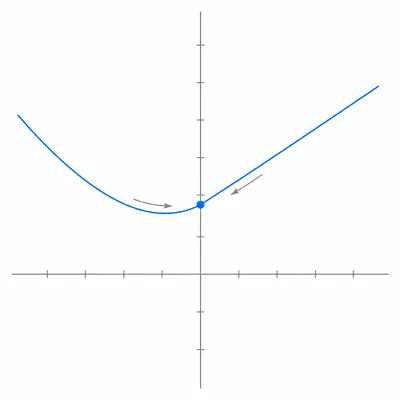
Let f(x) = x^2 + 2 for x < 1 and f(x) = 4x - 1 for x >= 1. Evaluate the limit of f(x) as x approaches 1.
- 14
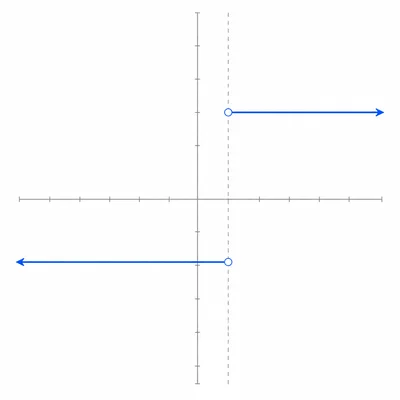
Evaluate the limit as x approaches 2: |x - 2|/(x - 2).
- 15
Evaluate the limit as x approaches 0: (sqrt(1 + x) - 1)/x.