Practice identifying, describing, and performing translations, rotations, and reflections on the coordinate plane.
Read each problem carefully. Show your work and explain your thinking when needed.
Describe and apply basic transformations on the coordinate plane
Math - Grade 6-8
- 1
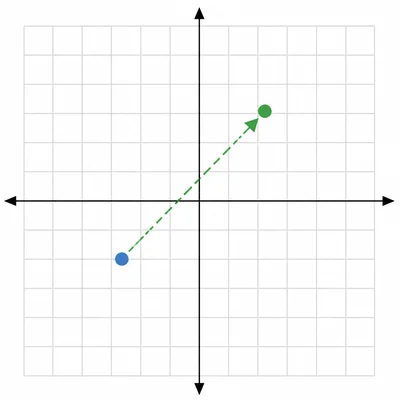
Point A is at (2, 3). Translate the point 4 units right and 2 units up. What are the new coordinates?
- 2
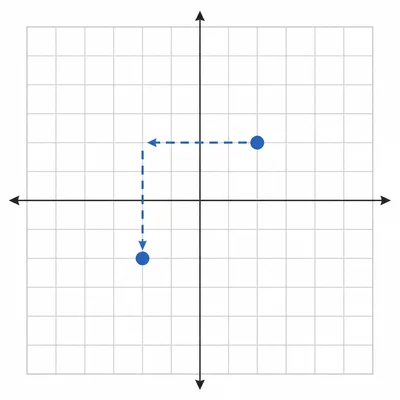
Point B is at (-1, 5). Translate the point 3 units left and 6 units down. What are the new coordinates?
- 3
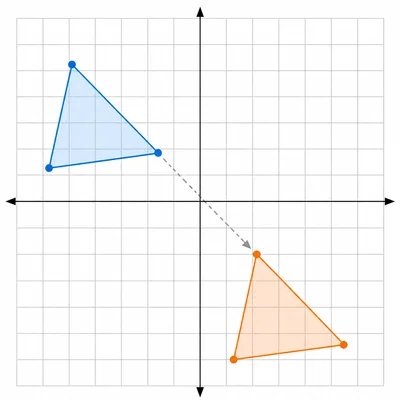
Triangle ABC has vertices A(1, 1), B(4, 1), and C(2, 3). Translate the triangle by the rule (x, y) to (x + 2, y - 1). What are the new coordinates of A', B', and C'?
- 4
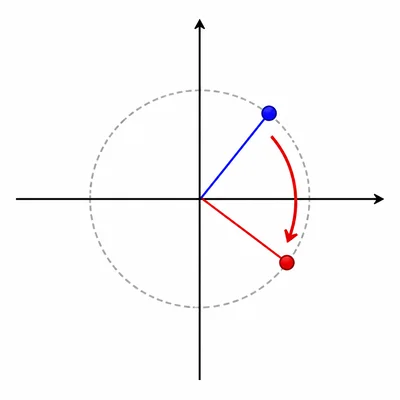
Point C is at (3, 2). Rotate the point 90 degrees clockwise around the origin. What are the new coordinates?
- 5
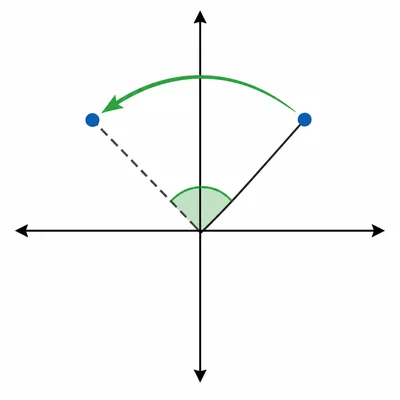
Point D is at (-4, 1). Rotate the point 90 degrees counterclockwise around the origin. What are the new coordinates?
- 6
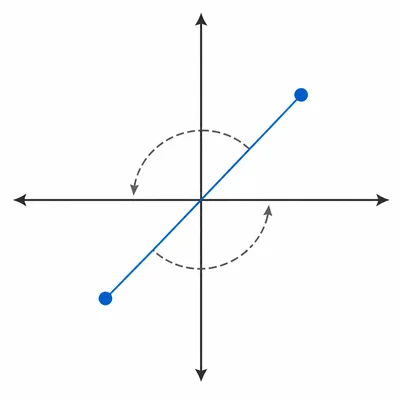
Point E is at (5, -2). Rotate the point 180 degrees around the origin. What are the new coordinates?
- 7
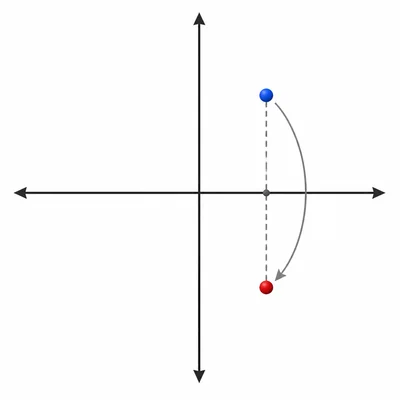
Point F is at (6, -3). Reflect the point across the x-axis. What are the new coordinates?
- 8
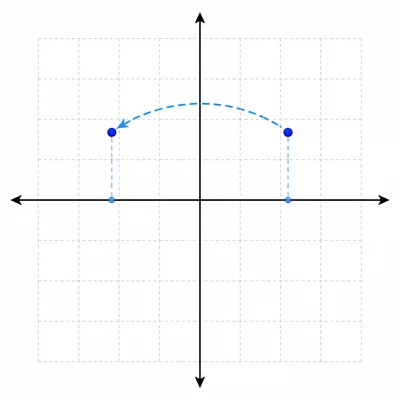
Point G is at (-2, 7). Reflect the point across the y-axis. What are the new coordinates?
- 9
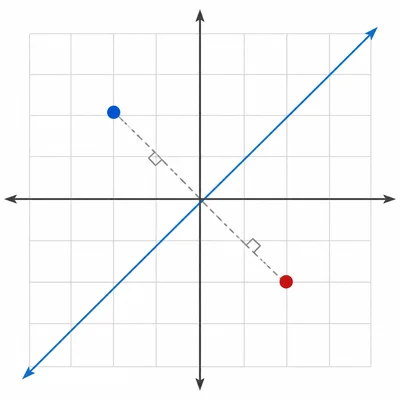
Point H is at (4, -1). Reflect the point across the line y = x. What are the new coordinates?
- 10
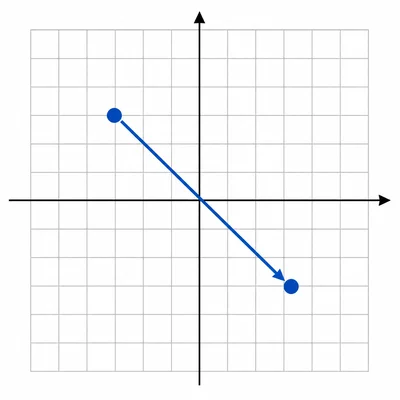
A point moves from (1, 4) to (5, 1). Describe the translation in words.
- 11
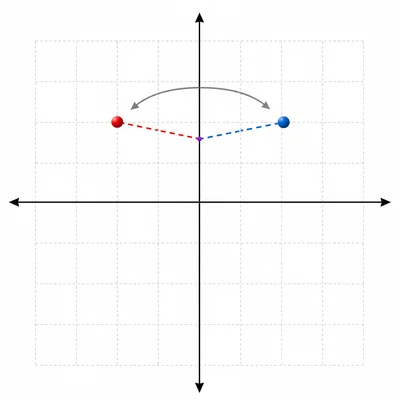
Point J is at (-3, 2). After a reflection across the y-axis, where is the image point J'?
- 12
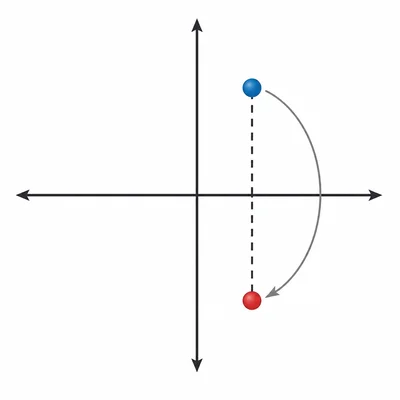
Point K is at (2, -5). After a reflection across the x-axis, where is the image point K'?
- 13
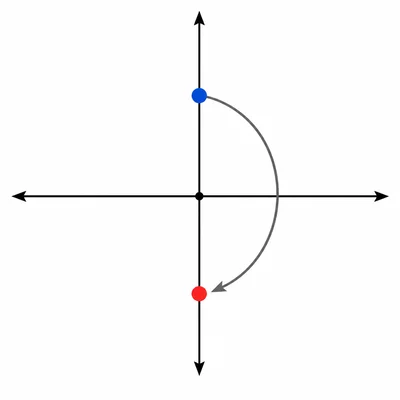
Point L is at (0, 6). Rotate the point 180 degrees around the origin. What are the new coordinates?
- 14
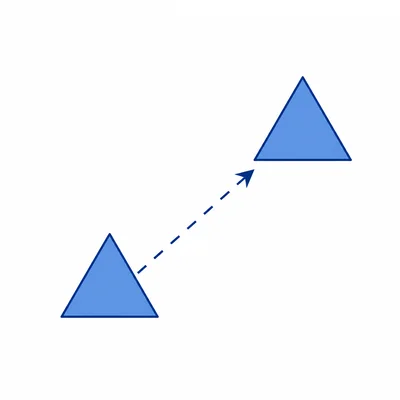
A shape is moved so that every point shifts the same distance in the same direction. Is this transformation a translation, rotation, or reflection? Explain.
- 15
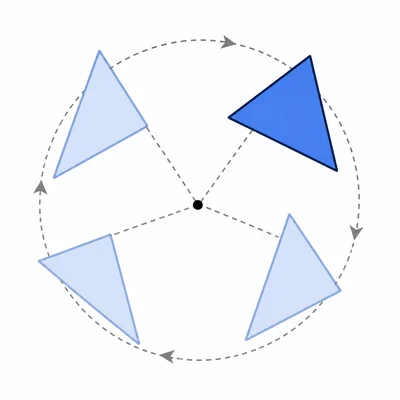
A triangle is turned around a fixed point. Is this transformation a translation, rotation, or reflection? Explain.