Practice identifying, describing, and applying geometric transformations on the coordinate plane.
Read each problem carefully. Show your work in the space provided. Use coordinate rules when possible and give exact coordinates for image points.
Translations, reflections, rotations, dilations, and composition of transformations
Math - Grade 9-12
- 1
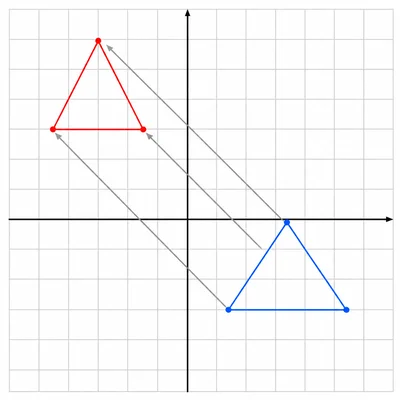
Triangle ABC has vertices A(2, 1), B(5, 1), and C(3, 4). Translate the triangle 4 units left and 3 units up. Give the coordinates of A', B', and C'.
- 2
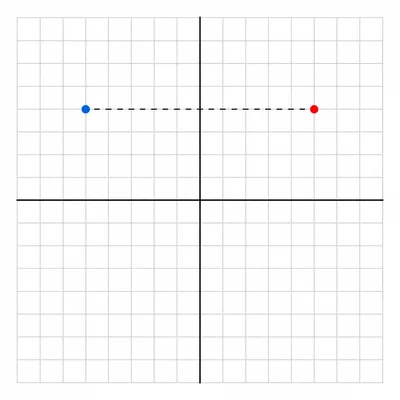
Point P(-6, 4) is reflected across the y-axis. What are the coordinates of P'?
- 3
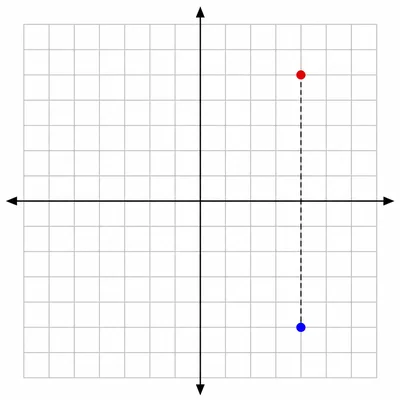
Point M(3, -7) is reflected across the x-axis. What are the coordinates of M'?
- 4
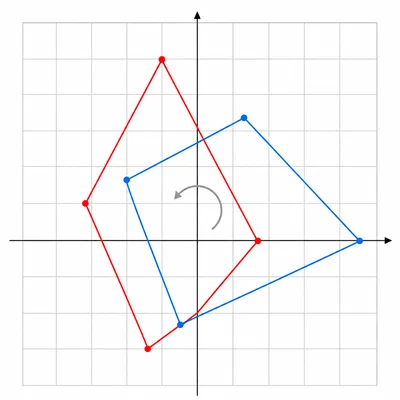
Quadrilateral WXYZ has vertices W(-2, 1), X(1, 3), Y(4, 0), and Z(0, -2). Rotate the quadrilateral 90 degrees counterclockwise about the origin. Give the coordinates of W', X', Y', and Z'.
- 5
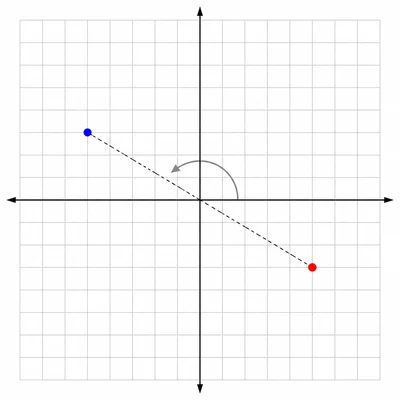
Point R(-5, 2) is rotated 180 degrees about the origin. What are the coordinates of R'?
- 6
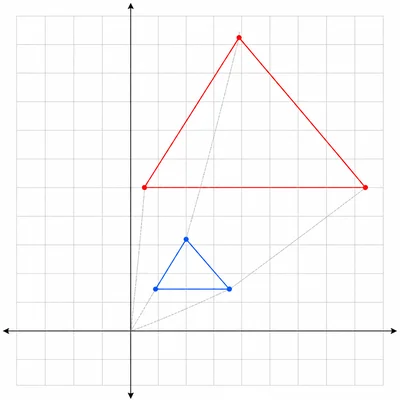
Triangle DEF has vertices D(1, 2), E(4, 2), and F(2, 6). Dilate the triangle about the origin by a scale factor of 3. Give the coordinates of D', E', and F'.
- 7
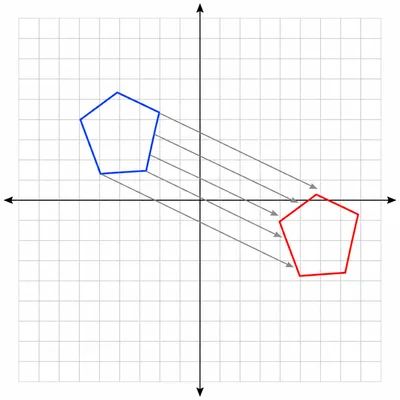
A figure is transformed by the rule (x, y) to (x + 7, y - 2). Name the transformation and describe it in words.
- 8
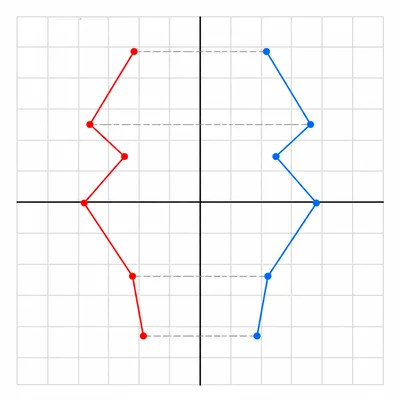
A point (x, y) is transformed to (-x, y). Name the transformation and identify the line of reflection.
- 9
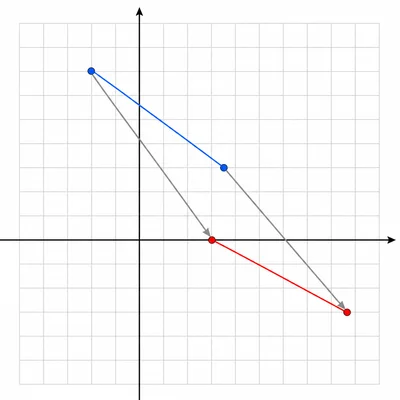
Segment AB has endpoints A(-1, 5) and B(3, 2). It is translated to A'(4, 1) and B'(8, -2). What translation vector was used?
- 10
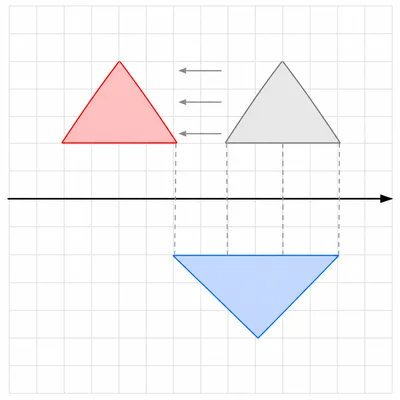
Triangle JKL has vertices J(2, -1), K(6, -1), and L(4, -4). First reflect the triangle across the x-axis, then translate it 3 units left. Give the final coordinates of J'', K'', and L''.
- 11
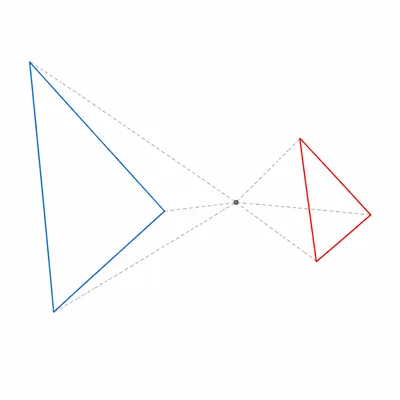
A triangle has side lengths 4, 7, and 8. It is dilated by a scale factor of 1/2. What are the side lengths of the image triangle?
- 12
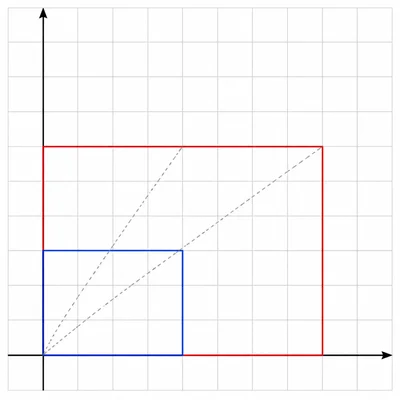
Rectangle ABCD has vertices A(0, 0), B(6, 0), C(6, 4), and D(0, 4). It is dilated about the origin by a scale factor of 2. What is the perimeter of the image rectangle?
- 13
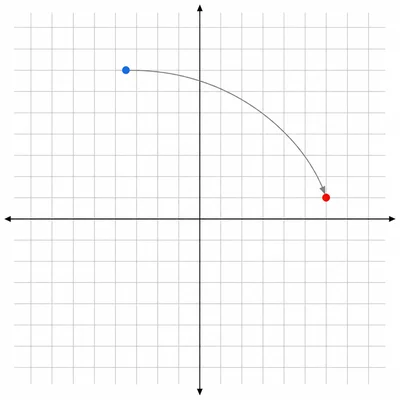
A figure is rotated 90 degrees clockwise about the origin. Write the coordinate rule for this transformation and use it to find the image of Q(-3, 8).
- 14
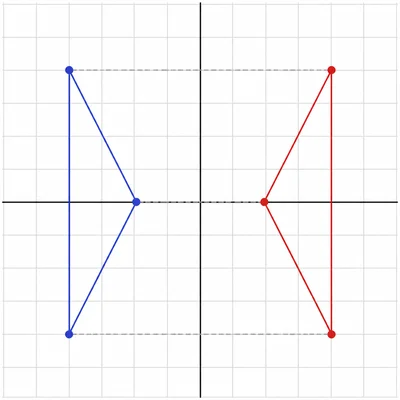
Two triangles are congruent. Triangle A is mapped onto Triangle B by a single transformation. The orientation is reversed, and corresponding points are the same distance from the y-axis on opposite sides. What transformation maps Triangle A to Triangle B?
- 15
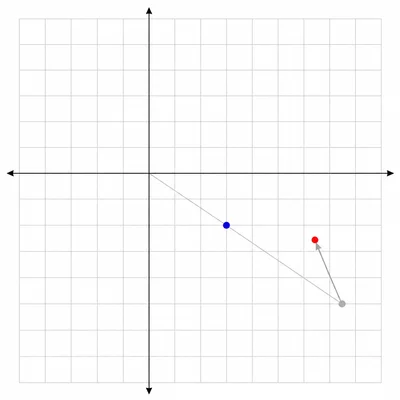
Point S(4, -2) is transformed by the rule (x, y) to (2x - 1, 2y + 3). Find S' and describe the transformation as a dilation followed by a translation.