Math Grade 9-12

Integration and the Fundamental Theorem of Calculus

Finding antiderivatives and evaluating definite integrals

View Answer Key
Name:
Date:
Score: / 15

Integration and the Fundamental Theorem of Calculus

Finding antiderivatives and evaluating definite integrals

Math - Grade 9-12

Instructions: Read each problem carefully. Show your work and include units when they are appropriate.
  1. 1

    Find an antiderivative of f(x) = 6x^2.

  2. 2

    Find the indefinite integral integral of (4x^3 - 2x + 5) dx.

  3. 3
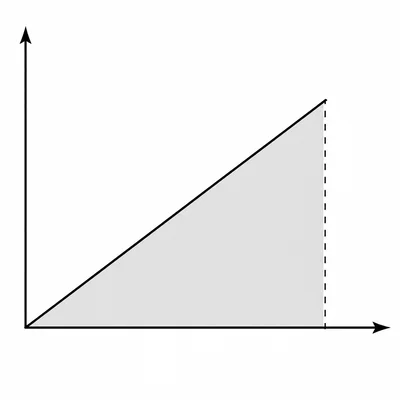
    Graph of a rising line with a triangular area shaded under it from the origin to a right boundary.

    Evaluate integral from 0 to 3 of 2x dx.

  4. 4
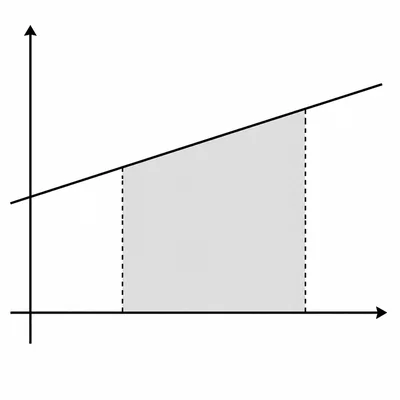
    Graph of an increasing line above the axis with the area between two vertical boundaries shaded.

    Evaluate integral from 1 to 4 of (x + 2) dx.

  5. 5

    Use the Fundamental Theorem of Calculus to find the derivative of F(x) = integral from 2 to x of (t^2 + 3) dt.

  6. 6

    Use the Fundamental Theorem of Calculus to find the derivative of G(x) = integral from -1 to x of (5t^4) dt.

  7. 7
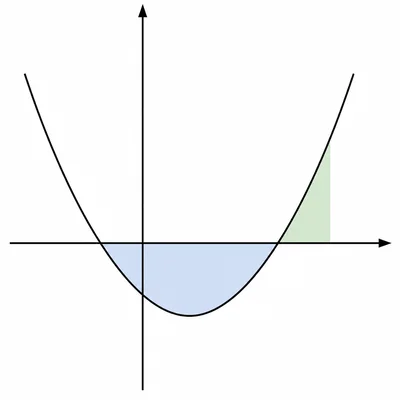
    Parabola with part of the shaded area below the axis and part above the axis over a positive interval.

    Find the value of integral from 0 to 2 of (3x^2 - 4) dx.

  8. 8

    Find an antiderivative of f(x) = 1/x for x > 0.

  9. 9
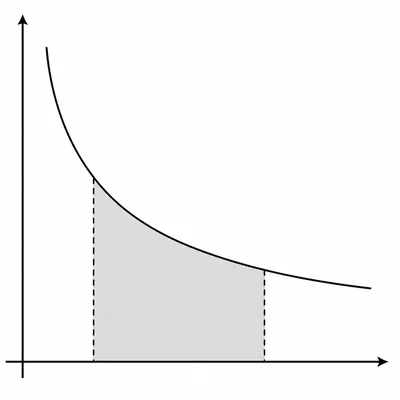
    Decreasing reciprocal curve in the first quadrant with the area under the curve shaded between two vertical boundaries.

    Evaluate integral from 1 to e of (1/x) dx.

  10. 10

    If F'(x) = 8x - 3, find one possible function F(x).

  11. 11
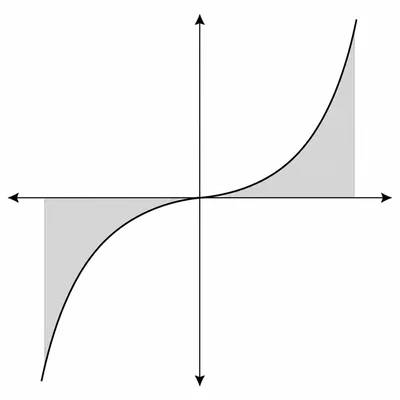
    Symmetric cubic graph with equal shaded regions below the axis on the left and above the axis on the right.

    Evaluate integral from -2 to 2 of x^3 dx.

  12. 12
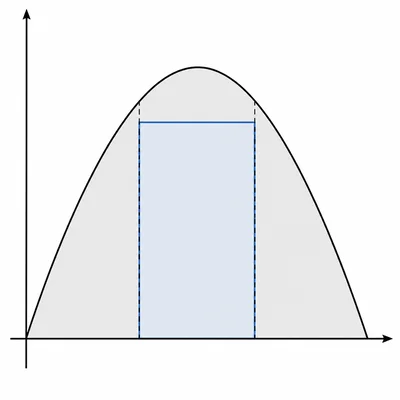
    Parabola with shaded area under it and a rectangle of equal interval width showing average height.

    Find the average value of f(x) = x^2 on the interval [0, 3].

  13. 13
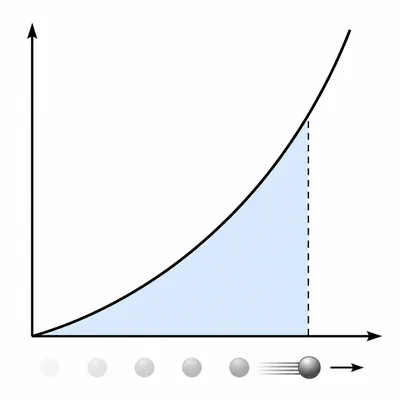
    Quadratic velocity-time graph with shaded area under the curve and a small moving particle icon.

    A particle moves with velocity v(t) = 3t^2 meters per second for 0 less than or equal to t less than or equal to 2. Find the displacement from t = 0 to t = 2.

  14. 14
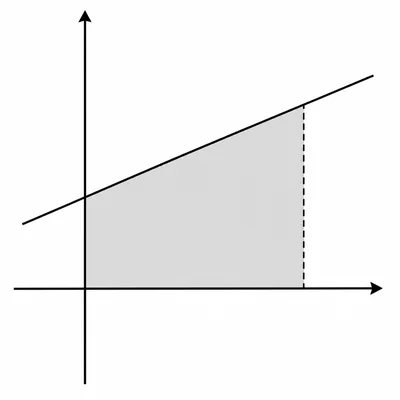
    Increasing line with a trapezoidal area shaded from the vertical axis to a right boundary.

    Suppose H(x) = integral from 0 to x of (2t + 1) dt. Find H(3).

  15. 15
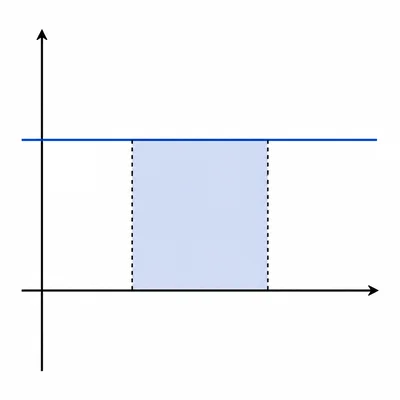
    Constant positive function with a rectangular area shaded between two vertical boundaries.

    Evaluate integral from 2 to 5 of 7 dx.

LivePhysics.com Math - Grade 9-12

More Math Worksheets

See all Math worksheets

More Grade 9-12 Worksheets

See all Grade 9-12 worksheets