Sign in to save

Bookmark this page so you can find it later.

Sign in to save

Bookmark this page so you can find it later.

Math Grade 4-5

Multiples, Factors, and Prime Numbers

Finding patterns in numbers

View Answer Key
Name:
Date:
Score: / 15

Finding patterns in numbers

Math - Grade 4-5

Instructions: Read each problem carefully. Show your work in the space provided.
  1. 1
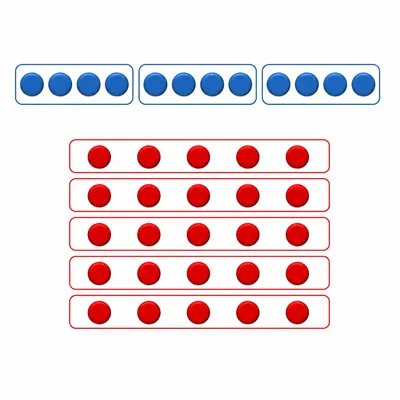
    Five equal groups of four counters showing multiples of four.

    List the first 5 multiples of 4.

  2. 2
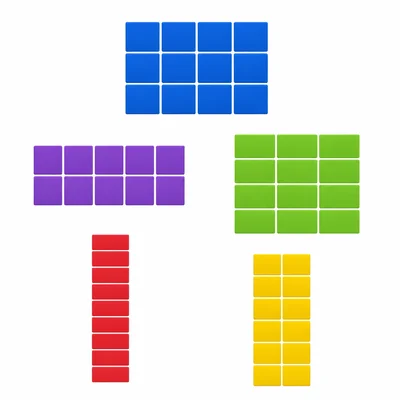
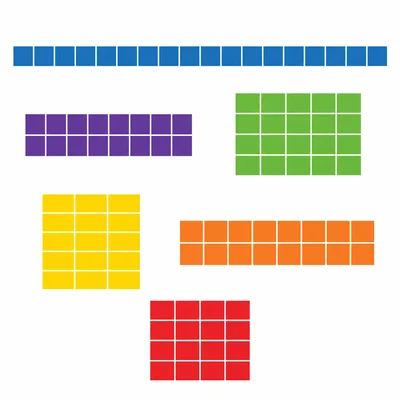
    Tile arrays showing different factor arrangements for twelve.

    List all the factors of 12.

  3. 3
    Seventeen counters arranged in a single row to model a prime number.

    Tell whether 17 is prime or composite. Explain how you know.

  4. 4
    Six equal groups of seven counters showing multiples of seven.

    Write the first 6 multiples of 7.

  5. 5
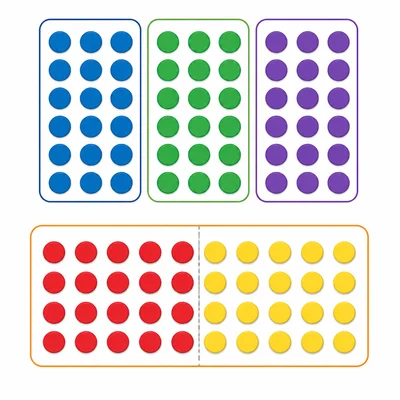
    Tile arrays showing factor pair arrangements for eighteen.

    Find all the factor pairs of 18.

  6. 6
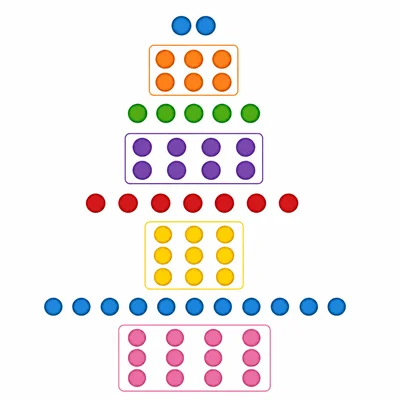
    Counter arrays for several numbers, with composites as rectangles and primes as single rows.

    Circle all the prime numbers: 9, 11, 13, 15, 19.

  7. 7
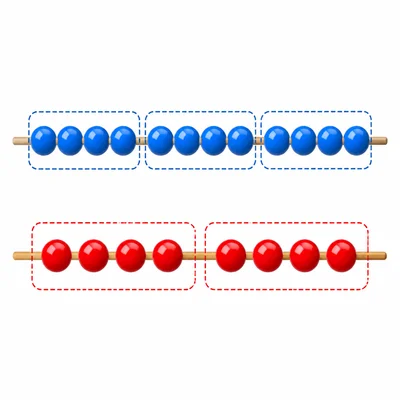
    Two bead trains divided into equal groups to model a greatest common factor.

    Find the greatest common factor of 8 and 12.

  8. 8
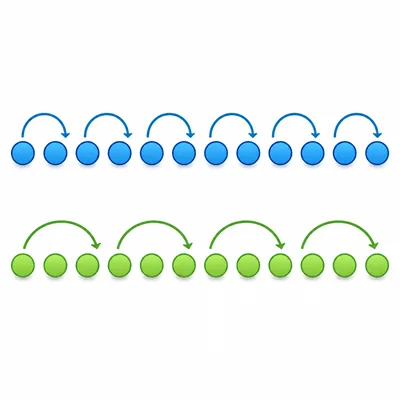
    Two skip-counting paths meeting at a common landing to model least common multiple.

    Find the least common multiple of 3 and 5.

  9. 9
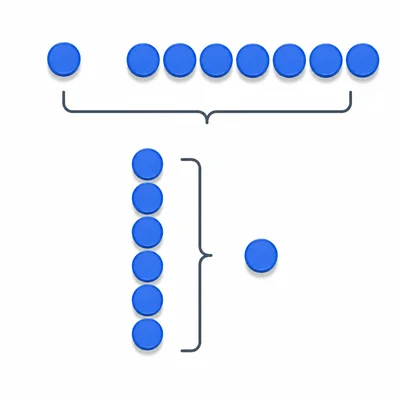
    Counters grouped to show twenty-one as a multiple of three and as half of forty-two.

    Is 21 a multiple of 3, a factor of 42, or both? Explain.

  10. 10
    Tile arrays showing factor arrangements for twenty.

    List all the factors of 20.

  11. 11
    Two skip-counting rows showing common multiples of two and three.

    Write the first 4 common multiples of 2 and 3.

  12. 12
    A single tile representing one, which is neither prime nor composite.

    Tell whether 1 is prime, composite, or neither. Explain your thinking.

  13. 13
    A dot pattern increasing by equal groups with one missing group.

    Find the missing number: 5, 10, 15, __, 25. Tell what pattern you used.

  14. 14
    Counters for fifteen and twenty-five grouped equally to model a greatest common factor.

    Find the greatest common factor of 15 and 25.

  15. 15
    Counters showing a number with only two factor arrangements, modeling a prime number.

    A number has exactly 2 factors, 1 and itself. What kind of number is it? Give one example.

LivePhysics™.com Math - Grade 4-5

More Math Worksheets

See all Math worksheets

More Grade 4-5 Worksheets

See all Grade 4-5 worksheets