Prime & Composite Detective
Discover prime and composite numbers by building dot arrays. Every number tells its own story through rectangles.
Number Detectives Guide
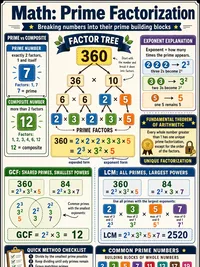
Prime Numbers
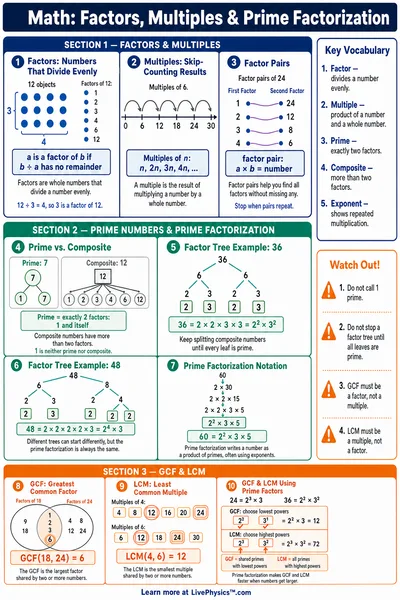
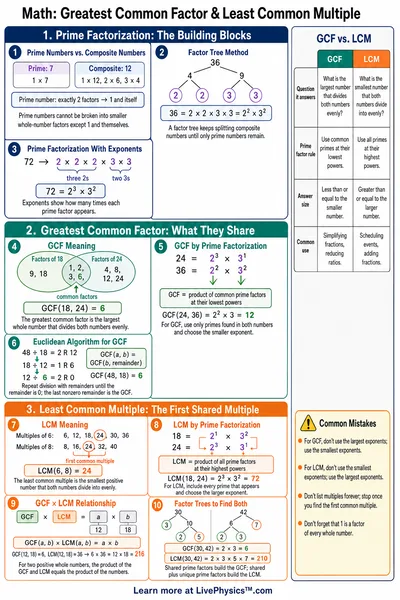
A prime number has exactly two factors, 1 and itself. This means it can only form one rectangle, a single row of dots.
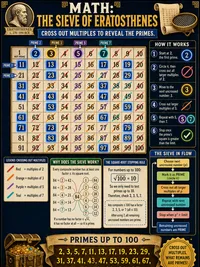
Examples, 2, 3, 5, 7, 11, 13, 17, 19, 23... When you try to arrange 7 dots into a rectangle, only 1 row of 7 works.
Composite Numbers
A composite number has more than two factors and can form more than one rectangle. You can arrange its dots in multiple ways.
Example, 12 can be arranged as 1x12, 2x6, and 3x4. That means 12 has factors 1, 2, 3, 4, 6, and 12.
Special Case, 1
The number 1 is neither prime nor composite. It has only one factor (itself), so it does not meet the definition of a prime number.
Primes need exactly two factors. Composites need more than two. The number 1 has exactly one, so it stands alone as a special case.
Factor Pairs
Factors come in pairs that multiply to give the original number. For 12, the pairs are (1, 12), (2, 6), and (3, 4).
Each factor pair corresponds to one rectangle. A prime number has only the pair (1, n), which is why it forms just one rectangle.