Practice converting between parametric, polar, and Cartesian forms and interpreting the graphs they create.
Read each problem carefully. Show your work in the space provided. Simplify your answers when possible and include units or angle measures when needed.
Connecting parametric forms, polar forms, and Cartesian graphs
Math - Grade 9-12
- 1
A curve is defined by x = 3t + 1 and y = 2t - 4. Eliminate the parameter t and write the Cartesian equation of the curve.
- 2
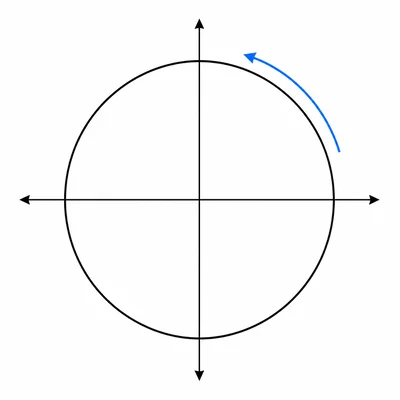
A particle moves according to x = 4 cos t and y = 4 sin t. Write a Cartesian equation for its path and describe the graph.
- 3
For the parametric equations x = t^2 + 1 and y = t - 3, eliminate the parameter t and write the equation in terms of x and y.
- 4
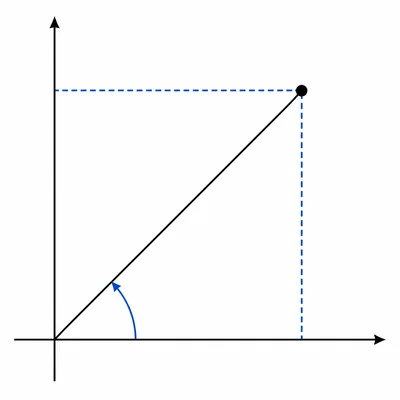
A point has polar coordinates (5, pi/6). Convert the point to Cartesian coordinates.
- 5
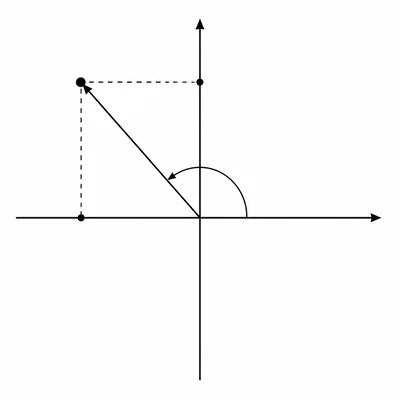
Convert the Cartesian point (-3, 3 root 3) to polar coordinates with r > 0 and 0 less than or equal to theta less than 2pi.
- 6
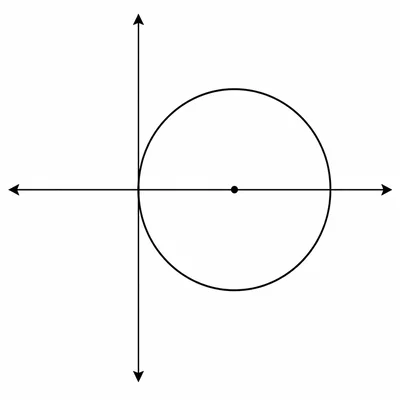
Rewrite the polar equation r = 6 cos theta in Cartesian form and identify the graph.
- 7
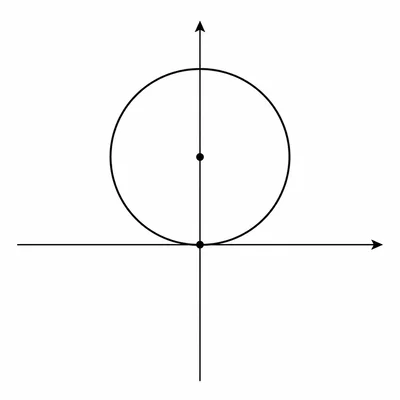
Rewrite the polar equation r = 4 sin theta in Cartesian form and identify the graph.
- 8
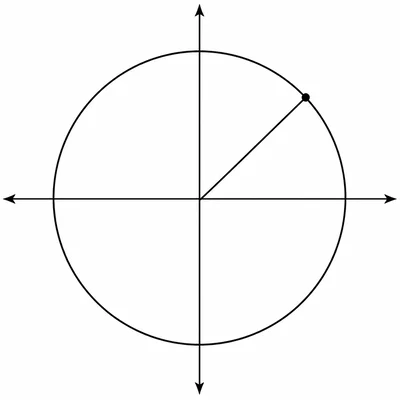
Find a polar equation for the circle x^2 + y^2 = 25.
- 9
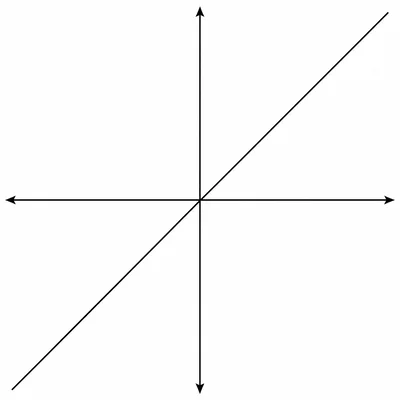
Find a polar equation for the line y = x.
- 10
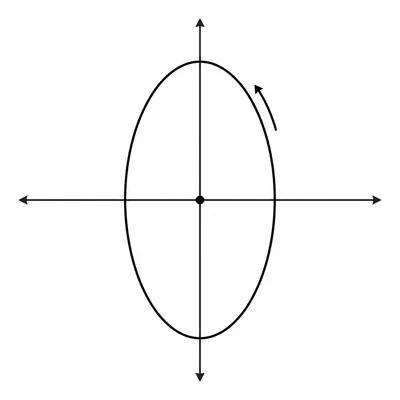
A particle moves with x = 2 cos t and y = 3 sin t for 0 less than or equal to t less than 2pi. Write a Cartesian equation for the path and describe the graph.
- 11
For the polar equation r = 2 + 2 cos theta, find the value of r when theta = 0, pi/2, and pi.
- 12
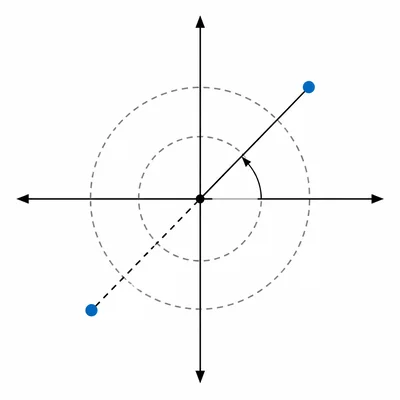
A point is given in polar form as (-4, pi/3). Rewrite the point using a positive radius.
- 13
Determine the slope of the line tangent to the parametric curve x = t^2 + 1 and y = 3t - 2 at t = 2.
- 14
Find dy/dx for the parametric equations x = sin t and y = cos t.
- 15
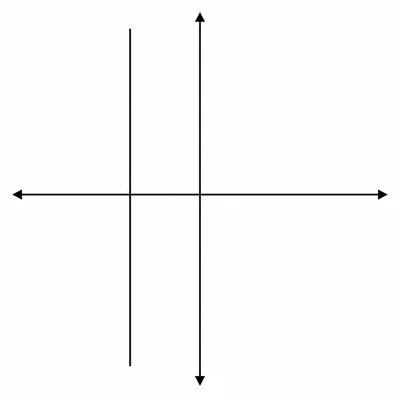
Convert the Cartesian equation x = -2 to a polar equation.