Practice applying Newton's law of universal gravitation and circular motion ideas to planets, moons, and satellites.
Read each problem carefully. Use G = 6.67 × 10^-11 N·m^2/kg^2 unless another value is given. Show your work and include units in your answers.
Calculating gravitational force, field strength, orbital speed, and period
Physics - Grade 9-12
- 1
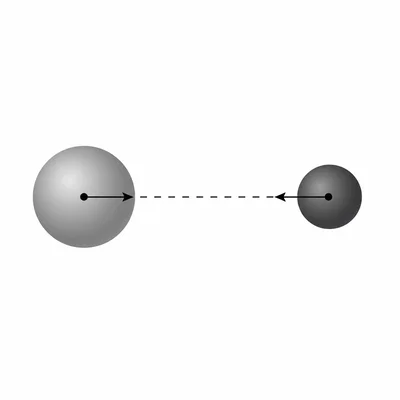
Two students model gravity using two spheres. Sphere A has a mass of 4.0 kg, sphere B has a mass of 6.0 kg, and their centers are 0.50 m apart. Calculate the gravitational force between them.
- 2
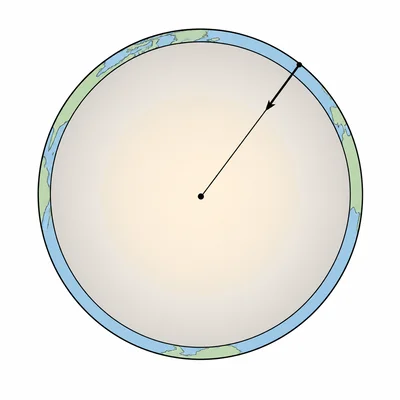
Earth has a mass of 5.97 × 10^24 kg and a radius of 6.37 × 10^6 m. Calculate the gravitational field strength at Earth's surface.
- 3
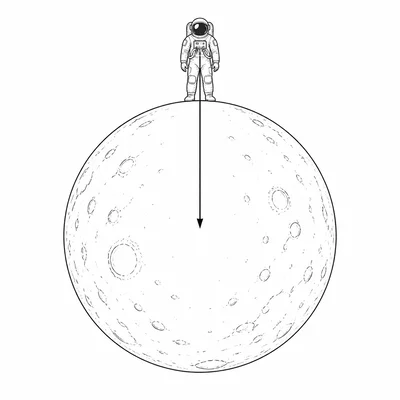
A 70.0 kg astronaut stands on the surface of a planet where the gravitational field strength is 3.7 N/kg. Calculate the astronaut's weight on that planet.
- 4
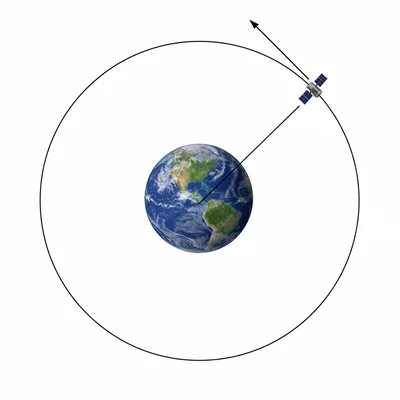
A satellite is in a circular orbit around Earth at a distance of 7.00 × 10^6 m from Earth's center. Use Earth's mass as 5.97 × 10^24 kg. Calculate the satellite's orbital speed.
- 5
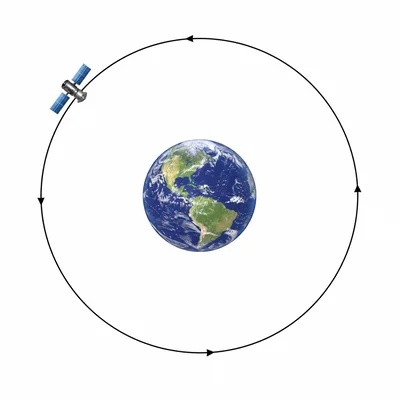
Using the satellite in problem 4 with orbital radius 7.00 × 10^6 m and speed 7.55 × 10^3 m/s, calculate the time for one complete orbit in seconds.
- 6
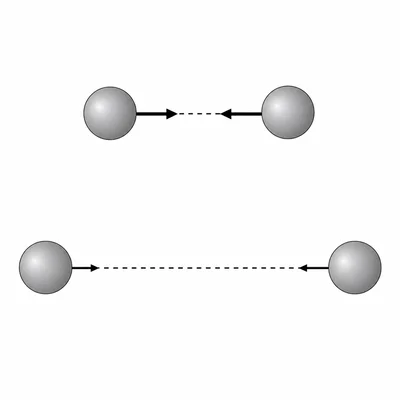
If the distance between two objects doubles while their masses stay the same, how does the gravitational force between them change?
- 7
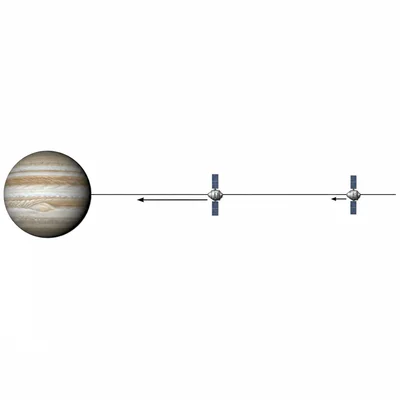
A spacecraft moves from a distance r from a planet's center to a distance 3r. How does the gravitational field strength change?
- 8
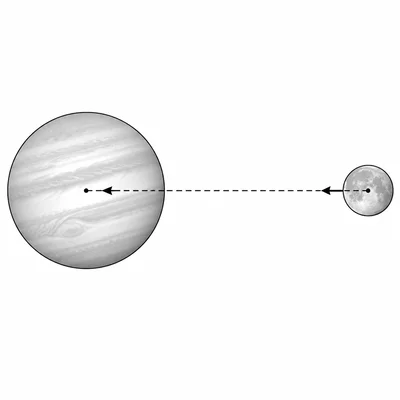
A moon of mass 7.35 × 10^22 kg orbits a planet of mass 5.97 × 10^24 kg. The distance between their centers is 3.84 × 10^8 m. Calculate the gravitational force between them.
- 9
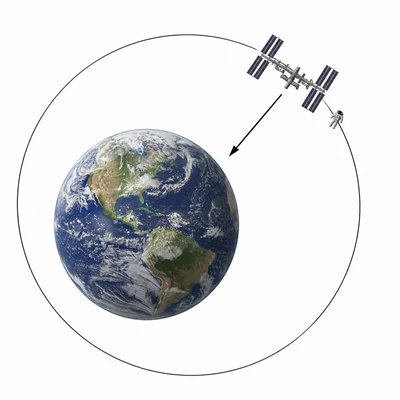
Explain why an astronaut in the International Space Station feels weightless even though Earth's gravity is still acting on the astronaut.
- 10
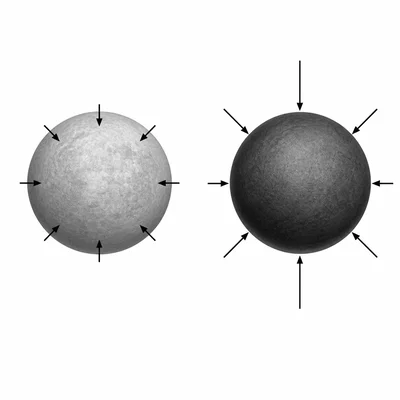
A planet has twice Earth's mass and the same radius as Earth. Compared with Earth, what is the gravitational field strength at the planet's surface?
- 11
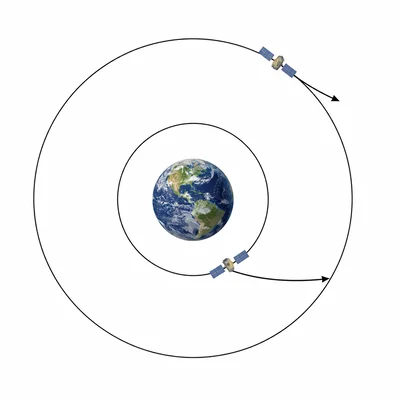
A satellite orbiting Earth moves to a higher circular orbit. Describe how its orbital speed and orbital period change.
- 12
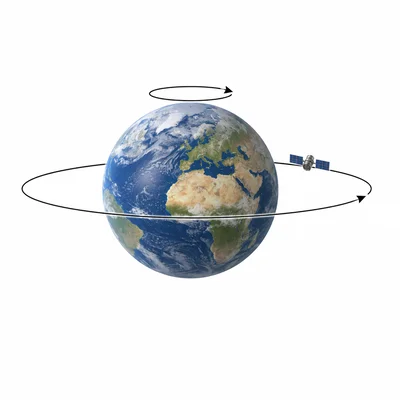
A geostationary satellite stays above the same point on Earth's equator. Explain the two main orbital conditions needed for this to happen.