Jump Distance on Other Planets
Enter your Earth jump height and body mass, then explore how gravity changes everything. See your jump height, hang time, and long jump distance on 14 worlds across the solar system.
Jump Parameters
Tip, average person jumps 0.4 - 0.6 m
Jump Height Comparison
Click any arc to select that body. Earth shown as dashed reference.
Select a Destination
Planets
Moons
Dwarf Planets
Moon
Surface gravity 1.62 m/s² (0.165g)
150 million km (orbits Earth)
The Science of Jumping on Other Worlds
Gravity and Jumping
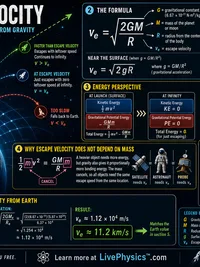
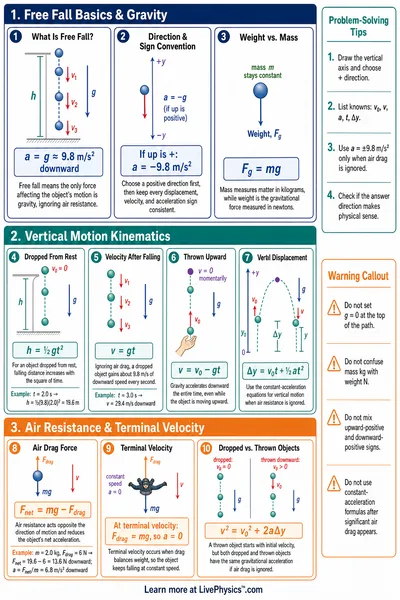
When you jump on Earth, your legs push against the ground and launch you upward with a fixed takeoff speed. That takeoff speed depends only on how hard you push - not on gravity.
On any other planet, your muscles work the same way. Your takeoff speed stays the same. But the planet pulls you back down more slowly (lower g) or more quickly (higher g).
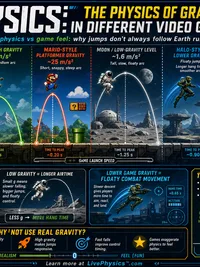
Jump height scales as 1/g. Halve the gravity and you jump twice as high. On the Moon (g = 1.62 m/s²) a 0.5 m Earth jump becomes about 3 m.
Surface Gravity Varies Widely
Surface gravity depends on a body's mass and radius. Two objects can have similar masses but very different gravities if their sizes differ.
| Body | g (m/s²) | vs Earth |
|---|---|---|
| Ceres | 0.27 | 0.03x |
| Pluto | 0.62 | 0.06x |
| Moon | 1.62 | 0.17x |
| Mars | 3.72 | 0.38x |
| Earth | 9.81 | 1.00x |
| Jupiter | 24.79 | 2.53x |
Gravity ranges from 0.27 m/s² on Ceres (asteroid belt) to 24.79 m/s² on Jupiter - nearly 92 times the difference.
Weight vs Mass
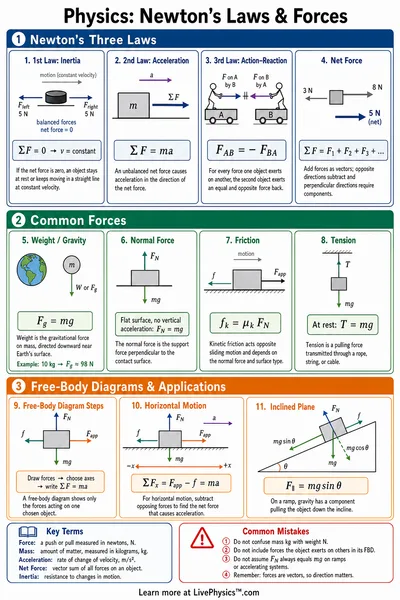
Mass is how much matter you contain. It stays the same everywhere in the universe. A 70 kg person is 70 kg on the Moon, on Mars, and on Jupiter.
Weight is the force gravity exerts on your mass. It equals mass multiplied by g. On the Moon you weigh about 1/6 of your Earth weight. On Jupiter you weigh 2.5 times more.
This is why astronauts on the Moon could carry heavy backpacks with relative ease - their mass was the same, but their weight was only 1/6.
Hang Time
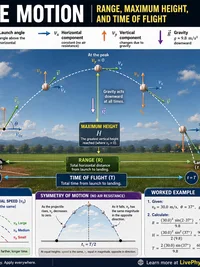
Hang time is the total time you spend airborne. It follows the same 1/g scaling as jump height. Lower gravity means longer time in the air.
A typical 0.64-second Earth jump becomes
- Moon about 3.9 seconds
- Mars about 1.7 seconds
- Pluto over 11 seconds
- Ceres over 47 seconds
On Ceres, a single jump would keep you airborne for nearly a minute. You could almost run while floating between steps.
The Long Jump
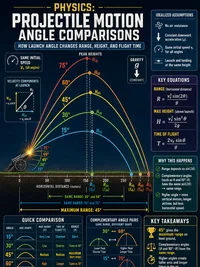
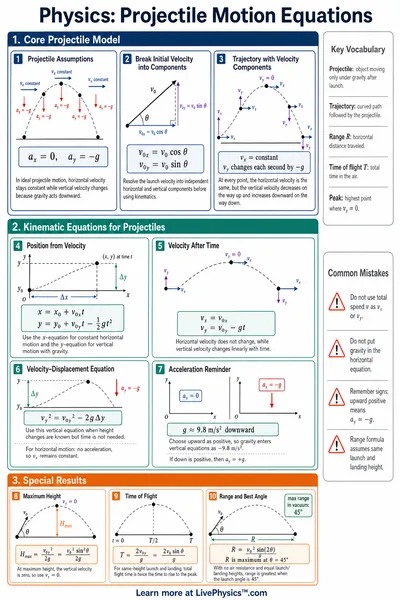
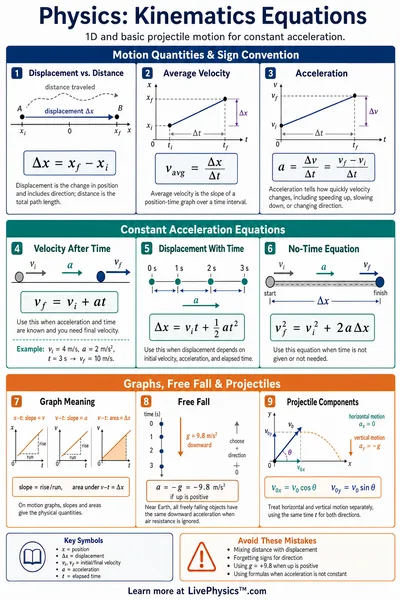
For a long jump at the optimal 45° takeoff angle, the range formula is R = v² / g. Halving gravity doubles the distance.
The human long jump world record is 8.95 m (set by Mike Powell in 1991). On the Moon that same jump would cover approximately 54 metres - over half a football field.
On Ceres or Pluto the numbers become extraordinary. A normal standing long jump could send you 200-400 metres. With enough horizontal speed, you could orbit a small asteroid entirely.