Explore how stress affects the nervous system, how the body responds to challenges, and how healthy coping strategies can support well-being.
Read each problem carefully. Use complete sentences when explaining psychological concepts. Show your thinking in the space provided.
How the body responds to stress and how coping strategies help
Psychology - Grade 9-12
- 1
Define stress in psychological terms. Include the difference between a stressor and a stress response in your answer.
- 2
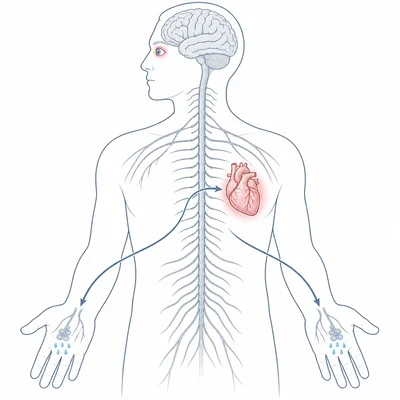
A student has an important presentation in class. Their heart rate increases, their palms sweat, and they feel more alert. Identify which branch of the autonomic nervous system is most active and explain why.
- 3
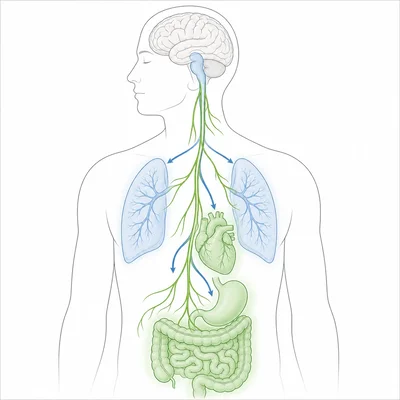
Explain how the parasympathetic nervous system helps the body recover after a stressful event.
- 4
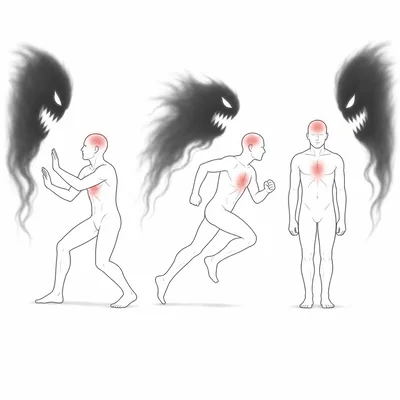
Describe the fight, flight, or freeze response. Give one example of how each reaction might appear in a real-life situation.
- 5
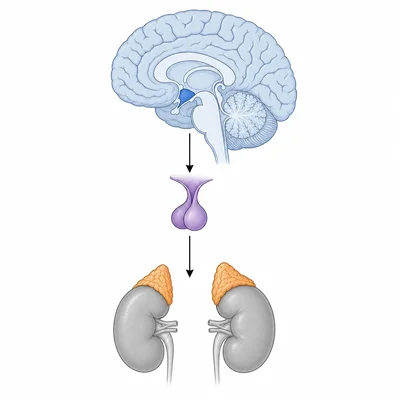
The HPA axis involves the hypothalamus, pituitary gland, and adrenal glands. Explain the basic role of the HPA axis in the stress response.
- 6
Compare acute stress and chronic stress. Include one possible example of each.
- 7
Explain why stress is not always harmful. Use the term eustress in your answer.
- 8
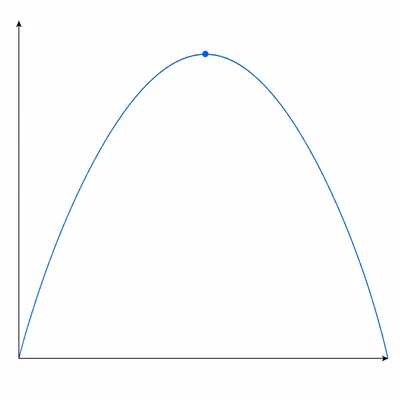
A graph shows performance increasing as stress rises from low to moderate levels, then decreasing when stress becomes too high. Explain what this pattern suggests about stress and performance.
- 9
Identify whether each coping strategy is problem-focused or emotion-focused: making a study schedule, practicing deep breathing, asking a teacher for clarification, and listening to calming music. Explain your choices.
- 10
A student feels overwhelmed by a long-term project and keeps avoiding it. Explain how avoidance can reduce stress in the short term but increase stress in the long term.
- 11
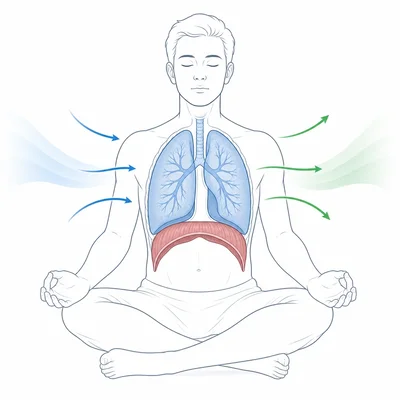
Describe one healthy coping strategy that could help calm the nervous system during stress. Explain how it may affect the body or mind.
- 12
A teenager says, "I failed one quiz, so I am terrible at this subject and will never improve." Identify the cognitive distortion in this statement and rewrite it in a more balanced way.
- 13
Explain how social support can reduce the effects of stress. Include at least two types of support a person might receive.
- 14
Chronic stress can affect sleep, attention, mood, and physical health. Choose two of these areas and explain how long-term stress might interfere with them.
- 15
Create a short stress management plan for a high school student preparing for final exams. Include one problem-focused strategy, one emotion-focused strategy, and one source of support.