Practice describing primary and secondary succession, identifying pioneer species, and explaining how ecosystems recover and change after disturbance.
Read each problem carefully. Answer in complete sentences and explain your reasoning when needed.
How ecosystems change over time
Biology - Grade 9-12
- 1
Define ecological succession in your own words.
- 2
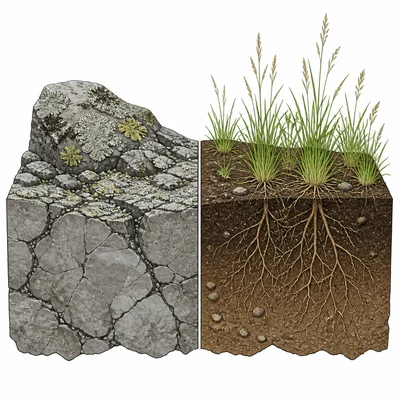
Explain the difference between primary succession and secondary succession.
- 3
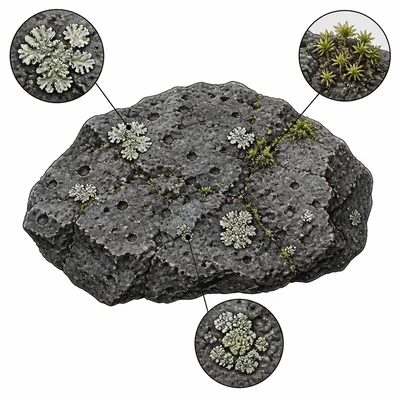
A volcanic eruption covers land with new rock. Which type of succession will most likely occur first, and why?
- 4
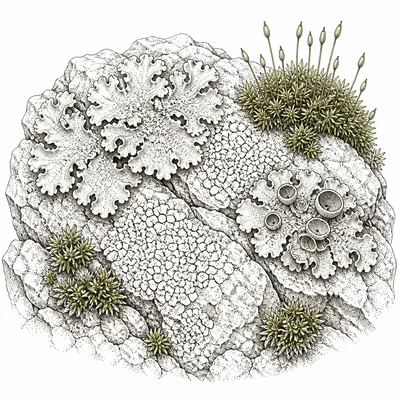
Name one common pioneer species and explain why it is successful early in succession.
- 5
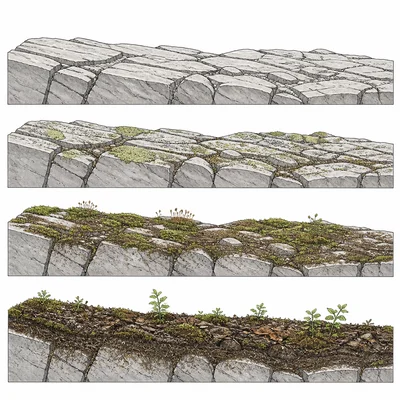
Describe how soil forms during primary succession.
- 6
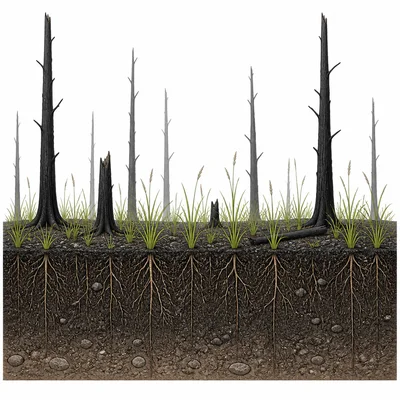
After a forest fire, grasses begin to grow in the burned area within a year. What does this suggest about the type of succession taking place?
- 7
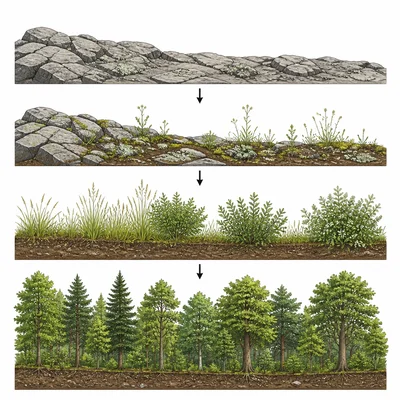
Put these stages in order from earliest to latest in a typical land succession: shrubs, grasses, mature forest, pioneer species.
- 8
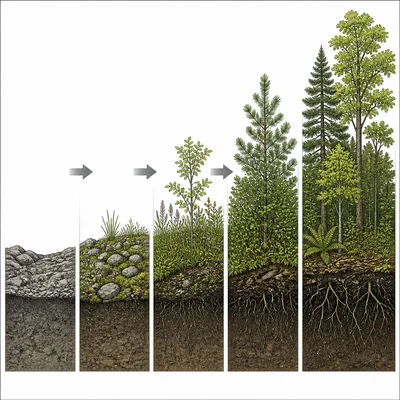
Explain why biodiversity often increases as succession continues.
- 9
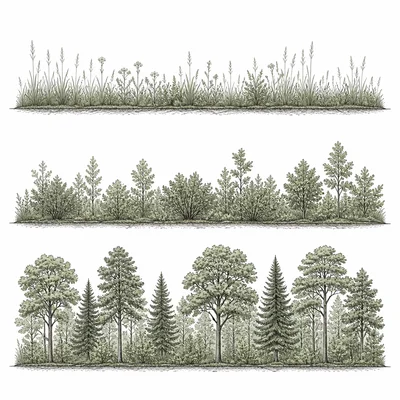
A farmer stops using a field, and over many years the field becomes a forest. Describe one likely sequence of changes in plant life.
- 10
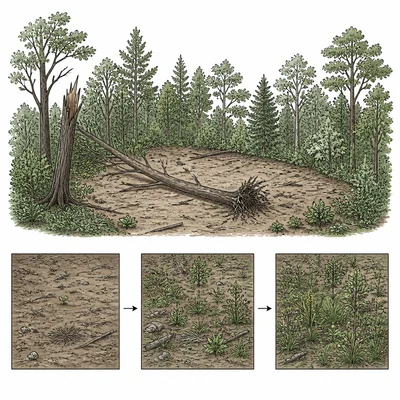
Why are disturbances such as fires, floods, or storms important in many ecosystems?
- 11
Some scientists prefer the term stable community instead of climax community. Explain why this change in wording can be helpful.
- 12
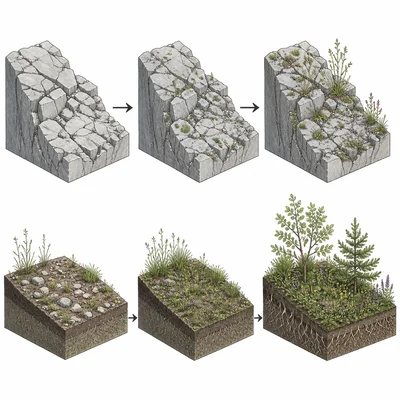
Compare the speed of recovery in primary and secondary succession and explain the reason for the difference.