Energy Transfer & Collisions Playground
Energy never disappears - it just changes form and moves to new places. Discover how rubbing creates heat, how collisions transfer motion, and how the sun's light becomes warmth.
Energy Transfer Explorer
Tap a card to see how energy changes form.
🌡️Heat🔊Sound💡Light🏃Motion⚡Electrical
Tap any card to see how energy moves from one form to another.
🤲
rub hands
🌡️HeatTap to explore
👏
clap hands
🔊SoundTap to explore
💡
turn on light
💡LightTap to explore
⚽
push ball
🏃MotionTap to explore
☀️
sun warms skin
🌡️HeatTap to explore
🎸
guitar string plucked
🔊SoundTap to explore
🔋
phone charging
⚡ElectricalTap to explore
🔥
fire burns
🌡️HeatTap to explore
⚡
thunder heard
🔊SoundTap to explore
📡
microwave heats food
🌡️HeatTap to explore
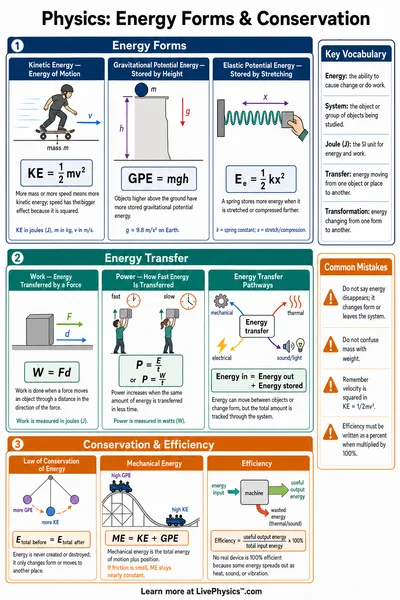
Energy never disappears - it just changes form. This is called the Law of Conservation of Energy!
NGSS 4-PS3-2 / 4-PS3-3 | Grades 3-5
Energy Reference
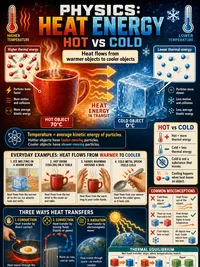
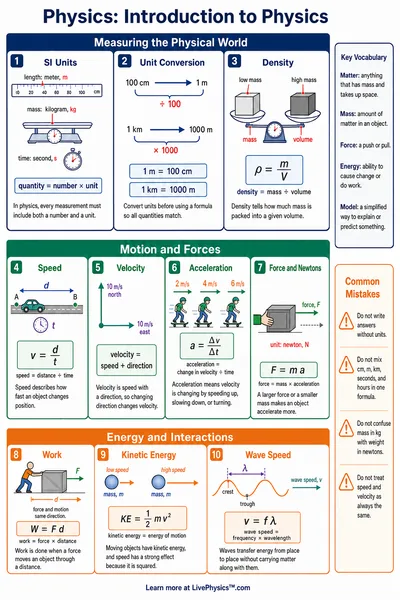
Types of Energy Transfer
- Heat energy moves from hot to cold objects
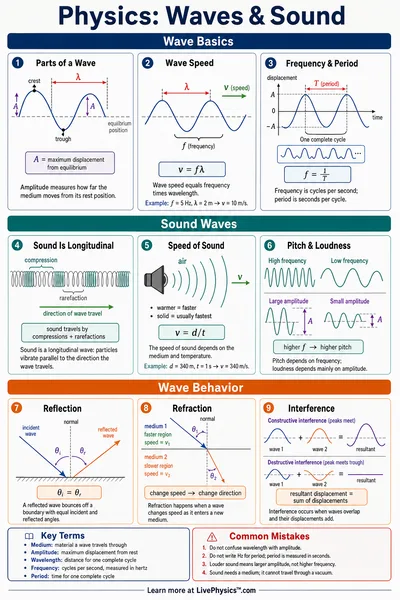
- Sound vibrations travel through air or solids
- Light electromagnetic waves carry energy from the sun
- Motion moving objects transfer energy on contact
- Electrical electrons carry energy through circuits
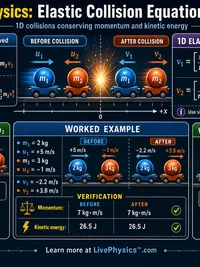
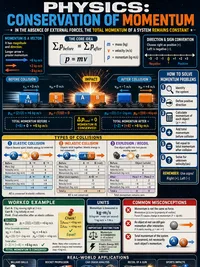
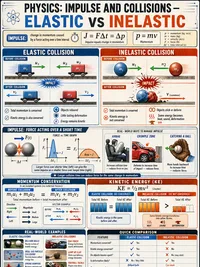
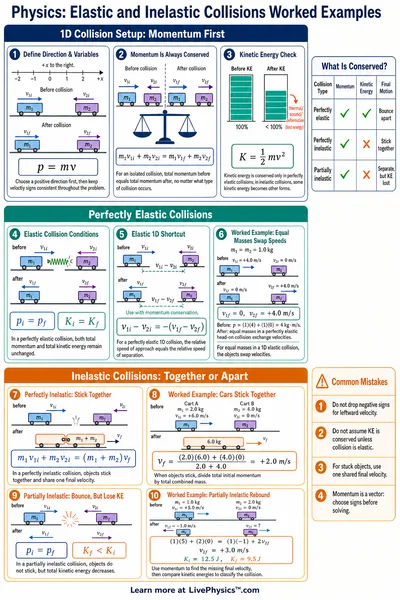
Collisions
When objects collide, momentum is always conserved.
- Heavier objects have more momentum at the same speed
- A fast light ball can push a slow heavy ball
- Elastic, objects bounce off (billiard balls)
- Inelastic, objects stick together (clay)
Conservation of Energy
Energy cannot be created or destroyed - only converted from one form to another.
- Rubbing hands, motion energy becomes heat
- Clapping, motion energy becomes sound
- A light bulb, electrical energy becomes light
- A ball collision, kinetic energy transfers between objects
NGSS Connections
- 4-PS3-2 make observations to show energy transferred from one object to another
- 4-PS3-3 ask questions and predict outcomes about the changes in energy in a system
- Applies to grades 3-5 physical science
- Supports hands-on investigation of heat, sound, light, and motion
Related Content
Visual Explainers
How Do Solar Panels Turn Sunlight Into Electricity?
Light energy becomes moving charge
Why Can You Hear Voices Through a Closed Door?
Sound can make a door vibrate
How Do Airbags Slow You Down Safely?
A crash stretched over more time
Why Do Things Fall at the Same Rate?
Gravity gives falling objects the same acceleration
Related Tools
Projectile Motion Calculator
Calculate trajectory, range, max height, and time of flight for projectile motion. Visualize the parabolic path with an interactive time slider and velocity vectors.
Circuit Calculator
Calculate voltage, current, resistance, and power with Ohm's law. Build series and parallel resistor networks with step-by-step equivalent resistance.
Lens & Mirror Calculator
Visualize image formation with interactive ray diagrams for lenses and mirrors.
Kinematics Solver
Solve constant-acceleration problems with step-by-step solutions and motion graphs.
Related Labs
Heat Transfer Lab
Visualize conduction, convection, and radiation with a temperature heatmap. Compare materials with different thermal conductivities using Fourier's law
Pushes & Motion Lab
Apply pushes and pulls to different objects and observe how force type, strength, and direction change motion. Collect data and discover Newton's laws in action. Grades K-2.
Friction Ramp Lab
Place objects on an inclined ramp, change the angle and surface material, and calculate whether the object slides. Investigate static and kinetic friction with Newton's second law.
Waves & Secret Messages Lab
Explore wave amplitude and wavelength, discover which materials waves travel through, and decode secret flash-code messages. NGSS 4-PS4-3. Grades 3–5.