Practice explaining what happens when common materials are heated or cooled, including melting, freezing, and other changes.
Read each problem carefully. Use science words when you can. Show your thinking in the space provided.
Observing how temperature can change materials
Science - Grade 2-3
- 1
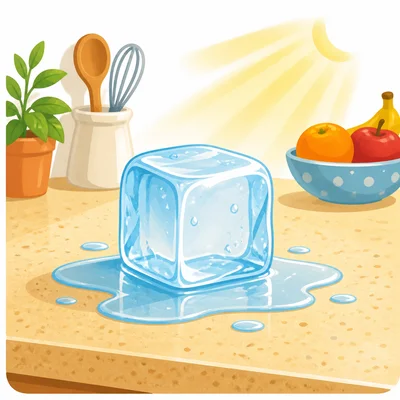
An ice cube is left on a warm kitchen counter. What change will happen to the ice cube, and why?
- 2
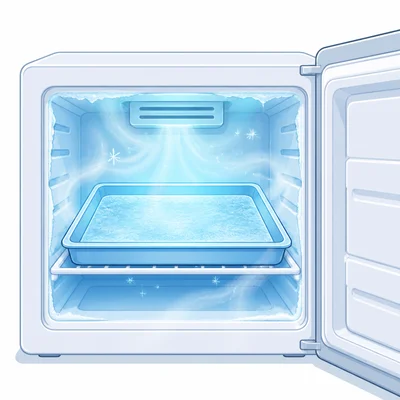
A tray of water is put into a freezer. What change will happen to the water after a few hours?
- 3
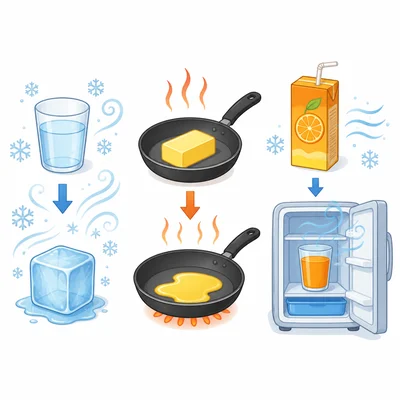
Circle the change caused by heating: water freezing into ice, butter melting in a pan, or juice getting colder in the refrigerator.
- 4
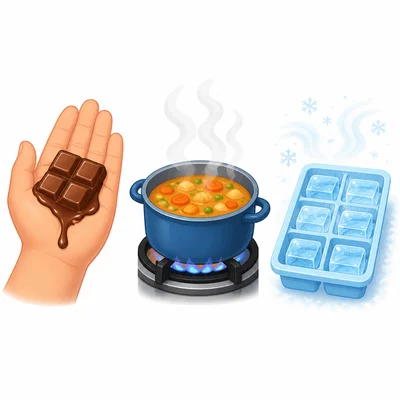
Circle the change caused by cooling: chocolate melting in your hand, soup getting hotter on the stove, or water turning into ice.
- 5
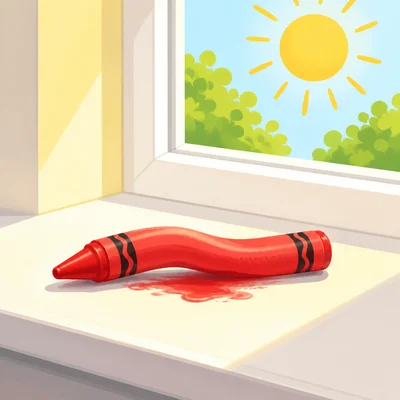
A crayon is left near a sunny window. It becomes soft and starts to lose its shape. Is this change caused by heating or cooling? Explain.
- 6
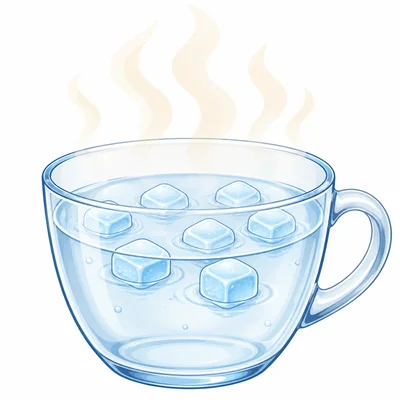
Mia pours warm water into a cup and then adds ice cubes. After a few minutes, the ice cubes are smaller. What happened?
- 7
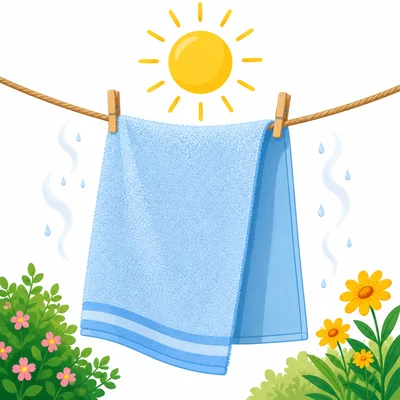
A wet towel is hung outside on a hot day. Later, the towel is dry. What happened to the water in the towel?
- 8
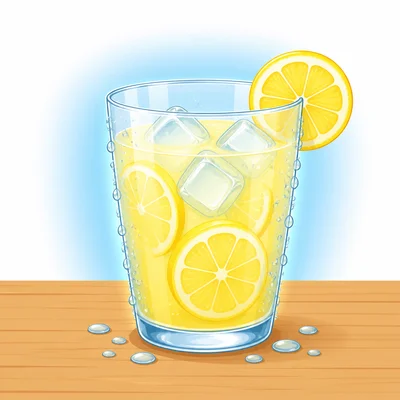
A glass of cold lemonade sits on a table. Water drops form on the outside of the glass. Did the lemonade leak? Explain what most likely happened.
- 9
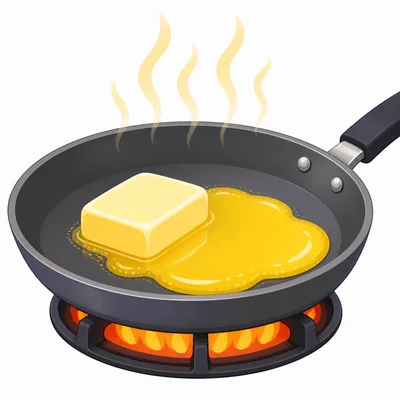
Write one example of a solid changing into a liquid when it is heated.
- 10
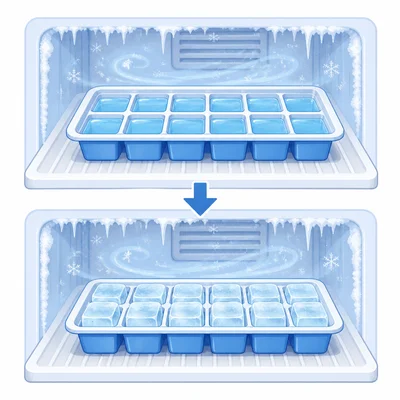
Write one example of a liquid changing into a solid when it is cooled.
- 11
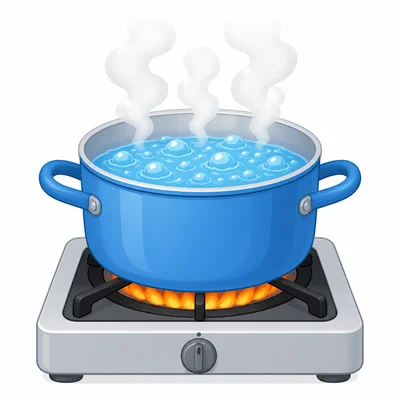
A pot of water is heated on a stove. After a while, steam rises from the pot. What change is happening to some of the water?
- 12
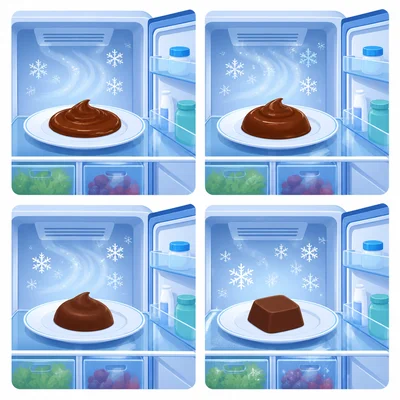
Liam puts a spoonful of melted chocolate in the refrigerator. Later, the chocolate is hard again. What caused this change?
- 13
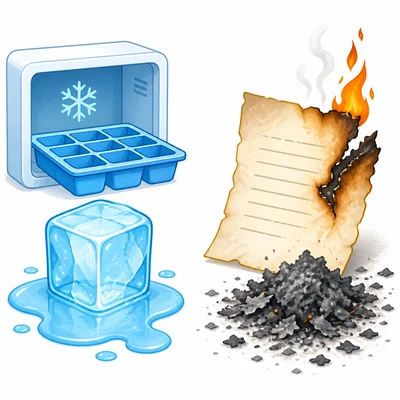
Some changes can be reversed. Choose one: ice melting into water or paper burning to ash. Which change can be reversed by cooling, and how?