Understanding States of Matter Playground
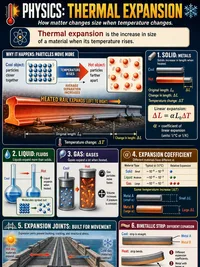
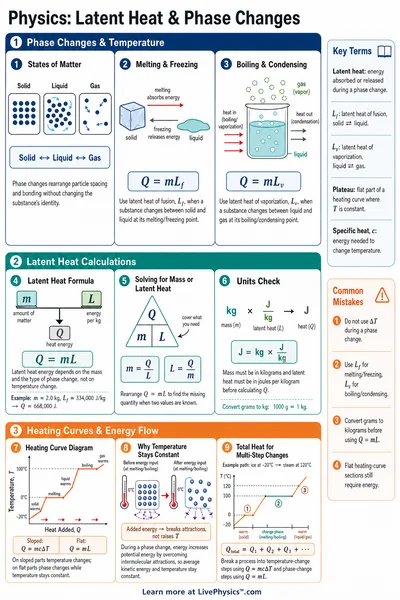
A particle model explains why materials can look very different while being made of the same substance. In a solid, attractions keep particles near fixed positions, so the material resists changes in shape. Particles still vibrate, and stronger heating makes those vibrations larger.
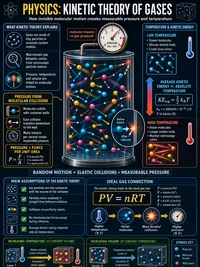
In a liquid, particles remain close together but can slide past one another. This lets a liquid flow while keeping nearly the same volume. In a gas, particles are far apart compared with their own size, so they spread out to fill any container.
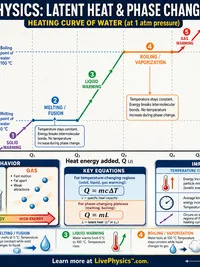
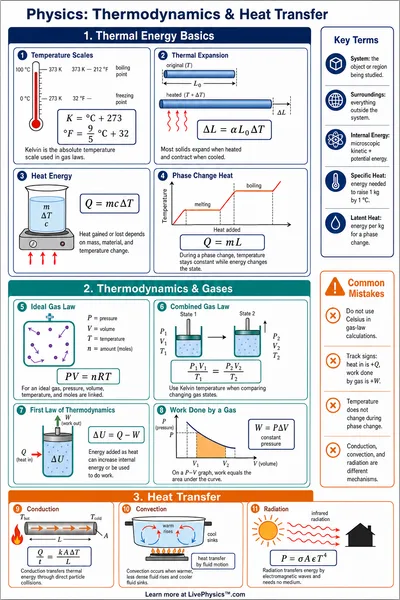
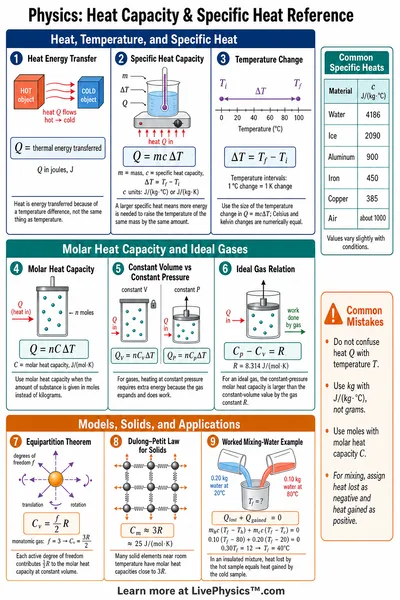
Temperature describes the average kinetic energy of particles. Kinetic energy is energy of motion, so a higher temperature usually means faster particle movement. During melting or boiling, however, added energy does not mainly make particles move faster.
Much of it is used to weaken attractive forces between particles or separate them further. This energy is called latent heat.
A flat part of a heating curve does not mean heating has stopped. It shows that energy is changing the arrangement of particles rather than raising the temperature.
Boiling depends on pressure as well as temperature. A liquid boils when its particles can form vapour bubbles that survive within the liquid. Lower outside pressure makes this easier, which is why water boils at a lower temperature high on a mountain.
Higher pressure makes boiling harder, so a pressure cooker can cook food at a higher temperature. Water has another important exception to the usual pattern. Its solid form is less dense than its liquid form because ice particles form an open structure, allowing ice to float.
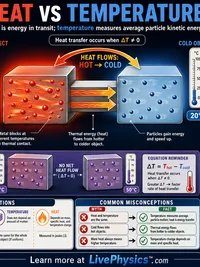
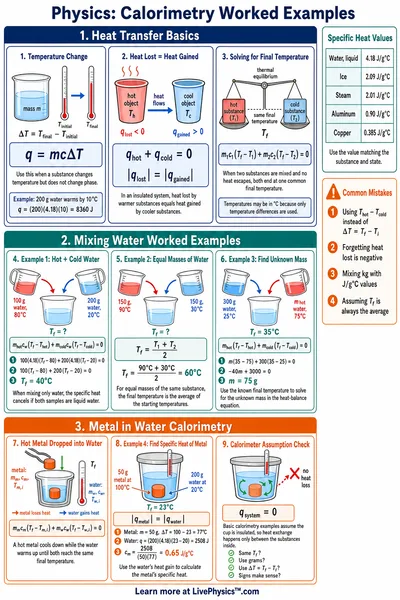
It helps to separate heat from temperature when studying these changes. Heat is energy transferred from a warmer object to a cooler object, while temperature tells how energetic particle motion is on average. Gas pressure comes from particles colliding with container walls, and compressing a gas forces collisions to happen more often.
Watch for evidence in everyday life, such as condensation on a cold drink, frost in a freezer, or puddles drying without boiling. A change of state is usually reversible and does not create a new substance, unlike burning or rusting, which are chemical changes.