Practice applying the zeroth, first, second, and third laws of thermodynamics to real systems and scientific reasoning.
Read each problem carefully. Use complete sentences and show calculations when needed.
Understanding energy, entropy, and thermal systems
Physics - Grade 9-12
- 1
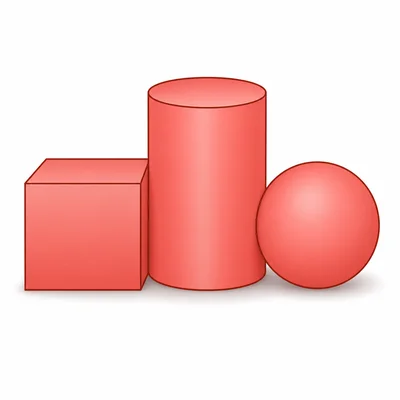
State the zeroth law of thermodynamics in your own words and explain what it means for measuring temperature.
- 2
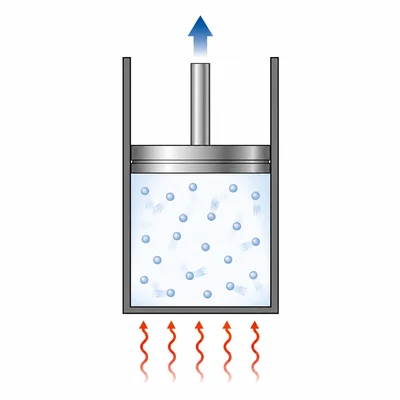
A gas in a cylinder absorbs 250 J of heat and does 90 J of work on its surroundings. Use the first law of thermodynamics to find the change in internal energy of the gas.
- 3
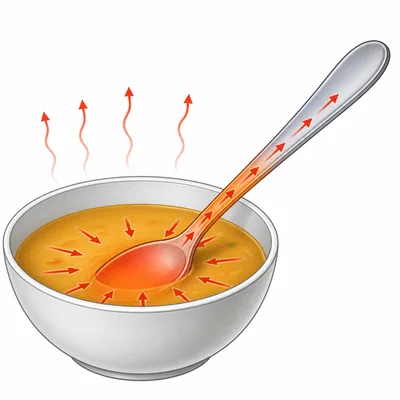
A metal spoon is placed in a cup of hot soup. Identify the direction of thermal energy transfer and explain which law of thermodynamics helps define when transfer stops.
- 4
Describe the first law of thermodynamics and explain how it is related to conservation of energy.
- 5
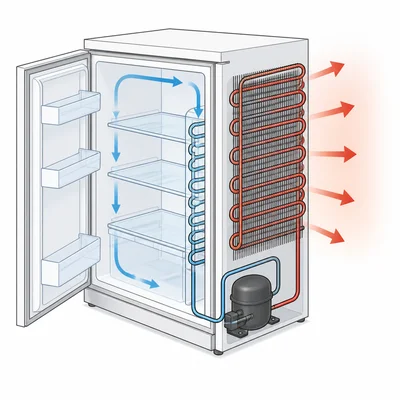
A refrigerator removes heat from its cold interior and releases it into a warmer kitchen. Explain why this process does not violate the second law of thermodynamics.
- 6
What does the second law of thermodynamics say about entropy in an isolated system?
- 7
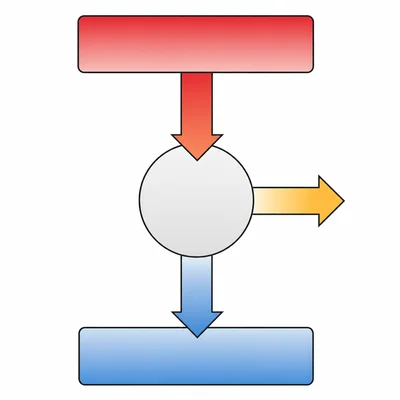
A heat engine takes in 600 J of heat from a hot reservoir and releases 420 J to a cold reservoir. How much work does the engine do?
- 8
Explain why no heat engine can be 100 percent efficient according to the second law of thermodynamics.
- 9
State the third law of thermodynamics and explain what it says about reaching absolute zero.
- 10
A student says that if a process decreases the entropy of one object, then the second law is broken. Explain why this statement is incorrect.
- 11
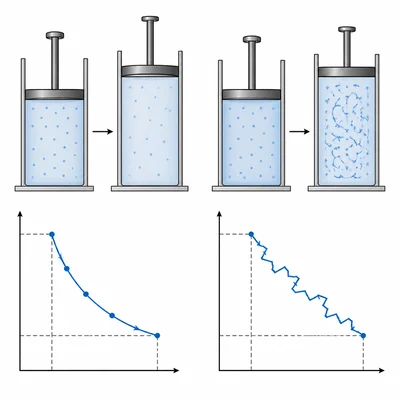
Compare a reversible process and an irreversible process in terms of entropy and energy transfer.
- 12
Give one real-world example for each of the following: the zeroth law, the first law, and the second law of thermodynamics.