Practice using metric units, reading measurement tools, converting between units, and explaining measurement choices in science investigations.
Read each problem carefully. Show your work in the space provided and include units in every measurement answer.
Using SI units, tools, conversions, and careful measurements
Science - Grade 6-8
- 1
Name the most common metric unit you would use to measure each quantity: length of a pencil, mass of a backpack, volume of water in a cup, and temperature of a classroom.
- 2
Convert 4.5 kilometers to meters. Show the conversion factor you used.
- 3
Convert 750 milligrams to grams. Show your work.
- 4
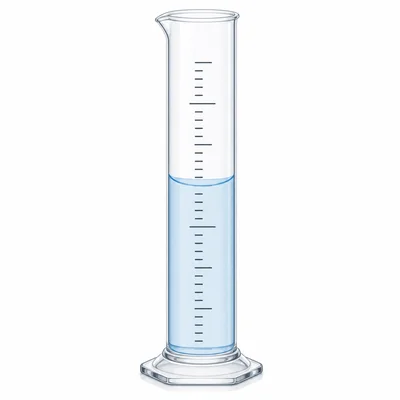
A graduated cylinder contains water. The bottom of the meniscus is halfway between the 36 mL and 38 mL marks. What volume should be recorded?
- 5
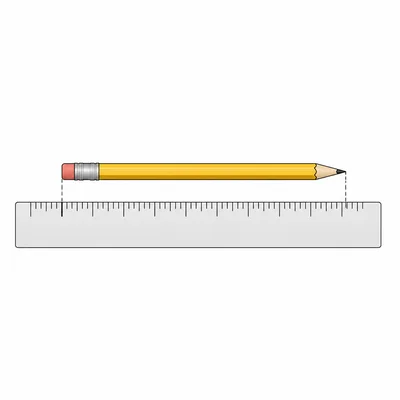
A pencil starts at the 2.0 cm mark on a ruler and ends at the 14.6 cm mark. What is the length of the pencil?
- 6
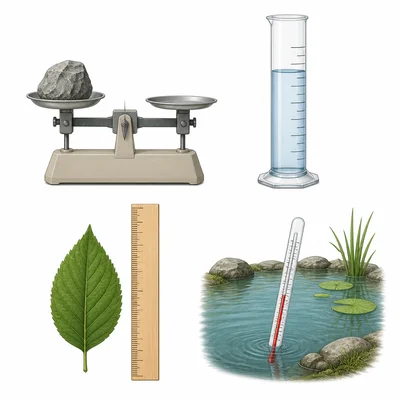
Choose the best tool for each measurement: the mass of a rock, the volume of 50 mL of water, the length of a leaf, and the temperature of pond water.
- 7
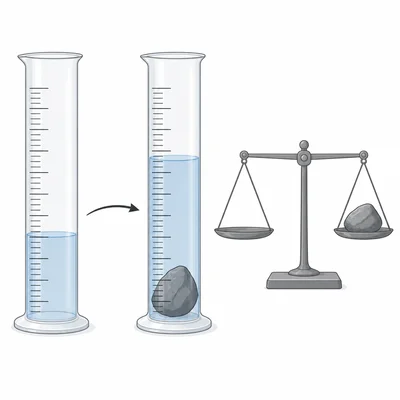
A rock is placed into a graduated cylinder with 20 mL of water. The water level rises to 26 mL. The rock has a mass of 54 g. What is the volume of the rock, and what is its density?
- 8
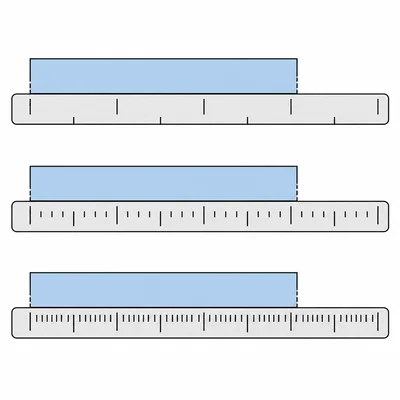
A student records the same length as 12 cm, 12.0 cm, and 12.00 cm in three different trials using different rulers. Which measurement shows the greatest precision? Explain your answer.
- 9
Convert 0.35 liters to milliliters. Show your work.
- 10
A thermometer reads 25 degrees Celsius. Convert this temperature to kelvins using K = degrees Celsius + 273.15.
- 11
Put these metric prefixes in order from largest to smallest: milli-, kilo-, centi-, base unit, micro-.
- 12
Choose an appropriate metric unit for each item: the length of a school hallway, the length of an ant, the volume of a water bottle, and the mass of a paper clip.
- 13
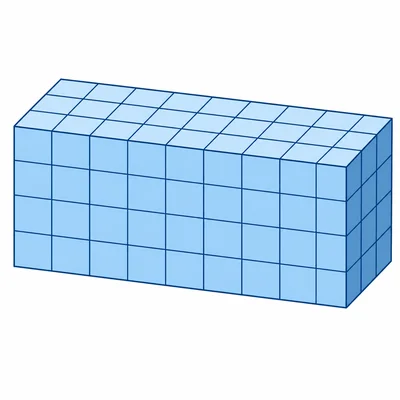
A rectangular block is 8 cm long, 3 cm wide, and 2 cm tall. What is the volume of the block?
- 14
The accepted boiling point of pure water at sea level is 100 degrees Celsius. A group measures it as 96 degrees Celsius. What is the percent error?
- 15
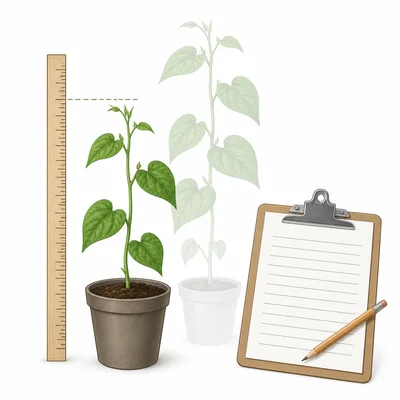
Design a simple measurement plan for tracking the growth of a bean plant for two weeks. Include the tool, unit, how often to measure, and one way to keep the data reliable.