Measurement Detectives Lab
Use an interactive ruler to measure virtual objects in inches and centimeters. Convert between the two systems, record your data, and display results on a line plot to find the range and mode.
Guided ExperimentMeasuring Objects in Inches and Centimeters
Before measuring, predict which object is longest and which is shortest. Predict how many centimeters long your favorite object is.
Write your hypothesis in the Lab Report panel, then click Next.
Controls
A standard pencil is about 7 and a half inches long when new.
Click the tick mark on the ruler that matches the length of this object.
Data Table
(0 rows)| # | Object | Length (in) | Length (cm) | Nearest ½ in | Nearest ¼ in |
|---|
Reference Guide
Reading a Ruler
Always start measuring from the 0 mark, not from the end of the ruler.
Each inch is divided into smaller marks
- Largest marks = whole inches (1, 2, 3...)
- Medium marks = half inches (1/2 = 0.5)
- Small marks = quarter inches (1/4 = 0.25)
- Smallest marks = eighth inches (1/8 = 0.125)
Count tick marks carefully and note which fraction mark the object ends at.
Inches vs. Centimeters
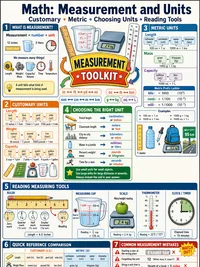
The US customary system uses inches and feet. The metric system uses centimeters and meters.
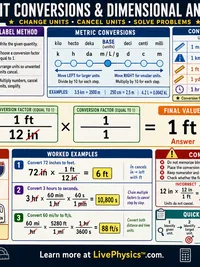
To convert inches to centimeters, multiply by 2.54.
To convert centimeters to inches, divide by 2.54.
Line Plot Basics
A line plot (dot plot) displays data on a number line. Each data point is shown as a dot above its value.
Key statistics from a line plot
- Range = largest value minus smallest value
- Mode = the value(s) with the most dots stacked
- Minimum = smallest value (leftmost dot)
- Maximum = largest value (rightmost dot)
Fraction Tick Marks on a Ruler
Between 0 and 1 inch there are fraction marks. Reading from left to right
Written as decimals, 0, 0.25, 0.5, 0.75, 1.0
When rounding, 0.3 inches rounds to 0.25 (nearest quarter) or 0.5 (nearest half).