Practice identifying and explaining major periodic table trends, including atomic radius, ionization energy, electronegativity, and metallic character.
Read each problem carefully. Use periodic trends to justify each answer with clear scientific reasoning.
Exploring patterns in atomic size, ionization energy, and electronegativity
Chemistry - Grade 9-12
- 1
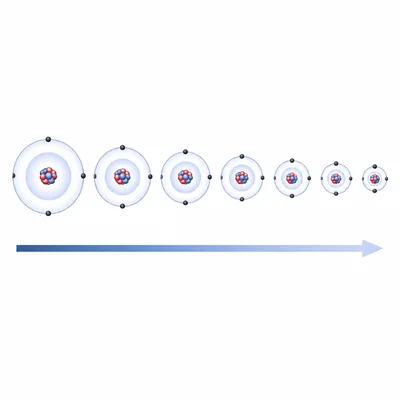
Describe the general trend in atomic radius as you move from left to right across a period.
- 2
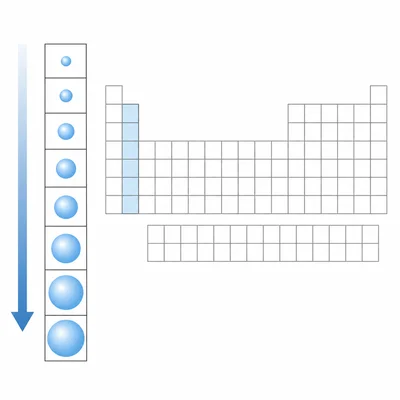
Describe the general trend in atomic radius as you move down a group.
- 3
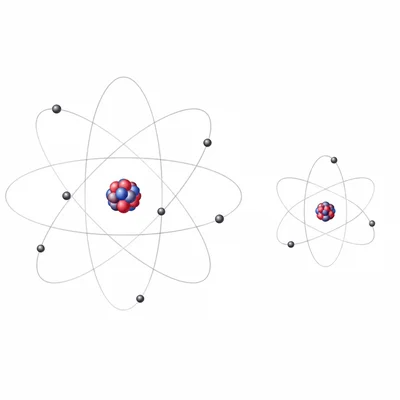
Which element has the larger atomic radius: sodium (Na) or chlorine (Cl)? Explain your answer.
- 4
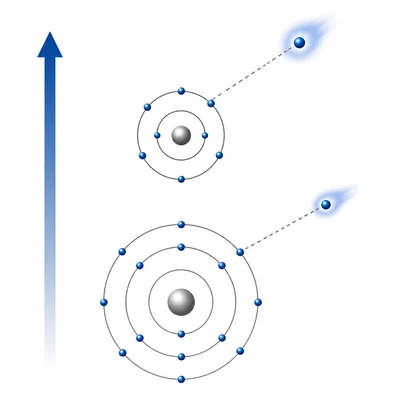
Which element has the higher first ionization energy: magnesium (Mg) or calcium (Ca)? Explain your answer.
- 5
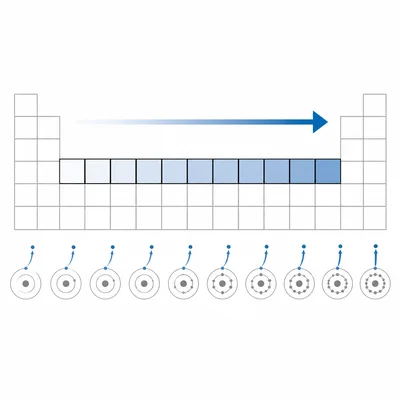
State the general trend in first ionization energy across a period from left to right.
- 6

State the general trend in electronegativity as you move down a group.
- 7
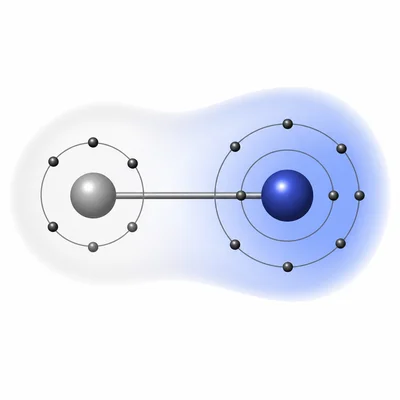
Which element is more electronegative: fluorine (F) or oxygen (O)? Explain your answer.
- 8
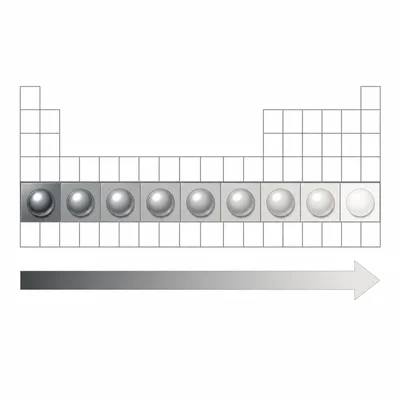
Compare the metallic character of elements as you move from left to right across a period.
- 9
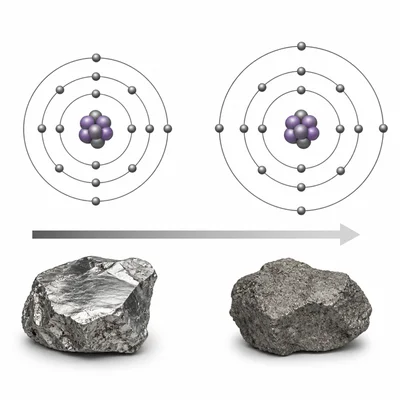
Which element is more metallic: potassium (K) or bromine (Br)? Explain your answer.
- 10
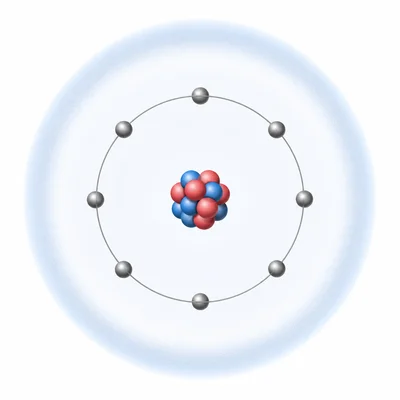
Explain why noble gases usually have very low chemical reactivity.
- 11
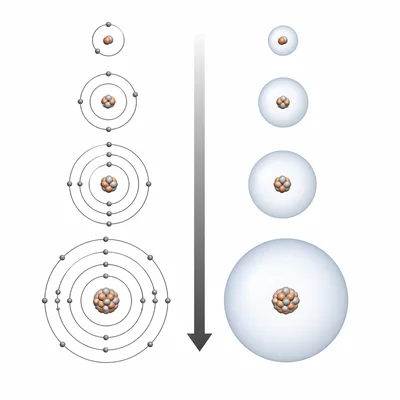
Which element would have the larger atomic radius: lithium (Li) or cesium (Cs)? Explain your answer.
- 12
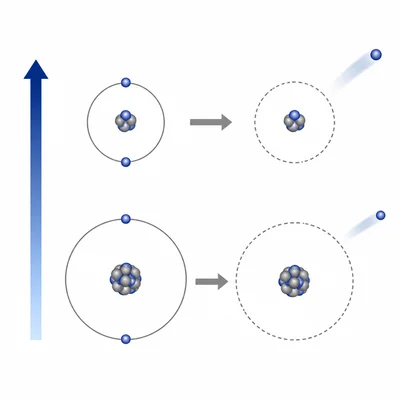
Which element has the higher ionization energy: neon (Ne) or argon (Ar)? Explain your answer.
- 13
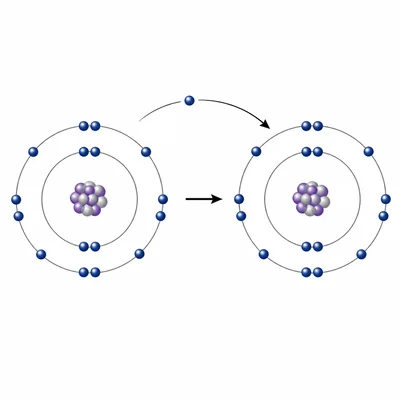
An element is located in Group 17 and Period 3. Predict whether it is likely to gain or lose an electron in a chemical reaction, and explain why.
- 14
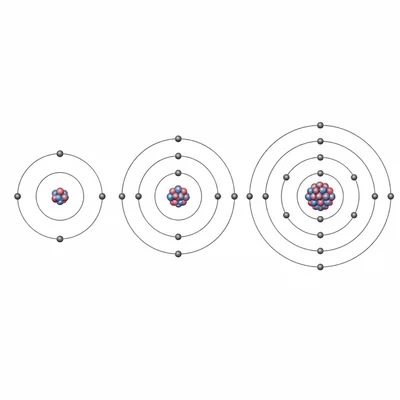
Why do elements in the same group often have similar chemical properties?
- 15
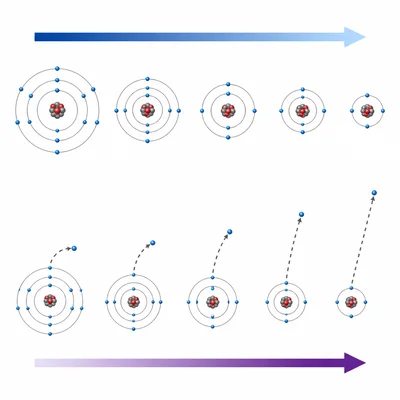
A student claims that atomic radius and ionization energy increase in the same direction across a period. Explain why this claim is incorrect.