Learn why sleep and dreams are important for the brain and body, including how sleep affects memory, emotions, growth, attention, and health.
Read each problem carefully. Write complete answers and use evidence from what you know about sleep, dreams, and the brain.
Exploring sleep stages, dreams, memory, mood, and health
Psychology - Grade 6-8
- 1
Explain two reasons why sleep is important for middle school students.
- 2
A student sleeps only 5 hours before a big test. Describe two ways this lack of sleep might affect the student during the test.
- 3
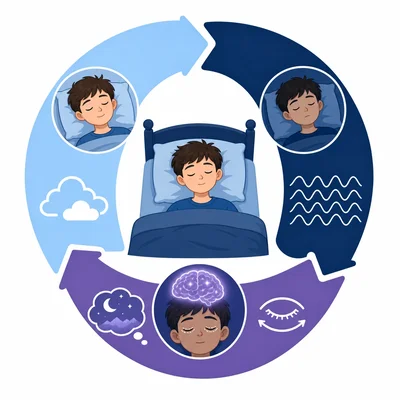
The sleep cycle includes different stages, including light sleep, deep sleep, and REM sleep. What is REM sleep, and why is it important?
- 4
Choose the better sleep habit and explain why it helps: A. Going to bed at a different time every night, or B. Going to bed around the same time every night.
- 5
What is one way dreams may help the brain deal with emotions?
- 6
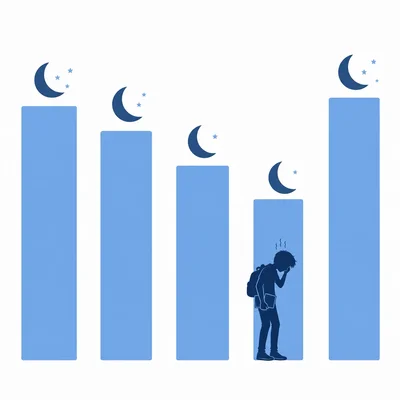
Look at a chart showing that a student sleeps 8 hours on Monday, 7 hours on Tuesday, 6 hours on Wednesday, 5 hours on Thursday, and 9 hours on Friday. What pattern do you notice, and what might happen to the student by Thursday?
- 7
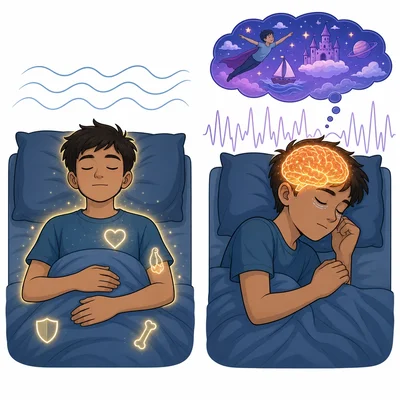
Describe the difference between deep sleep and REM sleep.
- 8
A friend says, "Dreams are useless because they are not real." Write a response that explains why dreams may still matter.
- 9
Name two things a person can do before bed to improve sleep quality.
- 10
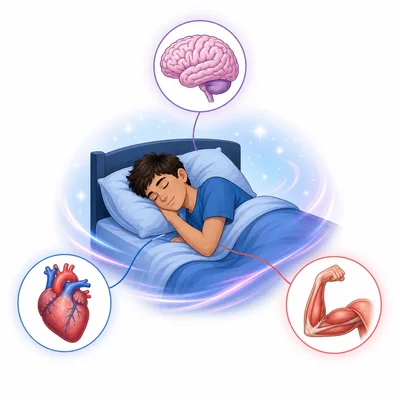
A diagram shows a brain, a heart, and muscles connected to a sleeping person. Explain how sleep can help each of these body systems.
- 11
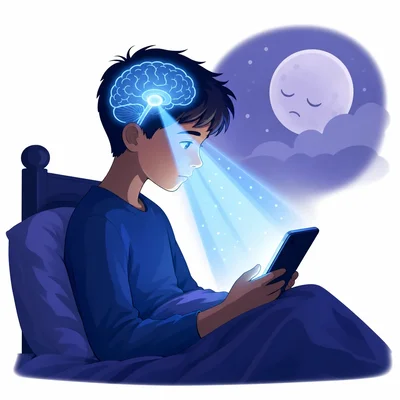
Why can using a phone or tablet right before bed make it harder to fall asleep?
- 12
Create a simple recommendation for a healthy sleep routine for a middle school student. Include at least three specific actions.