Practice explaining how sound travels and how vibrations affect pitch and volume.
Read each problem carefully. Write complete sentences when explaining your ideas.
Explore vibrations, sound waves, pitch, and volume
Science - Grade 2-3
- 1
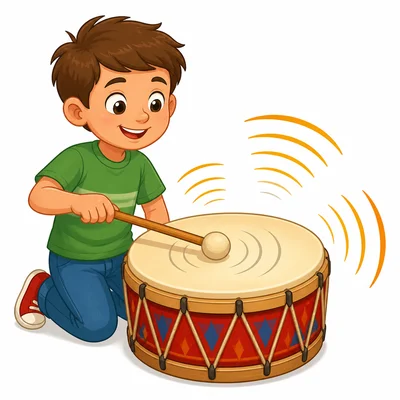
A drum makes a sound when you hit it. What is vibrating to make the sound?
- 2
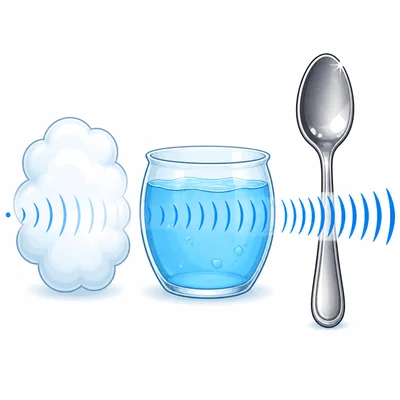
Sound can travel through air, water, and solids. Circle the material that sound travels through best: air, water, or a metal spoon.
- 3
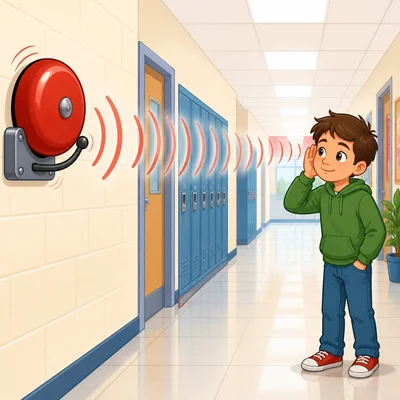
You hear a school bell from across the hallway. How did the sound get from the bell to your ears?
- 4
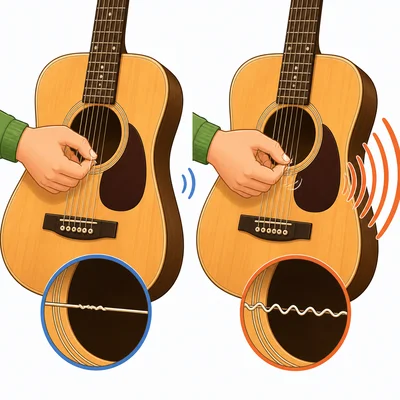
A guitar string is plucked softly. Then the same string is plucked harder. What changes about the sound?
- 5
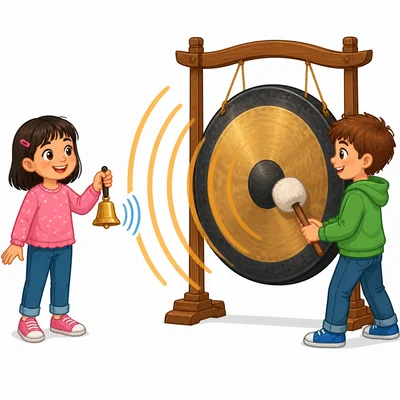
A tiny bell and a large gong are struck. Which one will probably make a higher pitch, and why?
- 6
Fill in the blank: Sound begins with something that is __________.
- 7
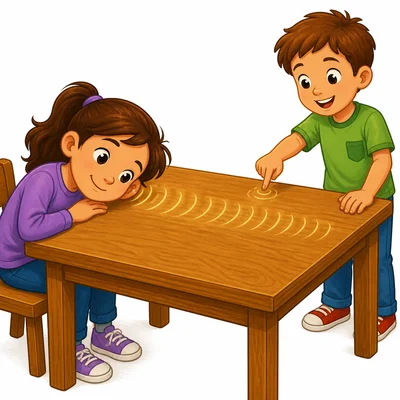
Mia puts her ear on a wooden table while her friend gently taps the other end. She hears the tapping clearly. Why does this happen?
- 8
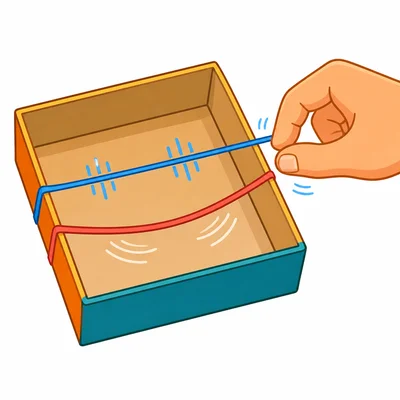
Two rubber bands are stretched over a box. One rubber band is tight and one is loose. Which rubber band will likely make the higher pitch when plucked?
- 9
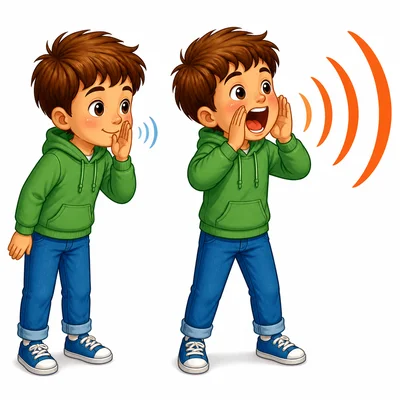
Sam whispers and then shouts the same word. What sound property changes: pitch or volume?
- 10
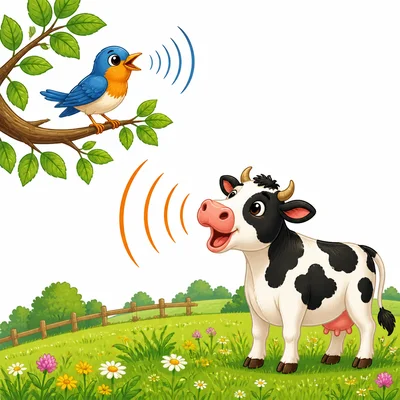
A bird chirps with a high pitch. A cow moos with a low pitch. Which animal's sound has faster vibrations?
- 11
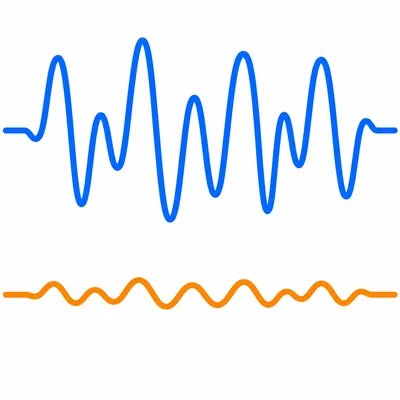
Look at two sound waves. Wave A has tall waves. Wave B has short waves. Which wave shows the louder sound?
- 12
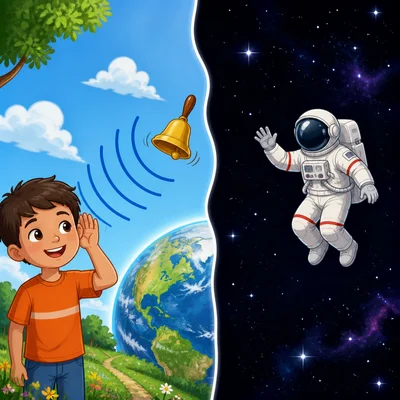
Why can you not hear sounds from space the same way you hear sounds on Earth?
- 13

A student fills one glass with a little water and another glass with more water. When tapped, the glasses make different pitches. What changed that affected the pitch?
- 14
Name one way to make a sound softer and one way to make a sound louder.
- 15
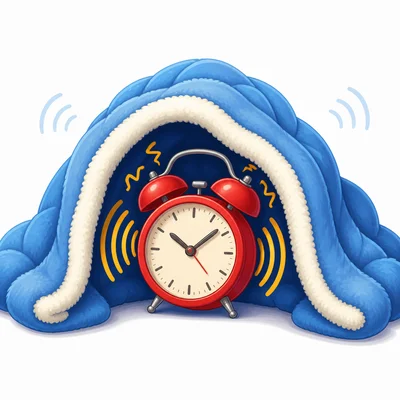
Lena covers a ringing alarm clock with a thick blanket. The sound becomes quieter. Why does the blanket make the sound quieter?