Practice recognizing common types of chemical reactions and describing what happens during each one.
Read each problem carefully. Identify the reaction type or explain what is happening in the reaction. Use complete sentences when needed.
Identifying synthesis, decomposition, single replacement, double replacement, and combustion
Chemistry - Grade 6-8
- 1
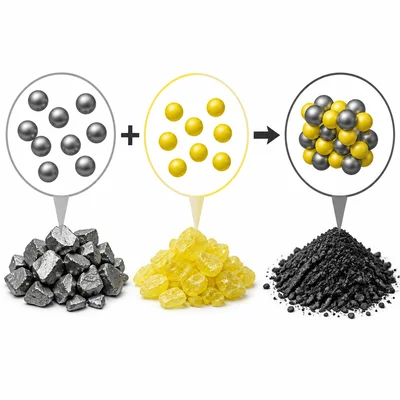
A reaction combines iron and sulfur to make iron sulfide: Fe + S -> FeS. What type of chemical reaction is this?
- 2
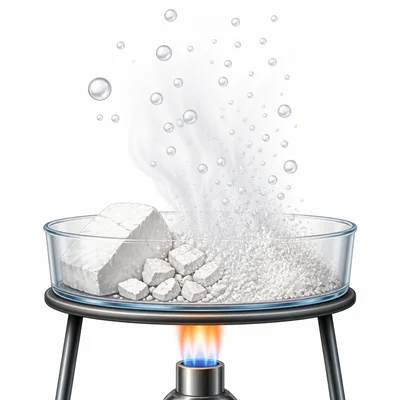
Calcium carbonate breaks down when heated: CaCO3 -> CaO + CO2. What type of chemical reaction is this?
- 3
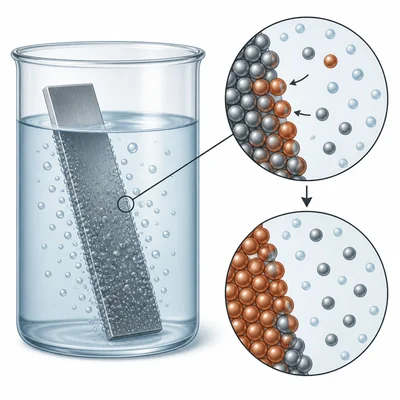
Zinc reacts with hydrochloric acid: Zn + 2HCl -> ZnCl2 + H2. What type of chemical reaction is this?
- 4
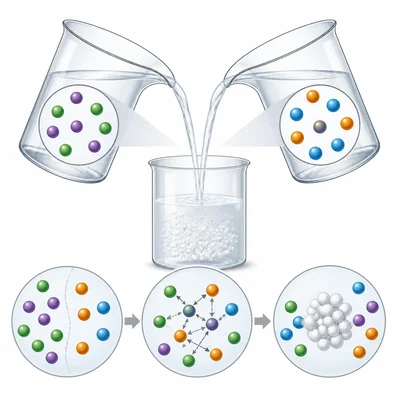
Silver nitrate reacts with sodium chloride: AgNO3 + NaCl -> AgCl + NaNO3. What type of chemical reaction is this?
- 5
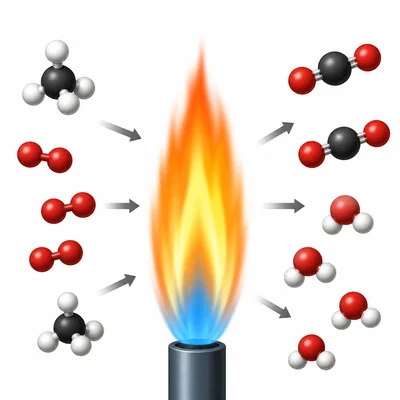
Methane burns in oxygen: CH4 + 2O2 -> CO2 + 2H2O. What type of chemical reaction is this?
- 6
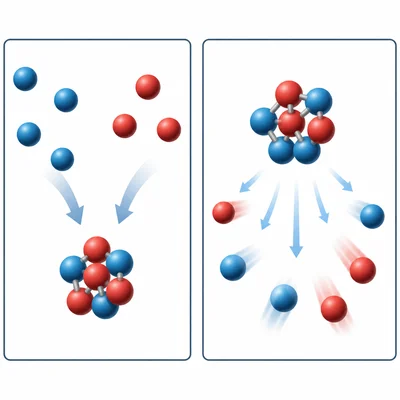
Describe what makes a synthesis reaction different from a decomposition reaction.
- 7
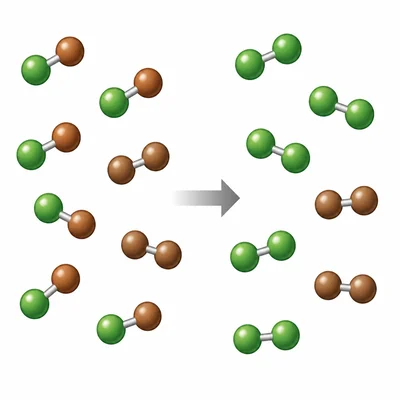
In the reaction Cl2 + 2KBr -> 2KCl + Br2, what type of reaction occurs, and which element is replaced?
- 8
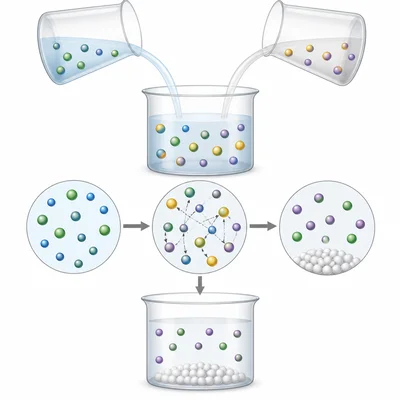
In the reaction BaCl2 + Na2SO4 -> BaSO4 + 2NaCl, what type of reaction occurs?
- 9
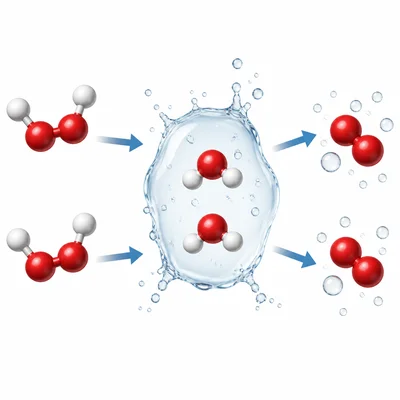
Hydrogen peroxide breaks down into water and oxygen: 2H2O2 -> 2H2O + O2. What type of reaction is this?
- 10
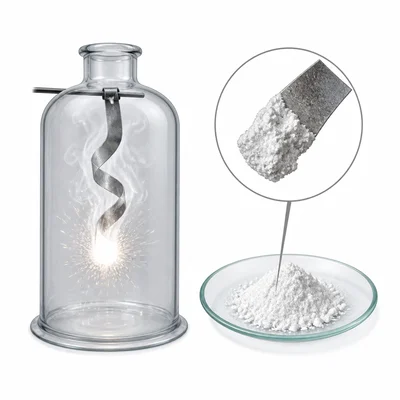
Magnesium burns in oxygen to form magnesium oxide: 2Mg + O2 -> 2MgO. Name the reaction type and explain your choice.
- 11
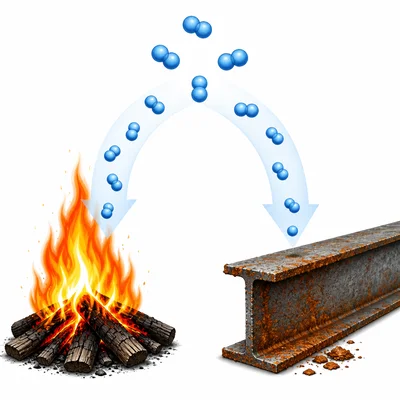
A student says that every reaction with oxygen is combustion. Is that statement always correct? Explain.
- 12
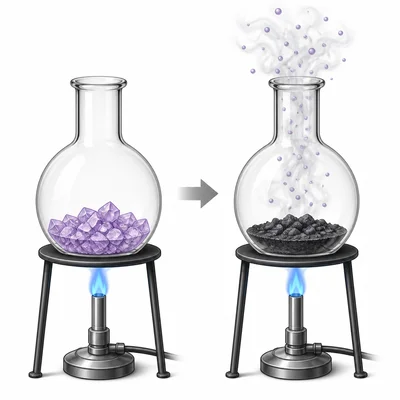
Classify this reaction: 2KClO3 -> 2KCl + 3O2. Then explain what happens to the reactant.