Practice identifying signs of stress and anxiety, choosing healthy coping strategies, and making a plan for support.
Read each prompt carefully. Write complete answers and use respectful, school-appropriate examples.
Recognizing stress signals and practicing healthy coping skills
SEL - Grade 6-8
- 1
List three physical signs that someone might be feeling stressed or anxious.
- 2
Read the situation: Jordan has a big science presentation tomorrow and keeps thinking, "I am going to mess up." Identify the stressor and one anxious thought Jordan is having.
- 3
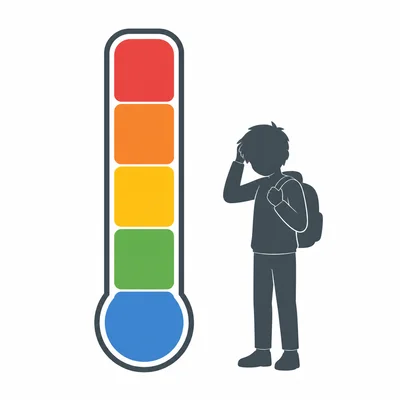
Use the stress thermometer to rate this situation from 1 to 5: You forgot your homework at home, and class starts in two minutes. Explain your rating.
- 4
Describe one healthy way to calm your body when you notice stress building.
- 5
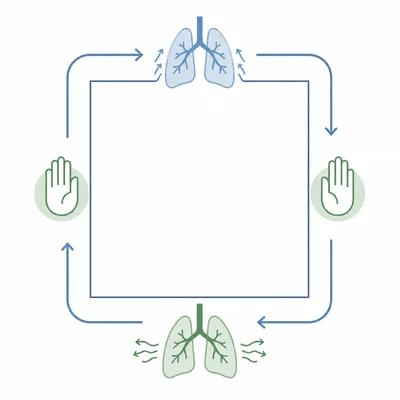
Practice box breathing. Write the four steps in order.
- 6
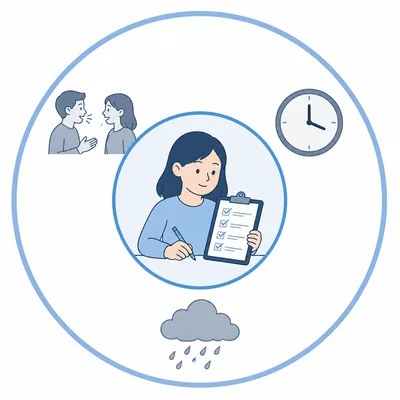
Circle of control: Write one thing a student can control during a stressful group project and one thing a student cannot control.
- 7
Change this unhelpful thought into a more balanced thought: "If I make one mistake, everyone will think I am terrible at this."
- 8
Name two coping strategies that can help with test anxiety before a test begins.
- 9
Read the situation: Maya feels overwhelmed because she has homework, soccer practice, and chores today. Write a simple plan with two steps she could take.
- 10
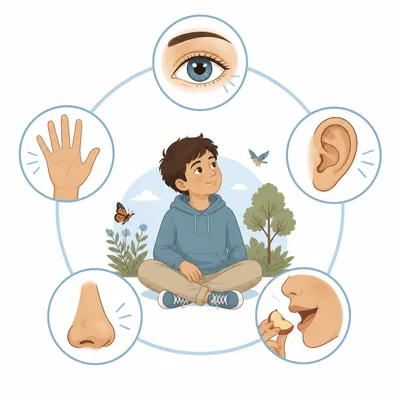
Use the 5-4-3-2-1 grounding strategy. Fill in what a person should notice for each number.
- 11
Explain why sleep, food, movement, and water can affect stress and anxiety.
- 12
Write one respectful sentence a student could say to ask an adult for help with stress.
- 13
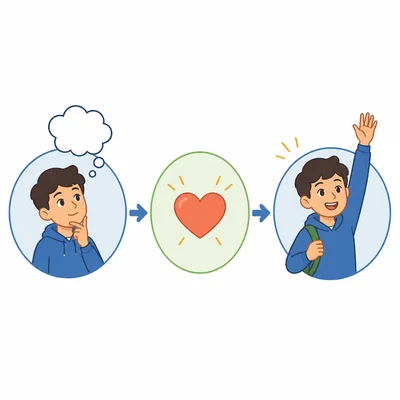
Look at the thought-feeling-action pattern. For this thought, write a possible feeling and a healthy action: "I studied, and I can try my best."
- 14
Choose one boundary that could reduce stress from phones, games, or social media. Explain how it could help.
- 15
Write a personal stress plan with three parts: one warning sign, one coping strategy, and one trusted person or place for support.