Explore how the first cities in Mesopotamia developed near rivers and how farming, government, writing, and trade shaped early urban life.
Read each question carefully. Use complete sentences and include evidence or examples when asked.
How geography, farming, and trade helped cities grow
Social Studies - Grade 6-8
- 1
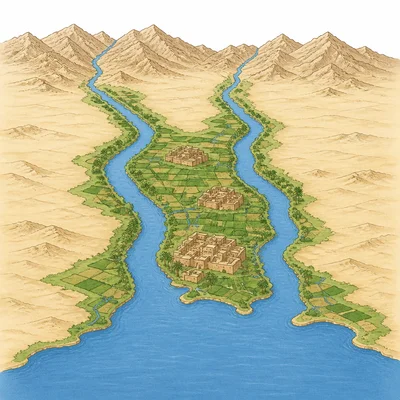
Mesopotamia means "land between the rivers." Identify the two major rivers of Mesopotamia and explain why they were important to early cities.
- 2
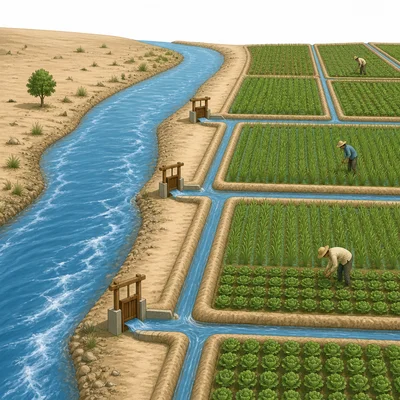
Explain how irrigation helped farming communities in Mesopotamia grow into larger cities.
- 3
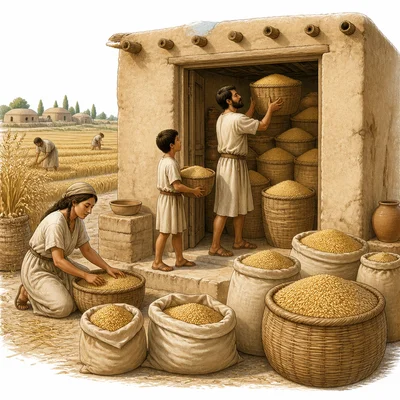
What is a food surplus, and why was it important for the development of the first cities?
- 4
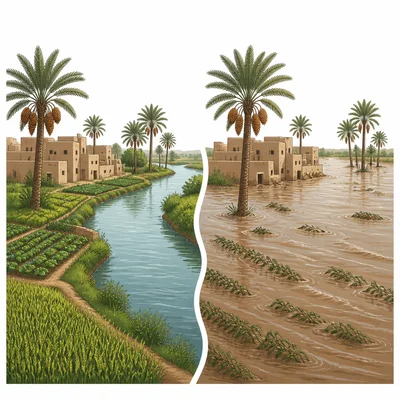
Describe one benefit and one challenge of living near the Tigris and Euphrates Rivers.
- 5
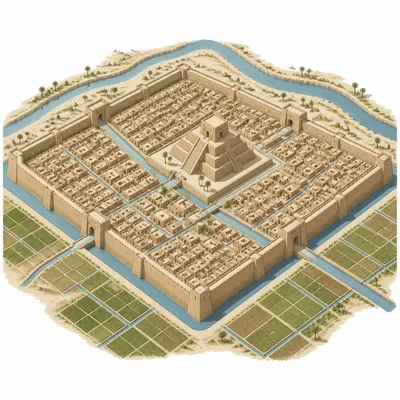
Look at a diagram of a Sumerian city with a temple, walls, canals, homes, and farmland. Choose two features and explain what they tell us about life in the city.
- 6
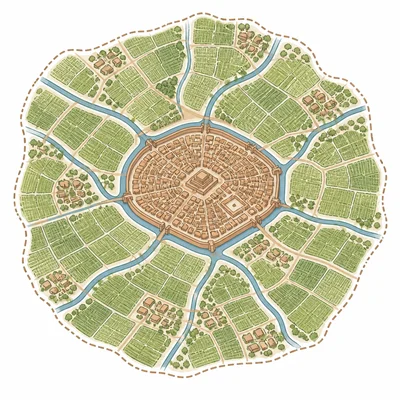
What was a city-state in ancient Mesopotamia?
- 7
Uruk is often considered one of the world's first major cities. Give two reasons a city like Uruk needed organized leadership.
- 8
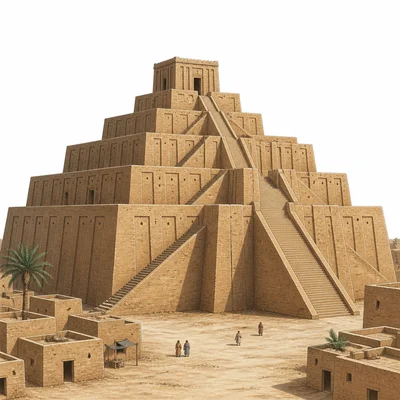
What was a ziggurat, and what role did it play in Mesopotamian cities?
- 9
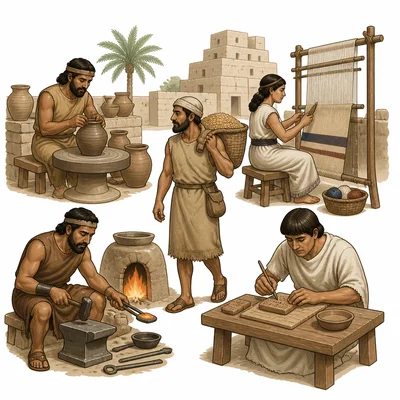
Explain how specialization of labor changed life in early Mesopotamian cities.
- 10

Why was cuneiform writing important to Mesopotamian cities?
- 11
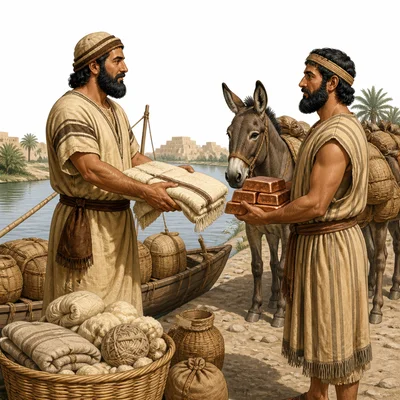
A merchant in Ur trades wool cloth for copper from another region. What does this example show about Mesopotamian cities?
- 12
Place these developments in a logical order: food surplus, permanent villages, specialized jobs, irrigation farming, growing cities.
- 13
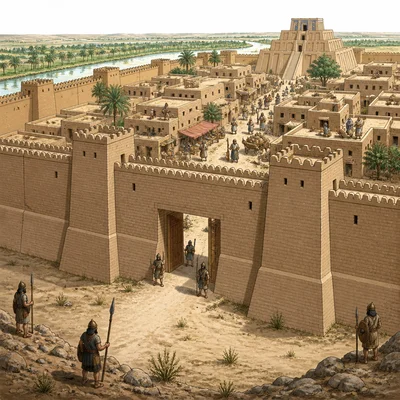
How did city walls show both the success and the problems of early Mesopotamian cities?
- 14
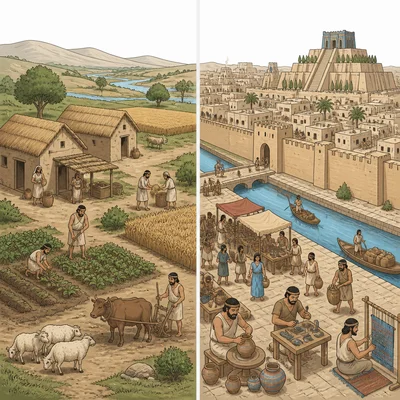
Compare life in a small farming village with life in a growing Mesopotamian city. Give two differences.
- 15
Write a short explanation of why Mesopotamia is important in world history. Include at least three details from this worksheet.