Review landmark Supreme Court cases required for AP U.S. Government and Politics by identifying constitutional principles, holdings, and applications.
Read each prompt carefully. Identify the case, constitutional issue, ruling, and political significance when asked. Use complete sentences.
Constitutional principles, holdings, and applications
Social Studies - Grade 9-12
- 1
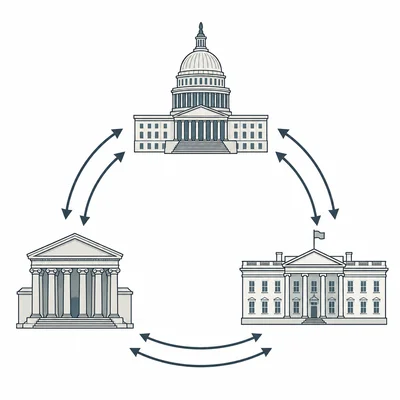
Marbury v. Madison established one of the Supreme Court's most important powers. Identify that power and explain why it matters in a system of checks and balances.
- 2
In McCulloch v. Maryland, Maryland tried to tax the national bank. Explain the Court's ruling and identify the constitutional clause that supported it.
- 3
Schenck v. United States involved speech during wartime. What test did the Court use, and how did the ruling limit First Amendment protections?
- 4
Brown v. Board of Education overturned the idea of separate but equal in public schools. Identify the constitutional amendment involved and explain the significance of the ruling.
- 5
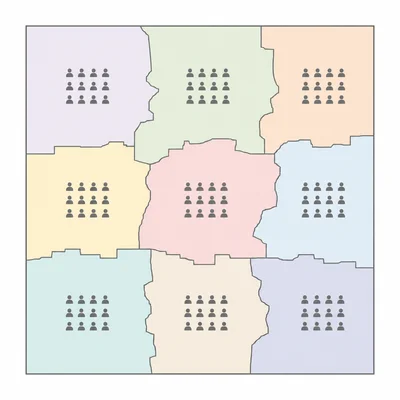
Baker v. Carr addressed legislative districting. Explain the one person, one vote principle and why the case was important for representation.
- 6
Engel v. Vitale involved prayer in public schools. What did the Court rule, and which part of the First Amendment was central to the decision?
- 7
Gideon v. Wainwright changed the rights of criminal defendants. Explain the Court's ruling and identify the amendment that applied.
- 8
Tinker v. Des Moines involved students wearing black armbands to protest the Vietnam War. Explain the Court's ruling about student speech in public schools.
- 9
New York Times Co. v. United States involved the publication of the Pentagon Papers. What did the Court rule about prior restraint?
- 10
Wisconsin v. Yoder involved Amish families who objected to compulsory school attendance beyond eighth grade. Explain the Court's ruling and the First Amendment principle involved.
- 11
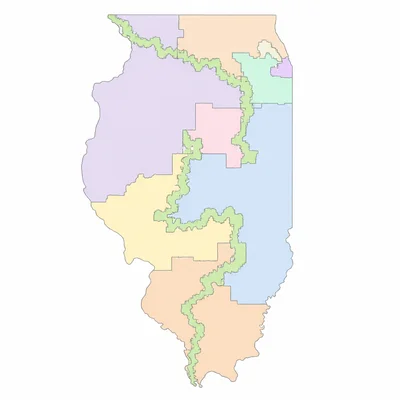
Shaw v. Reno involved oddly shaped congressional districts. What constitutional issue did the Court address, and why can race-based districting be controversial?
- 12
United States v. Lopez limited congressional power under the Commerce Clause. Explain the Court's ruling and its effect on federalism.
- 13
District of Columbia v. Heller addressed gun ownership. Explain the Court's interpretation of the Second Amendment in this case.
- 14
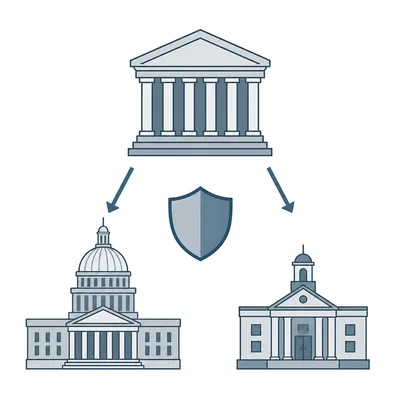
McDonald v. Chicago applied the Second Amendment to state and local governments. Explain how selective incorporation was used in the decision.
- 15
Citizens United v. Federal Election Commission involved campaign spending by corporations and unions. Explain the Court's ruling and its connection to the First Amendment.