Analyze how behavioral economics concepts such as nudges, defaults, framing, loss aversion, and social norms affect personal decisions, markets, and public policy.
Read each problem carefully. Use examples and evidence in your explanations. Show your reasoning in the space provided.
How decision design shapes individual and public choices
Social Studies - Grade 9-12
- 1
Define behavioral economics in your own words. Explain how it differs from the traditional idea that people always make fully rational economic choices.
- 2
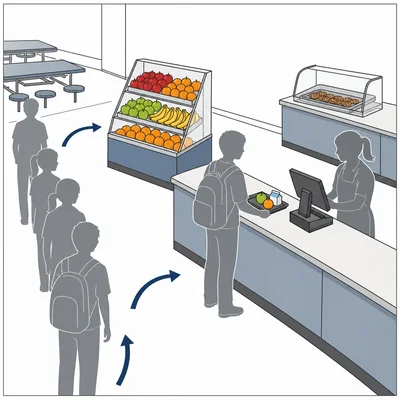
A school cafeteria places fruit at eye level near the checkout line and puts cookies behind the counter. Identify the choice architecture being used and explain how it might affect student behavior.
- 3
Explain the concept of a default option. Give one example of a default option in public policy or everyday life.
- 4
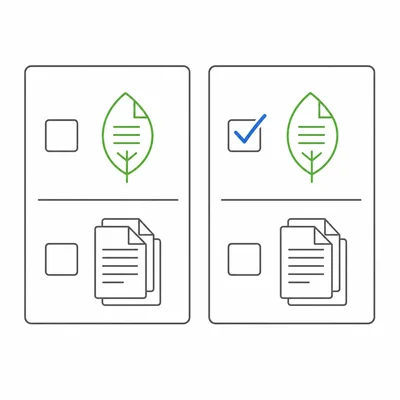
A city wants more residents to sign up for paperless utility bills. Option A says, 'Check this box to receive paperless bills.' Option B says, 'You will receive paperless bills unless you check this box to receive paper bills.' Which option is likely to produce more paperless sign-ups, and why?
- 5
Read the two messages: Message A says, '90% of people pay their taxes on time.' Message B says, '10% of people fail to pay their taxes on time.' Explain how framing could make these messages feel different even though they use the same information.
- 6
A health department sends a letter saying, 'Most people in your neighborhood have already scheduled a flu shot.' Identify the behavioral economics idea being used and explain why it may work.
- 7
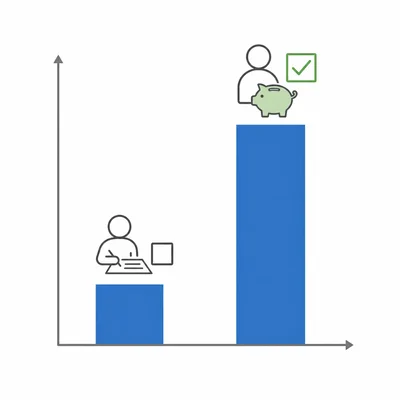
A graph shows that employees enrolled automatically in a savings plan participate at a much higher rate than employees who must sign up themselves. What conclusion could a policy analyst draw from this pattern?
- 8
Explain loss aversion. Then describe how a teacher or coach might use loss aversion to motivate students or athletes in a fair way.
- 9
A grocery store labels one yogurt as '80% fat-free' and another identical yogurt as '20% fat.' Explain why customers might respond differently to the two labels.
- 10
Describe one ethical concern about using nudges in government policy. Then describe one reason supporters believe nudges can be helpful.
- 11
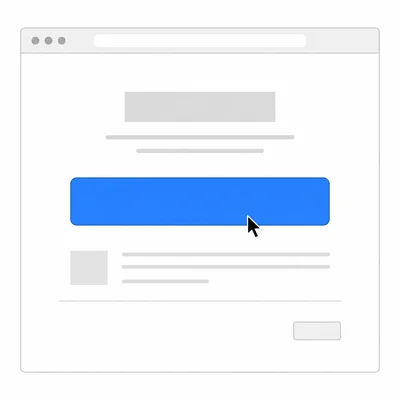
A website wants users to cancel a subscription only if they truly intend to. It makes the cancel button small and gray, while the keep subscription button is large and bright. Is this a neutral nudge, a helpful nudge, or a dark pattern? Explain your answer.
- 12
Explain present bias. Give an example of how present bias could affect a teenager's decision about studying, spending money, or health.
- 13
A town is designing a recycling program. Propose one choice architecture strategy that could increase recycling without forcing residents to recycle.
- 14
A survey asks, 'Do you support wasting taxpayer money on an unnecessary park project?' Explain why this question is biased and rewrite it in a more neutral way.
- 15
Choose one behavioral economics concept from this worksheet and explain how it could be used responsibly in a public policy campaign. Include the goal, the nudge, and one safeguard to protect individual choice.