Practice explaining the circular flow of income, including households, firms, markets, government, financial institutions, and international trade.
Read each problem carefully. Use complete sentences and economic vocabulary in your answers. Show your work in the space provided when calculations are needed.
How money, goods, services, and resources move through an economy
Social Studies - Grade 9-12
- 1
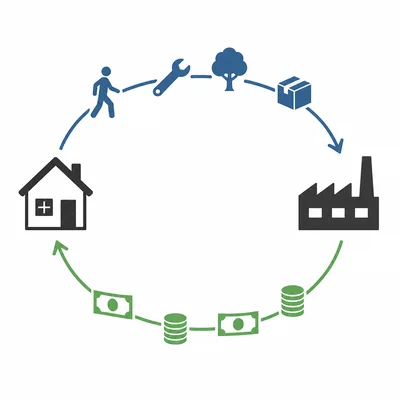
In a simple circular flow model with only households and firms, describe the two main flows between them.
- 2
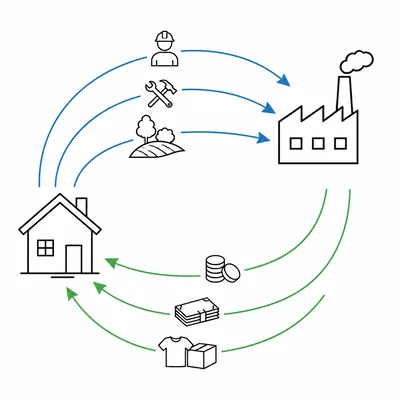
Identify the role of households in the circular flow of income.
- 3
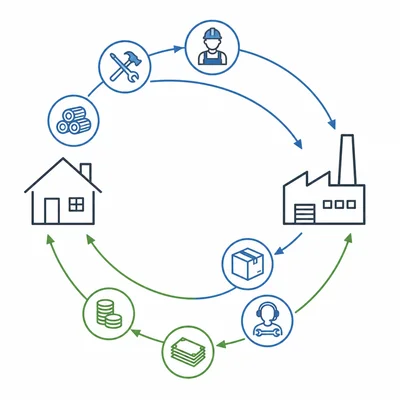
Identify the role of firms in the circular flow of income.
- 4
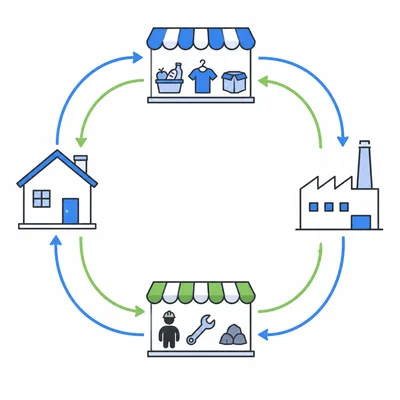
Explain the difference between a product market and a factor market.
- 5
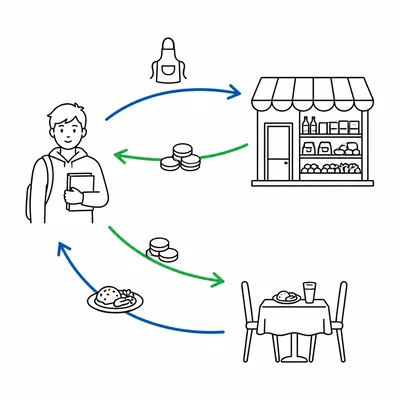
A student works at a grocery store and earns $120. The student then spends $40 at a restaurant. Explain how both transactions fit into the circular flow model.
- 6
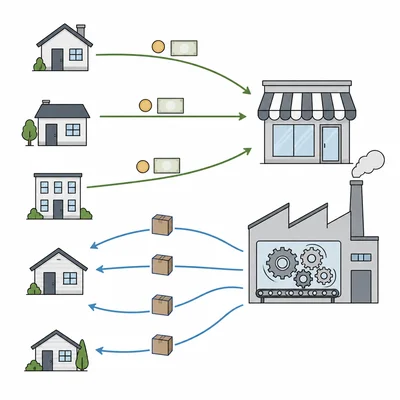
In a circular flow diagram, household spending on goods and services is usually called consumption. Explain why consumption is important for firms.
- 7
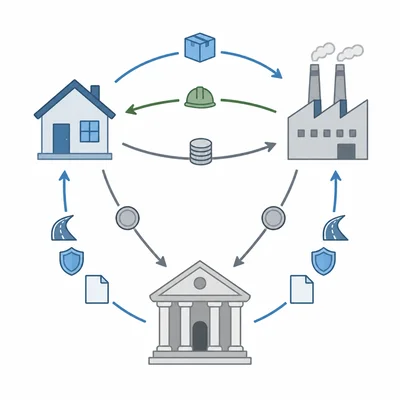
Add the government to the circular flow model. Describe two ways the government interacts with households and firms.
- 8
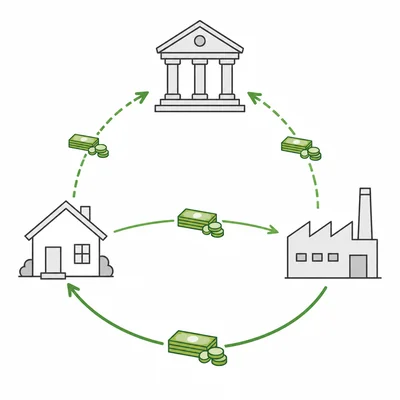
Explain how taxes affect the circular flow of income.
- 9
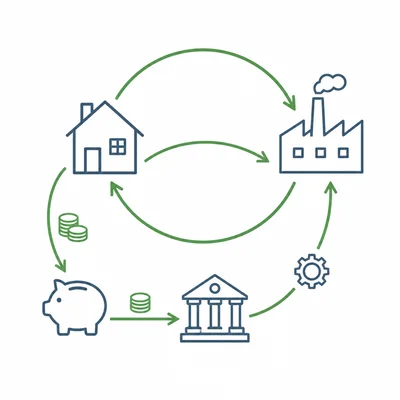
Explain how saving affects the circular flow of income.
- 10
A household earns $3,000 in income during a month. It pays $600 in taxes, saves $400, and spends the rest on goods and services. How much is consumption spending?
- 11
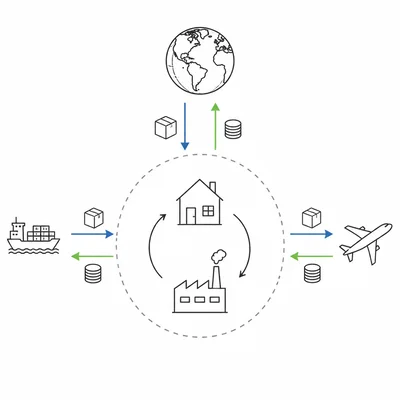
In an open economy, explain how imports and exports affect the circular flow of income.
- 12
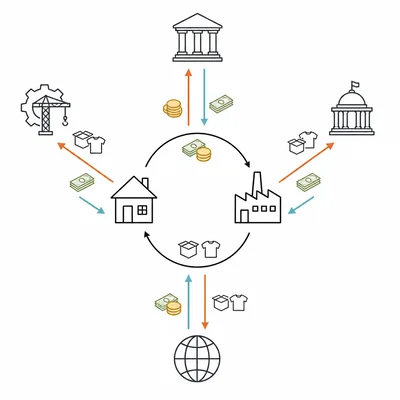
Classify each item as a leakage or an injection in the circular flow: household saving, business investment, taxes, government spending, imports, exports.