Practice identifying major world religions and belief systems, comparing core ideas, and explaining how belief systems shape cultures and societies.
Read each problem carefully. Use respectful language when describing religions and belief systems. Answer in complete sentences and support your ideas with examples when needed.
Comparing beliefs, practices, and cultural influence
Social Studies - Grade 6-8
- 1
What is a belief system, and how can it influence the daily life of a person or community?
- 2
Name three major world religions and write one basic fact about each one.
- 3
Explain one way that Judaism, Christianity, and Islam are similar.
- 4
Describe one important belief or practice in Buddhism.
- 5
How is Hinduism different from religions that focus on one founder and one single sacred text?
- 6
What is secularism, and how is it different from a religion?
- 7

Give one example of how religion can influence art, architecture, or music.
- 8
Why is it important to study world religions and belief systems in social studies?
- 9
Compare a religion and a philosophy. How are they similar, and how are they different?
- 10
Confucianism is often described as an ethical and philosophical system. What does that mean?
- 11
What is one respectful way to discuss differences between religions and belief systems in class?
- 12

Explain how a holiday or festival can reflect the beliefs of a religion or culture.
- 13
Why should people avoid stereotypes when learning about religions and belief systems?
- 14
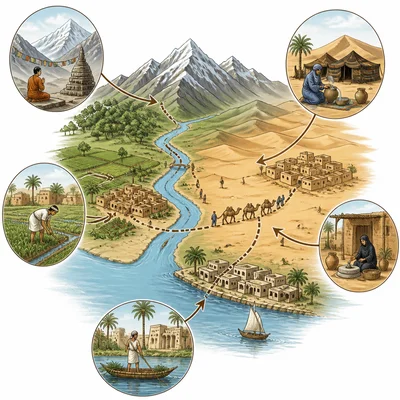
What is one example of how geography helped shape a religion or belief system?
- 15
A student says that all people in a religion believe and practice exactly the same way. Explain why that statement is not accurate.