Practice identifying the causes of World War I, comparing the major alliances, and explaining important outcomes of the war.
Read each problem carefully. Use complete sentences when explaining your answers. Show your thinking in the space provided.
Understanding the long-term causes, major alliances, and results of the Great War
Social Studies - Grade 6-8
- 1
The acronym M.A.I.N. is often used to remember four long-term causes of World War I. Write what each letter stands for and give a brief explanation of one cause.
- 2
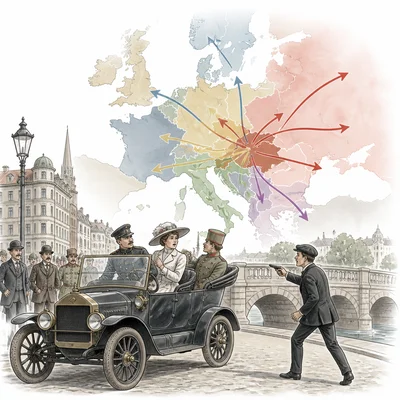
In 1914, Archduke Franz Ferdinand of Austria-Hungary was assassinated in Sarajevo. Explain why this event helped start a larger war in Europe.
- 3
Classify each country as part of the Allied Powers or the Central Powers during most of World War I: Germany, France, Great Britain, Austria-Hungary, Russia, Ottoman Empire.
- 4
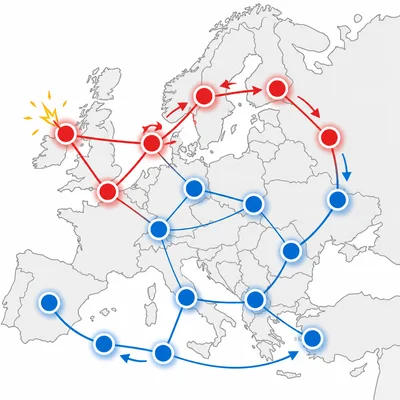
Explain how the alliance system made World War I larger and harder to avoid.
- 5
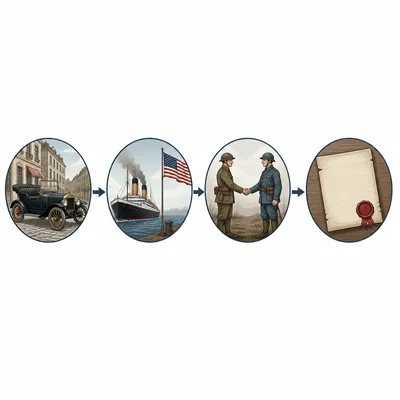
Look at a timeline with these events: 1914 assassination of Archduke Franz Ferdinand, 1917 United States enters the war, 1918 armistice ends the fighting, 1919 Treaty of Versailles signed. Put the events in order and explain what happened last.
- 6
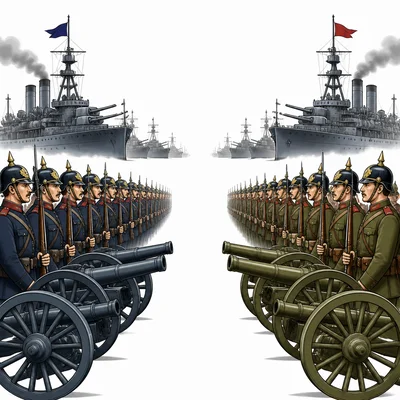
Define militarism and explain how it increased tension in Europe before World War I.
- 7
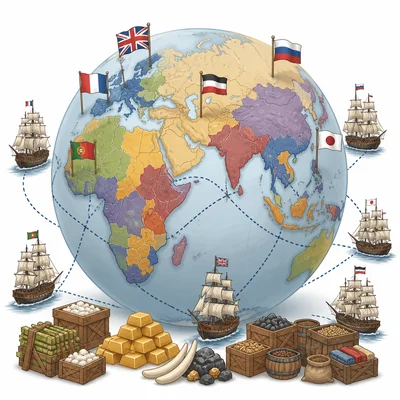
Define imperialism and explain how competition for colonies contributed to World War I tensions.
- 8

Define nationalism and explain how it affected groups living in large empires such as Austria-Hungary.
- 9
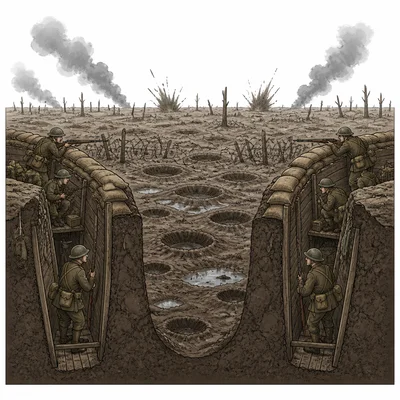
Explain why trench warfare led to a stalemate on the Western Front.
- 10
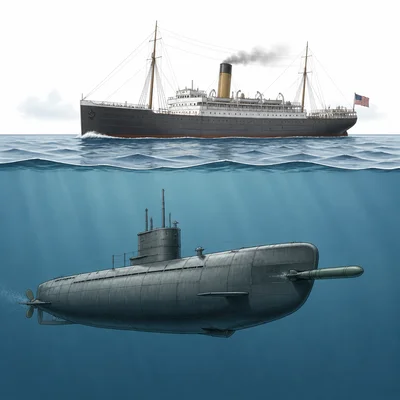
Describe one reason the United States entered World War I in 1917.
- 11
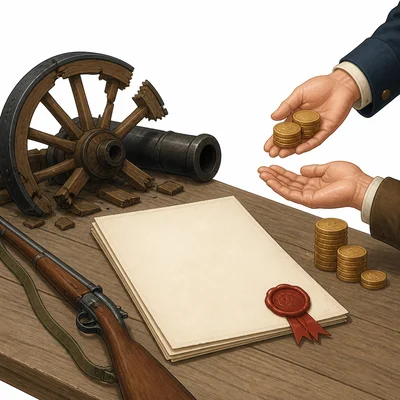
The Treaty of Versailles placed major blame for the war on Germany. Explain one major condition Germany had to accept under the treaty.
- 12
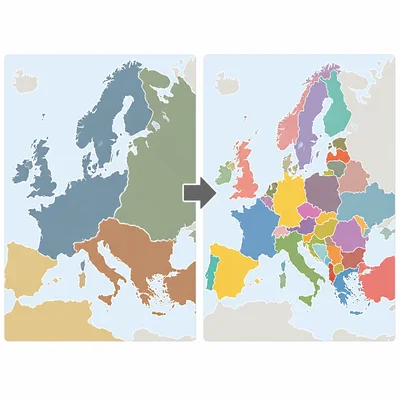
Explain how World War I changed the map of Europe after 1918.
- 13
Compare the goals of the League of Nations with one reason it struggled to succeed.
- 14
Read the statement: 'World War I was caused only by the assassination of Archduke Franz Ferdinand.' Explain why this statement is incomplete.
- 15
Write a short paragraph explaining how one cause, one alliance, and one outcome of World War I are connected.