Practice analyzing experimental designs by identifying control groups, explanatory variables, response variables, confounding variables, placebo effects, and ways to improve validity.
Read each scenario carefully. Identify the design features and explain your reasoning in complete sentences.
Identifying control groups, treatments, and hidden variables
Statistics - Grade 9-12
- 1
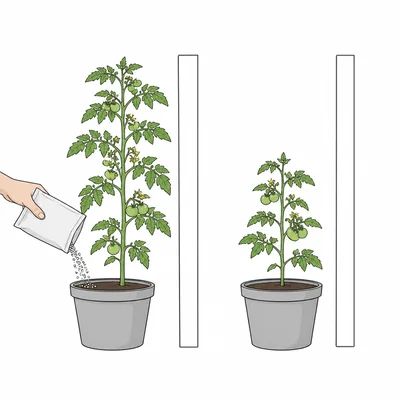
A researcher wants to test whether a new fertilizer increases tomato plant growth. She gives the fertilizer to 30 tomato plants and gives no fertilizer to another 30 tomato plants. After six weeks, she compares the average plant heights. Identify the treatment group, the control group, the explanatory variable, and the response variable.
- 2
A school compares test scores from students who choose to attend an after-school tutoring program with scores from students who do not attend. The tutoring group has higher scores. Explain why this study does not prove that tutoring caused the higher scores.
- 3
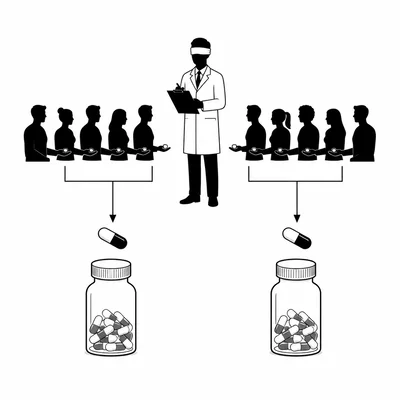
A pharmaceutical company tests a new allergy medicine. Half of the volunteers receive the medicine, and half receive a sugar pill that looks identical. Neither the volunteers nor the doctors measuring symptoms know who received which pill. What are the control group, placebo, and blinding features in this experiment?
- 4
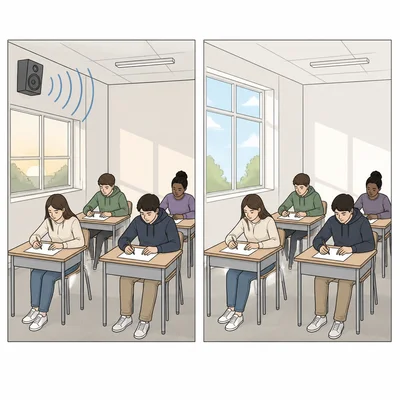
A teacher wants to know whether playing classical music during class improves quiz scores. She plays music during her first-period class but not during her fifth-period class. The first-period class scores higher. Identify one possible confounding variable and explain how it could affect the results.
- 5
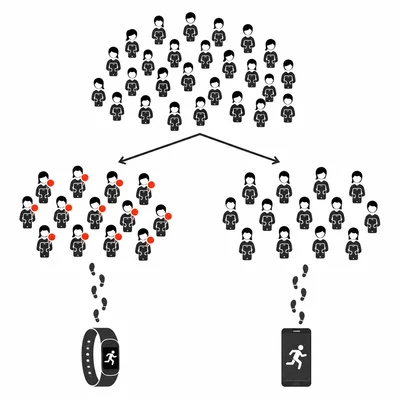
A fitness app company tests whether reminder notifications increase daily step counts. It randomly assigns 500 users to receive reminders and 500 users to receive no reminders. Explain why random assignment is important in this experiment.
- 6
A study finds that people who drink more coffee also tend to report higher stress levels. The researchers conclude that coffee causes stress. Identify a possible confounding variable and explain why the conclusion may be flawed.
- 7
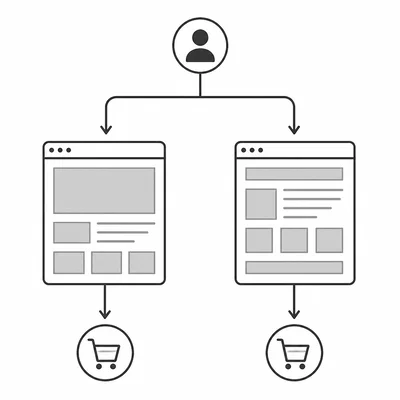
A company tests two website designs to see which leads to more purchases. Visitors are randomly sent to either Design A or Design B, and the company records whether each visitor buys something. Identify the explanatory variable, response variable, and control group, if any.
- 8
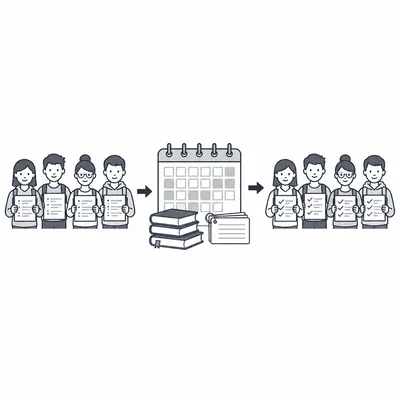
A researcher tests a new study strategy by asking volunteers to use the strategy for one month, then comparing their exam scores with their scores from the previous month. Name one weakness of this design and suggest an improvement.
- 9
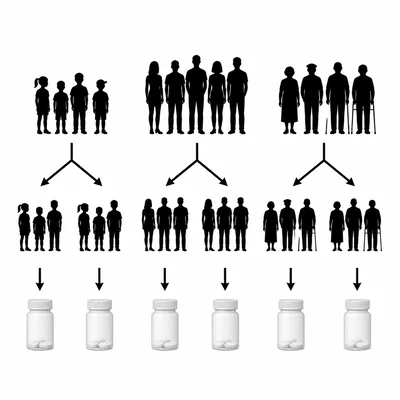
A medical researcher wants to test a blood pressure drug. Patients are grouped by age category first, then randomly assigned within each age category to either the drug group or the placebo group. What type of design is this, and why might it be useful?
- 10
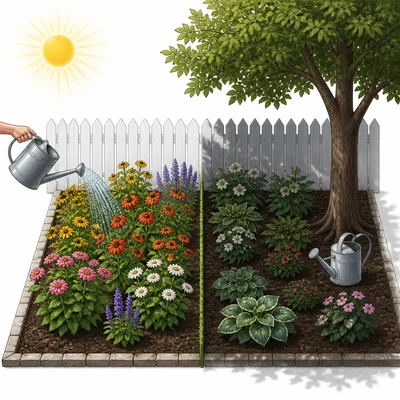
A gardener tests whether a new watering schedule helps flowers bloom. She gives the new schedule to plants on the sunny side of the yard and the old schedule to plants on the shady side. Explain the confounding problem.
- 11
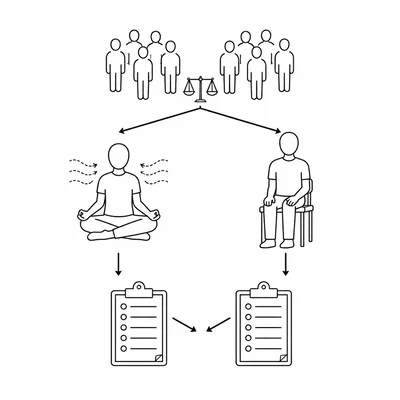
A psychologist tests whether a short meditation exercise reduces anxiety. Participants are randomly assigned to meditate for 10 minutes or sit quietly for 10 minutes. Then they complete an anxiety survey. Why is the quiet-sitting group a better control group than having no comparison group at all?
- 12
A nutrition study compares people who eat breakfast daily with people who skip breakfast. Breakfast eaters tend to have lower body weight. Explain why this observational study may be affected by confounding.
- 13
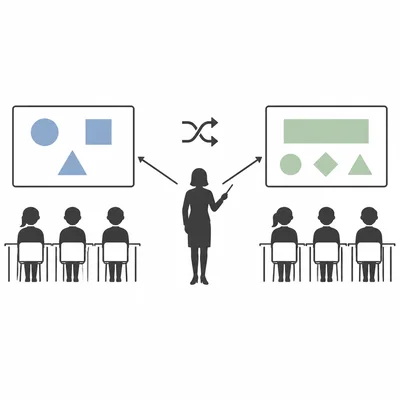
A researcher wants to compare two math teaching methods. Each of 20 teachers teaches one class using Method A and another similar class using Method B. The order of methods is randomly chosen for each teacher. Explain why this matched design may be helpful.
- 14
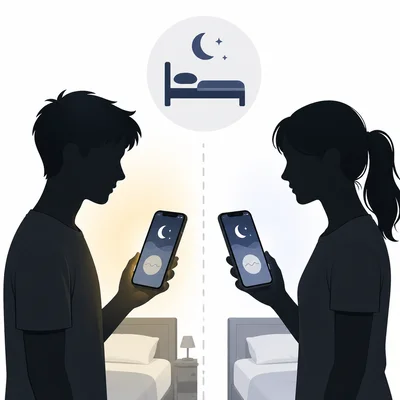
A sleep researcher studies whether a blue-light filter improves sleep. Participants are randomly assigned to use either a real blue-light filter or an app that looks the same but does not change the screen color. Participants do not know which app they have. Identify the placebo and explain its purpose.
- 15
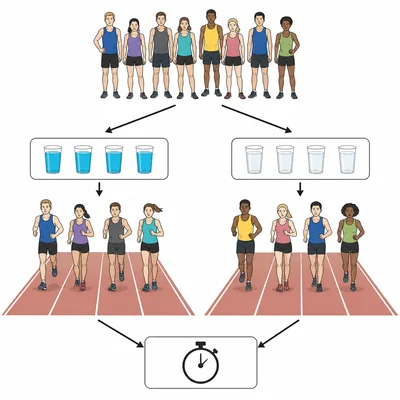
Design a simple randomized experiment to test whether drinking a sports drink before a workout improves running endurance compared with drinking water. Include the treatment group, control group, random assignment, and response variable.