Practice key ecology ideas, including food webs, habitats, populations, adaptations, limiting factors, and human impacts on ecosystems.
Read each problem carefully. Use complete sentences when explaining your thinking. Show your work in the space provided when calculations are needed.
Exploring ecosystems, energy flow, and interactions among organisms
Biology - Grade 6-8
- 1
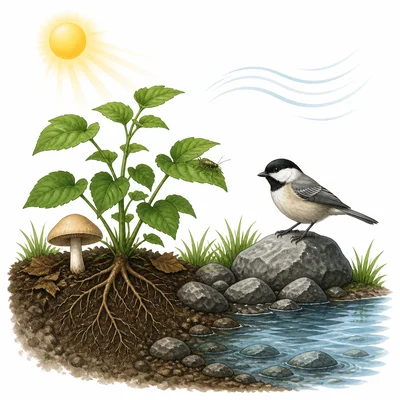
Define ecology in your own words. Include both living and nonliving parts of the environment in your definition.
- 2
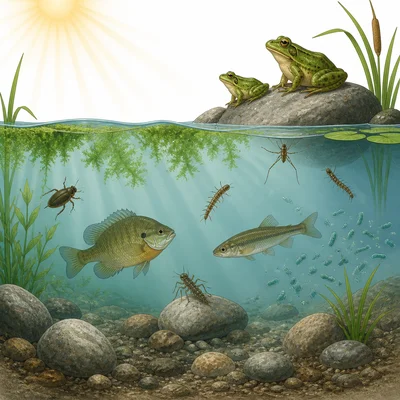
A pond contains frogs, algae, fish, insects, rocks, water, sunlight, and bacteria. List three biotic factors and three abiotic factors from this pond ecosystem.
- 3
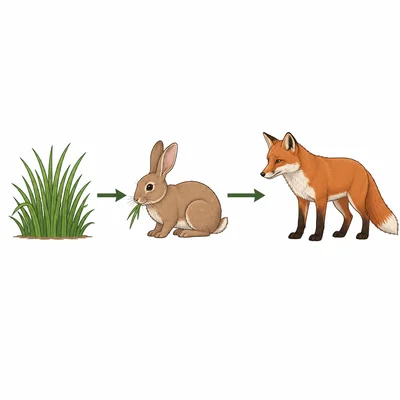
In a forest food chain, grass is eaten by a rabbit, and the rabbit is eaten by a fox. Identify the producer, the primary consumer, and the secondary consumer.
- 4
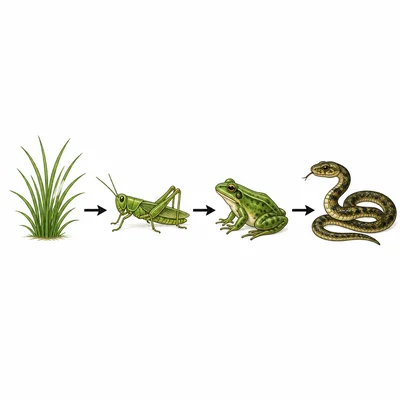
Draw or describe a food chain with at least four organisms. Label each organism as a producer, primary consumer, secondary consumer, or tertiary consumer.
- 5
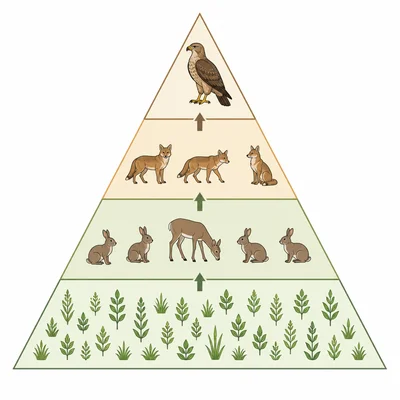
Energy decreases as it moves up an energy pyramid. If producers in an ecosystem have 10,000 units of energy, about how many units are usually available to the primary consumers using the 10 percent rule?
- 6
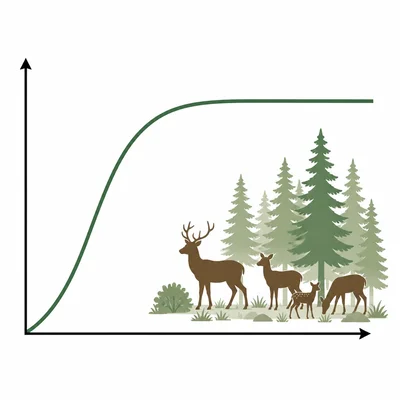
A population of deer in a forest grows quickly for several years, then stops growing because food and space become limited. What ecological idea explains why the population stops increasing?
- 7
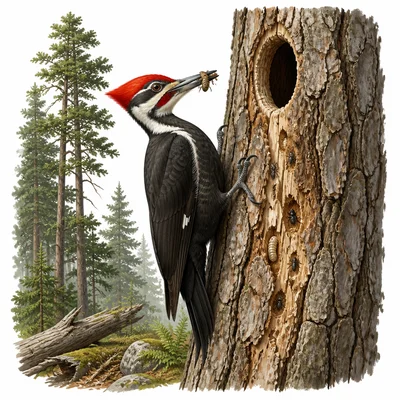
Explain the difference between a habitat and a niche. Use one animal as an example.
- 8
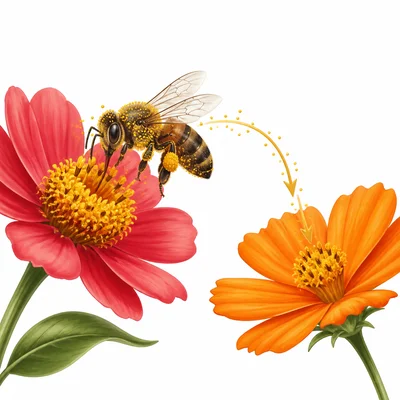
In a meadow, bees collect nectar from flowers and help move pollen between flowers. What type of relationship is this, and why?
- 9
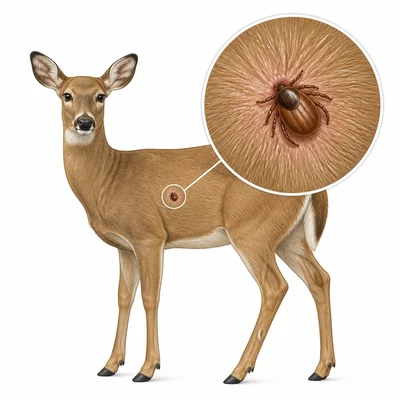
A tick attaches to a deer and feeds on its blood. The tick benefits, and the deer is harmed. What type of symbiotic relationship is this? Explain your answer.
- 10
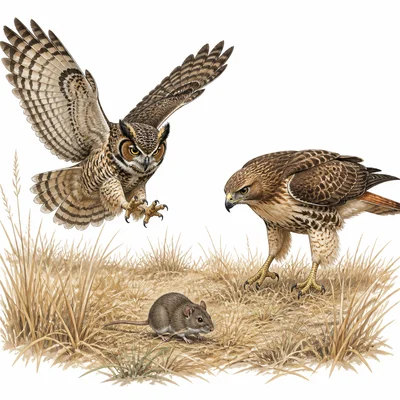
Owls and hawks both hunt mice in the same field. Explain how competition could affect these predators if the mouse population decreases.
- 11
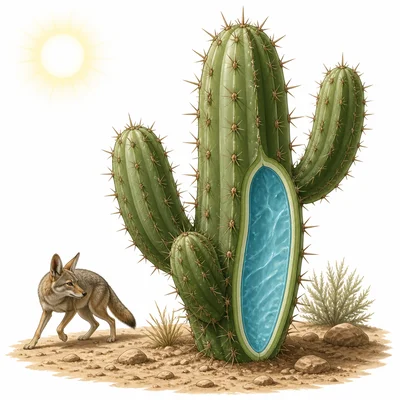
A certain cactus has thick stems that store water and sharp spines that protect it from animals. Explain how these traits help the cactus survive in a desert ecosystem.
- 12
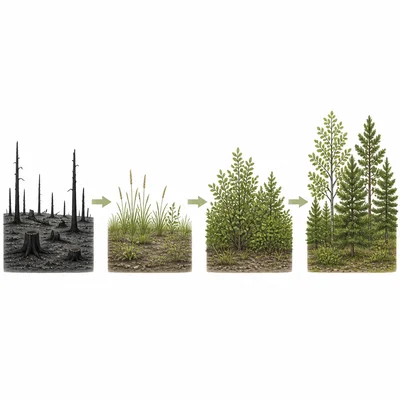
After a forest fire, grasses and small plants begin growing in the burned area. Over time, shrubs and young trees appear. What process is happening? Explain your answer.
- 13
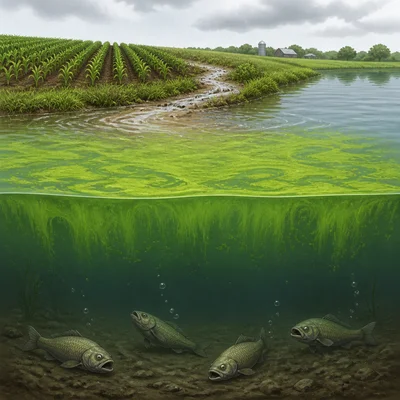
A river receives extra fertilizer runoff from nearby farms. Algae begin to grow very quickly, and later many fish die. Explain one reason fertilizer runoff can harm aquatic ecosystems.
- 14
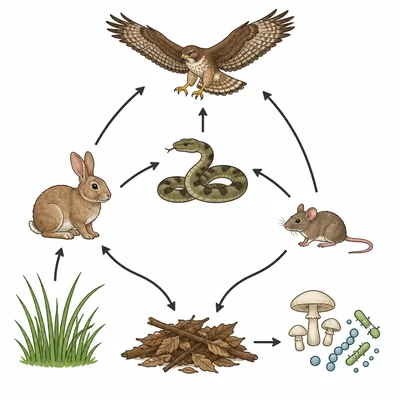
A food web includes grass, rabbits, mice, snakes, hawks, and decomposers. If the snake population suddenly decreases, predict one possible effect on another population in the food web.
- 15
Choose one human activity that can reduce biodiversity in an ecosystem. Describe the activity and explain how people could reduce its impact.