How Do Glow Sticks Work?
Light from a chemical reaction
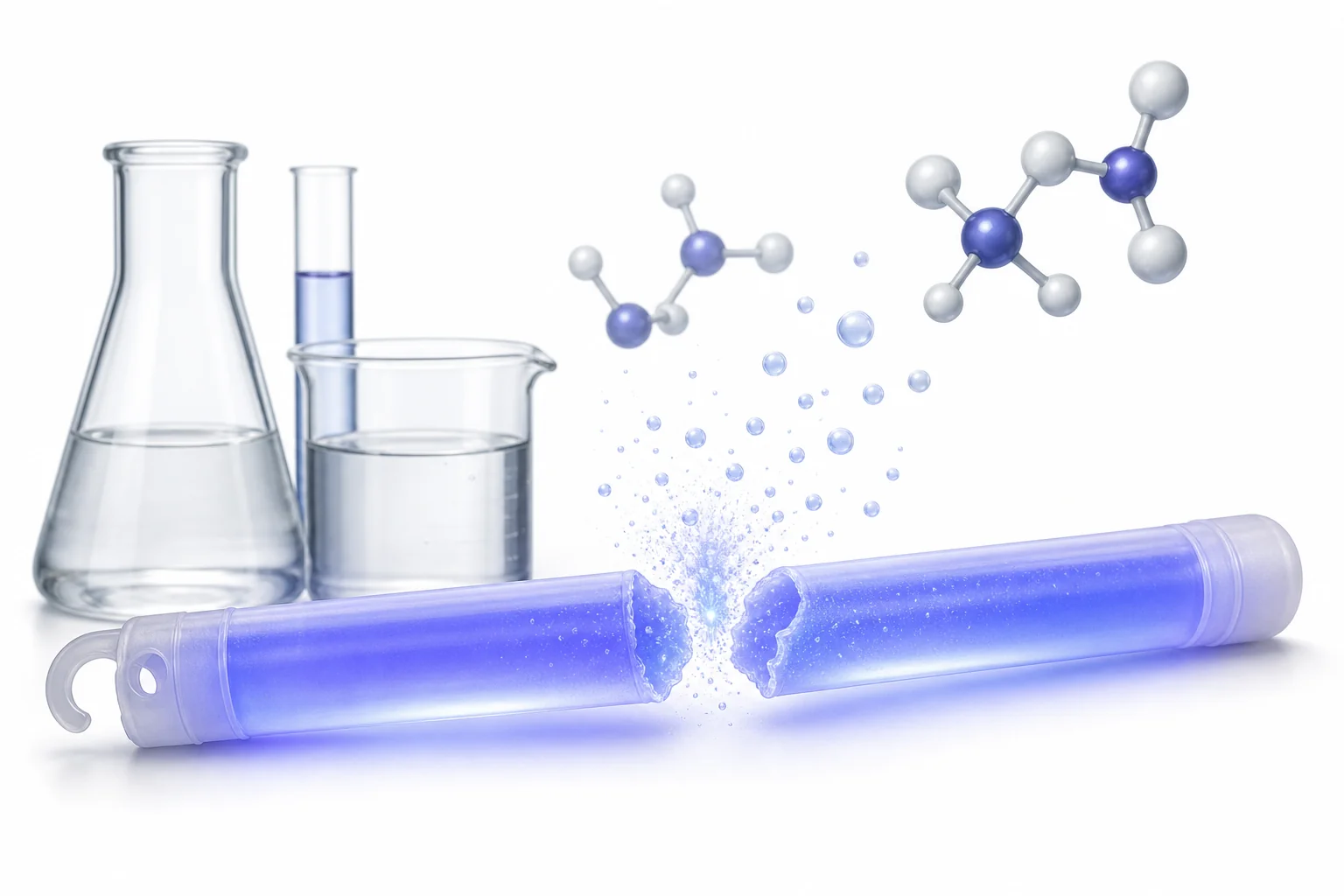
A glow stick makes light when two liquids mix after you bend and crack the inner glass tube. The reaction releases energy that moves into a dye, and the dye gives off colored light. Warm glow sticks shine brighter for a shorter time, while cold ones glow dimmer for longer.
A glow stick looks simple. Bend it, shake it, and it glows. Inside, a small glass tube breaks and lets two liquids mix. One liquid contains hydrogen peroxide. The other contains an oxalate compound and a fluorescent dye. When the chemicals react, they form an unstable high energy product. That product passes energy to the dye. The dye then releases the energy as visible light. This process is called chemiluminescence, which means light from chemistry. The color does not come from the peroxide or the plastic tube. It comes mostly from the dye molecules. Temperature also matters. A warm glow stick reacts faster, so it shines more strongly but fades sooner. A cold glow stick reacts more slowly, so it lasts longer but looks dimmer. Glow sticks are useful because they make light without flame, batteries, or hot metal filaments.
What breaks inside
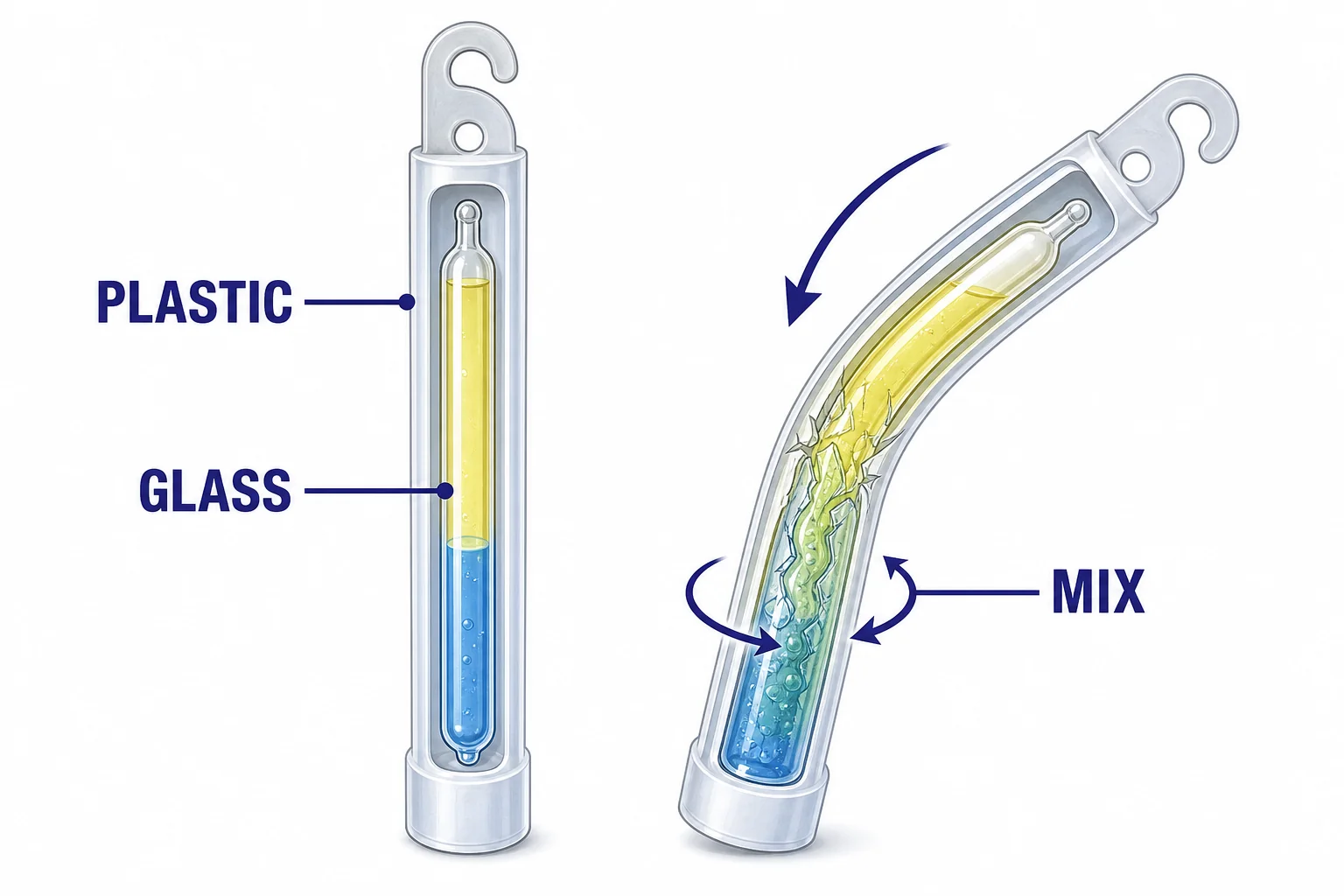
Cracking the inner ampule starts the reaction by letting the liquids mix.
Light without heat
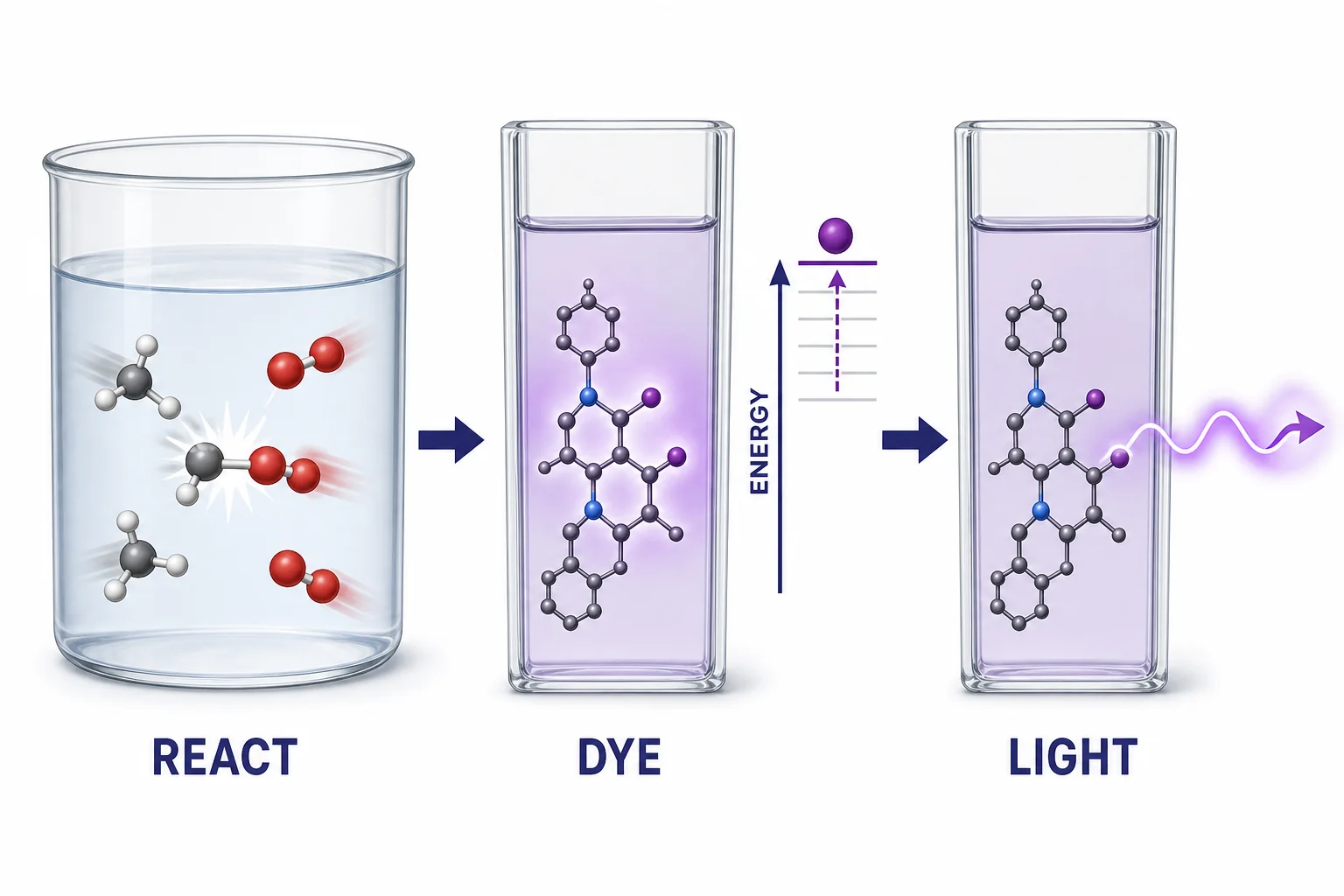
Glow sticks shine because excited dye molecules release photons.
Why color changes
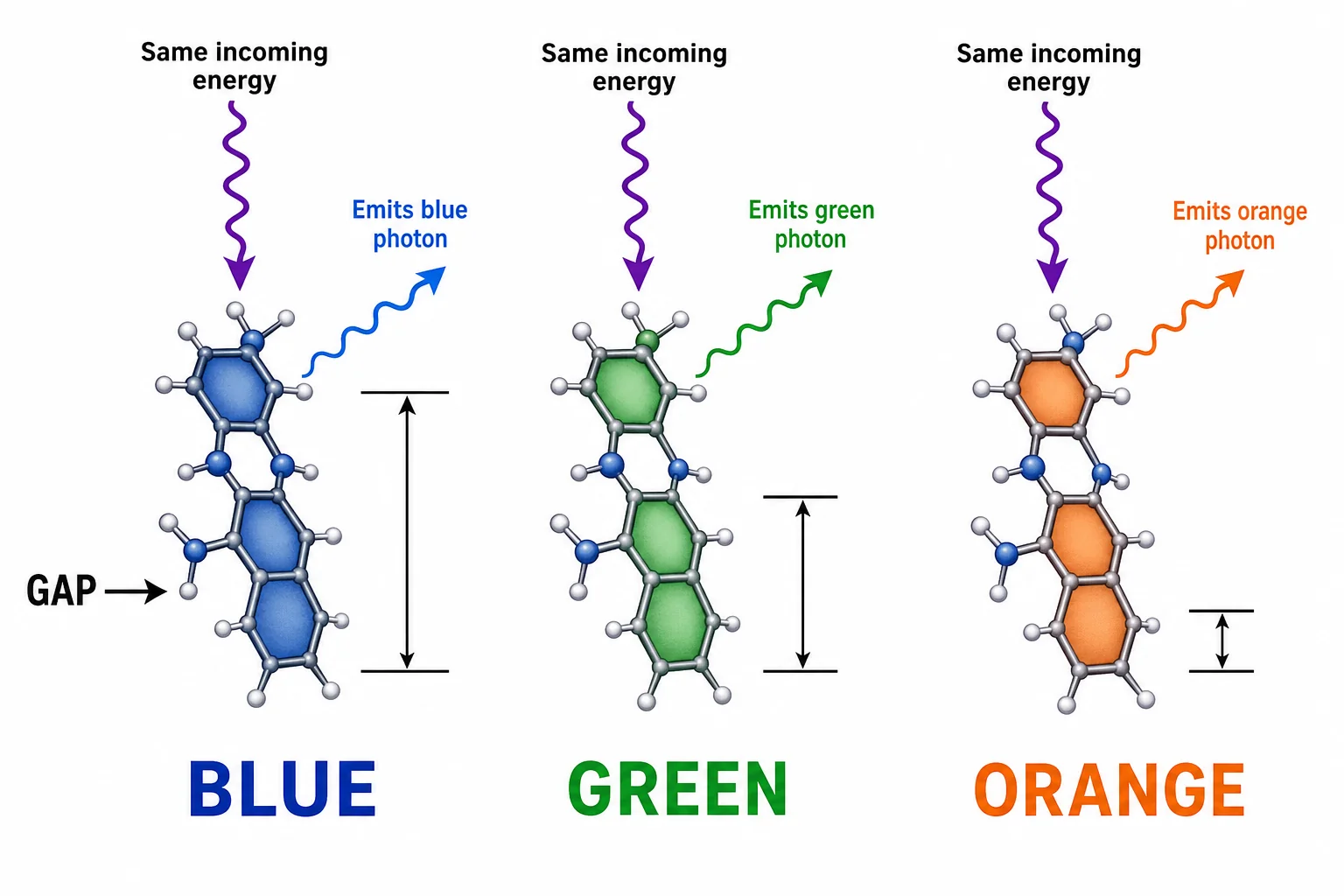
The dye controls the color by setting the energy of the emitted photon.
Why temperature matters
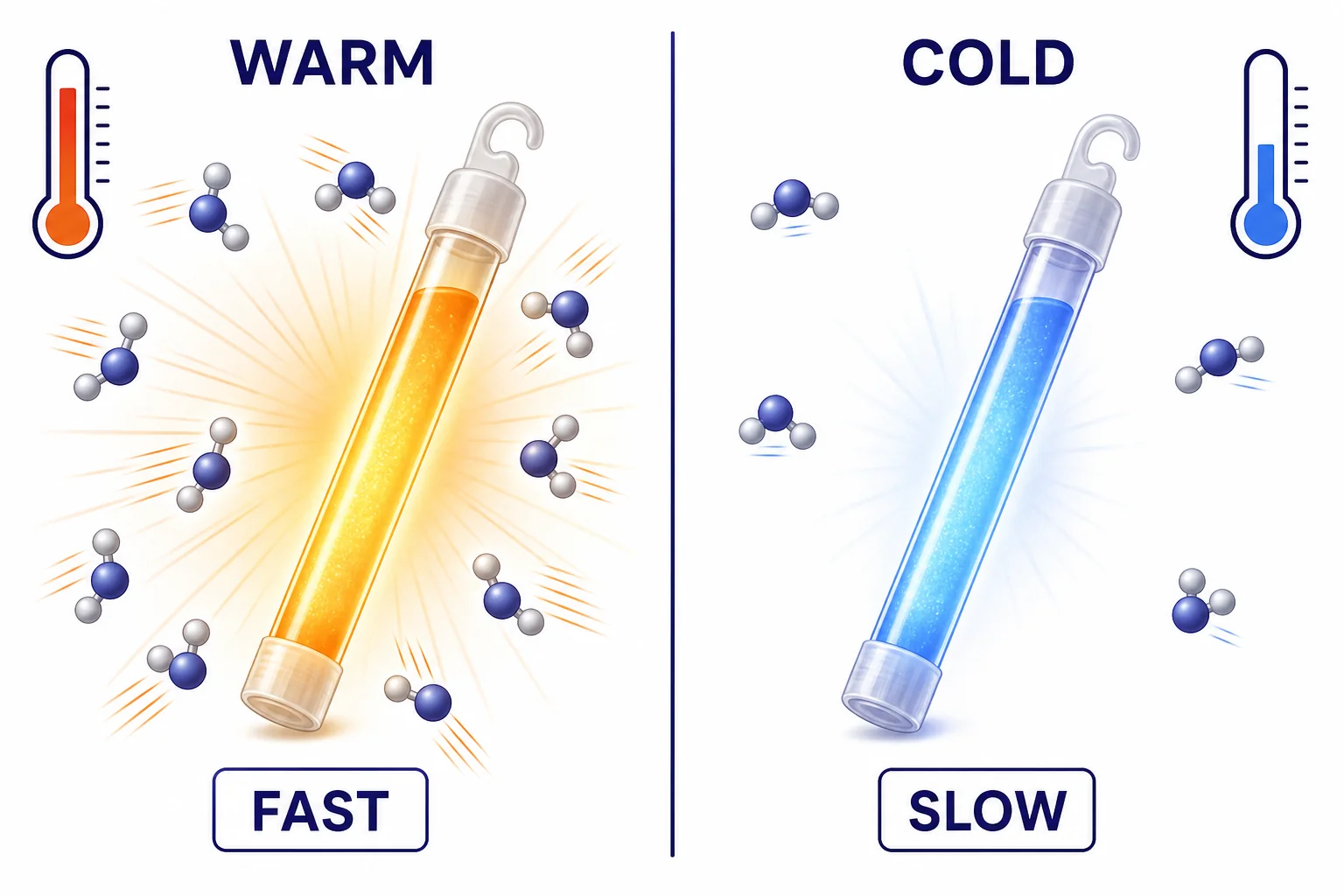
Temperature changes reaction rate, not the basic chemistry.
What gets used up
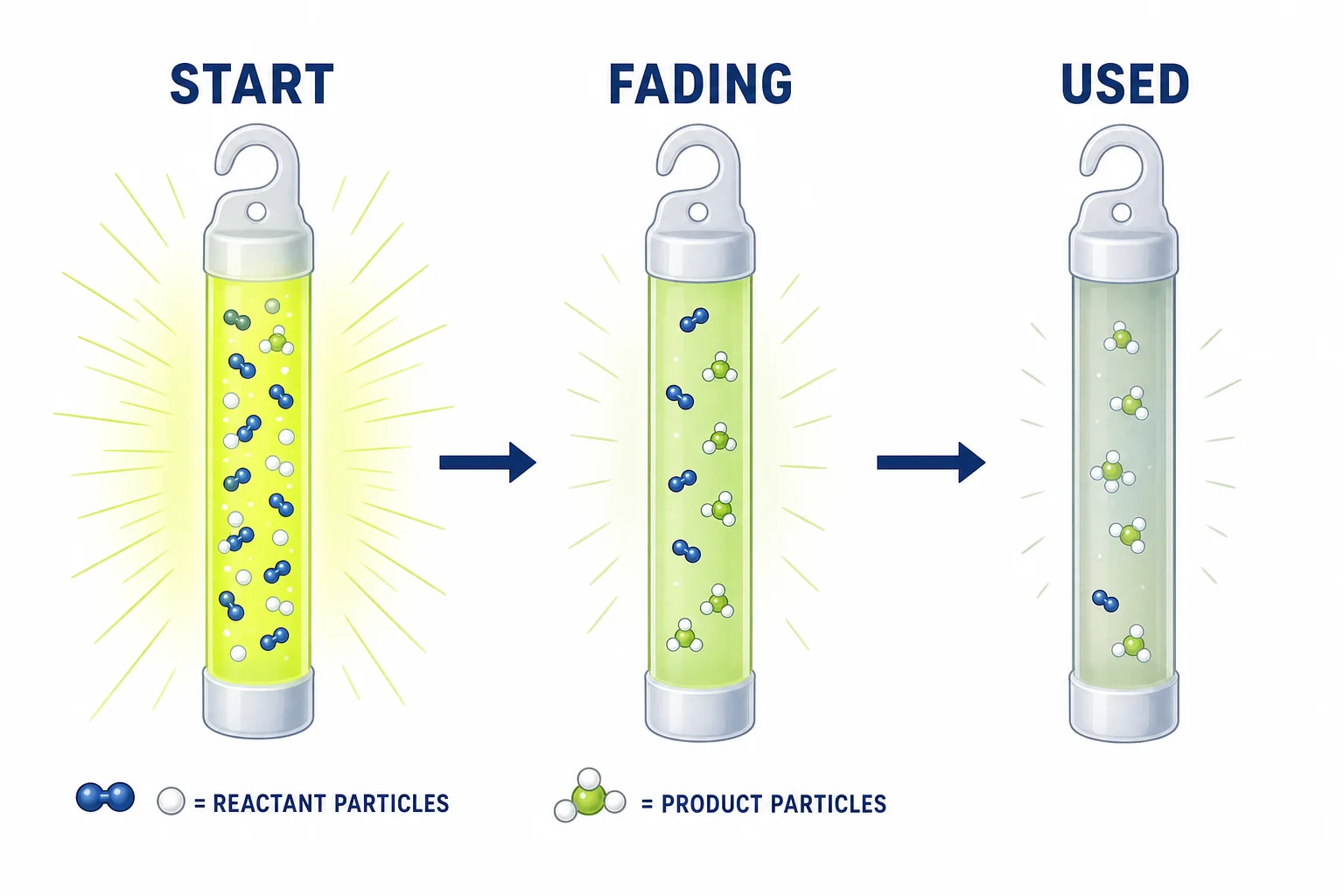
A glow stick is done when too few reactant molecules remain.
Vocabulary
- Chemiluminescence
- Light produced by a chemical reaction instead of by high heat.
- Fluorescent dye
- A molecule that can absorb energy and release it as visible light.
- Reactant
- A starting substance that is changed during a chemical reaction.
- Photon
- A small packet of light energy.
- Reaction rate
- How fast reactants are changed into products in a chemical reaction.
- Excited state
- A higher energy state of a molecule or electron before it releases energy.
In the Classroom
Warm and cold glow comparison
30 minutes | Grades 9-12
Place sealed glow sticks of the same color in warm water, room temperature water, and ice water. Students record brightness over time and connect the results to particle motion and reaction rate.
Color and dye model
20 minutes | Grades 9-12
Give students energy gap diagrams for several dye molecules and ask them to match larger and smaller gaps to different light colors. Students explain why the same reaction can produce different glow stick colors.
Matter and energy flow map
25 minutes | Grades 9-12
Students draw a flow chart from separated reactants to mixed products and emitted light. They identify where matter is conserved and where chemical energy is transferred to photons.
Key Takeaways
- • Glow sticks work when bending breaks an inner glass ampule and lets two liquids mix.
- • The reaction transfers chemical energy to a fluorescent dye.
- • The dye releases that energy as visible light.
- • Different dyes produce different colors because their energy gaps differ.
- • Warmer glow sticks shine brighter but fade faster, while colder glow sticks glow dimmer but last longer.