Why Do Batteries Run Out?
How chemical changes stop the flow of charge
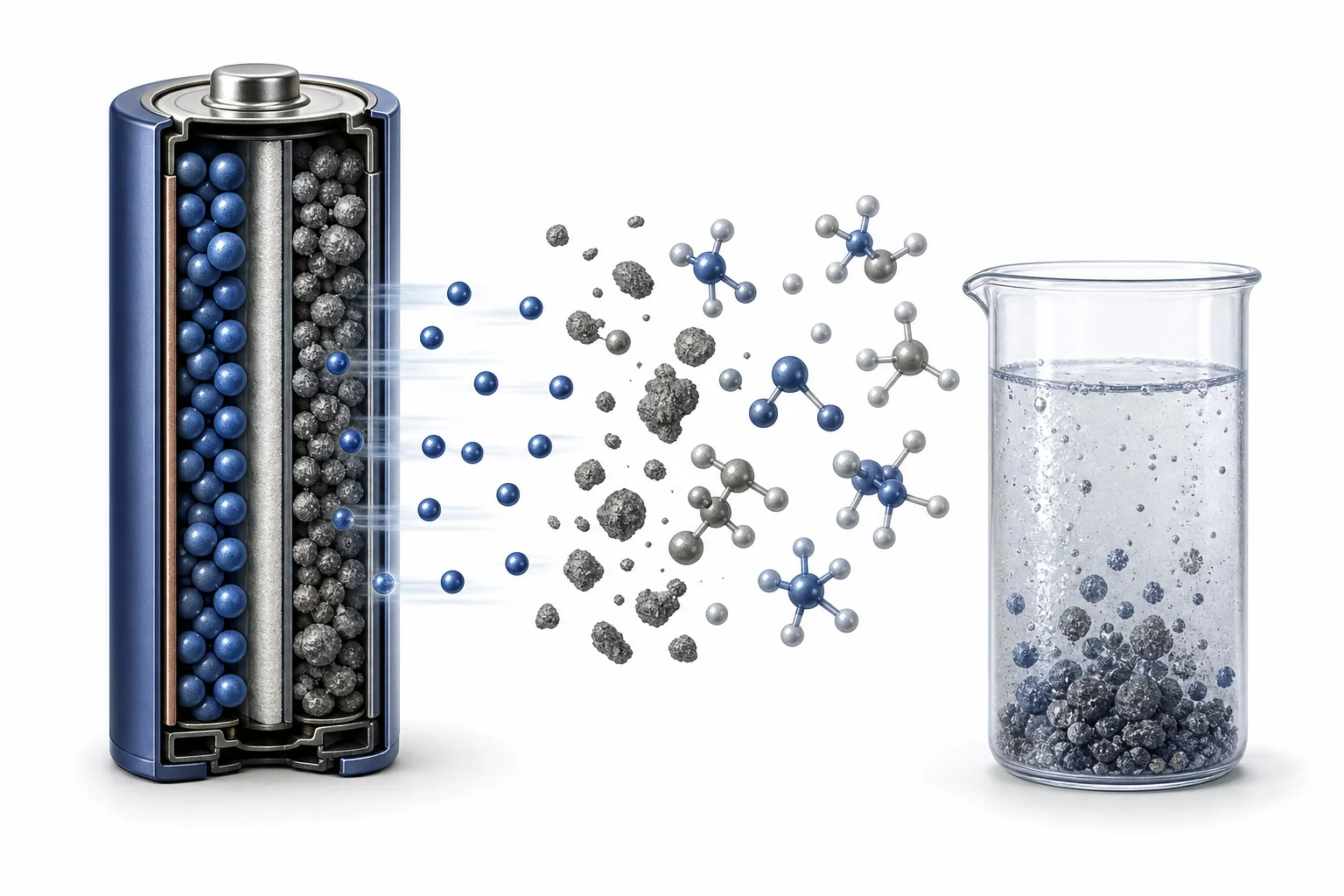
A battery runs out when the chemicals inside no longer push charged particles through a circuit. As it works, the inside materials change into new materials. When too much has changed, the battery can no longer keep a useful voltage.
A battery is not a tiny tank of electricity. It is a package of chemicals that can drive a reaction in one direction. That reaction separates charge, which creates a voltage between the two ends of the battery. When a wire connects the ends, electrons move through the outside circuit and do work. They may light a bulb, run a motor, or power a phone. Inside the battery, ions move through a paste or liquid so the reaction can keep going. The battery runs down because the starting materials are used up or changed. The products that form can also get in the way. At some point, the reaction can no longer keep enough voltage to push charge through the device. Rechargeable batteries reverse much of that chemistry when plugged in, but even they slowly lose useful material over many cycles.
A battery stores chemical potential
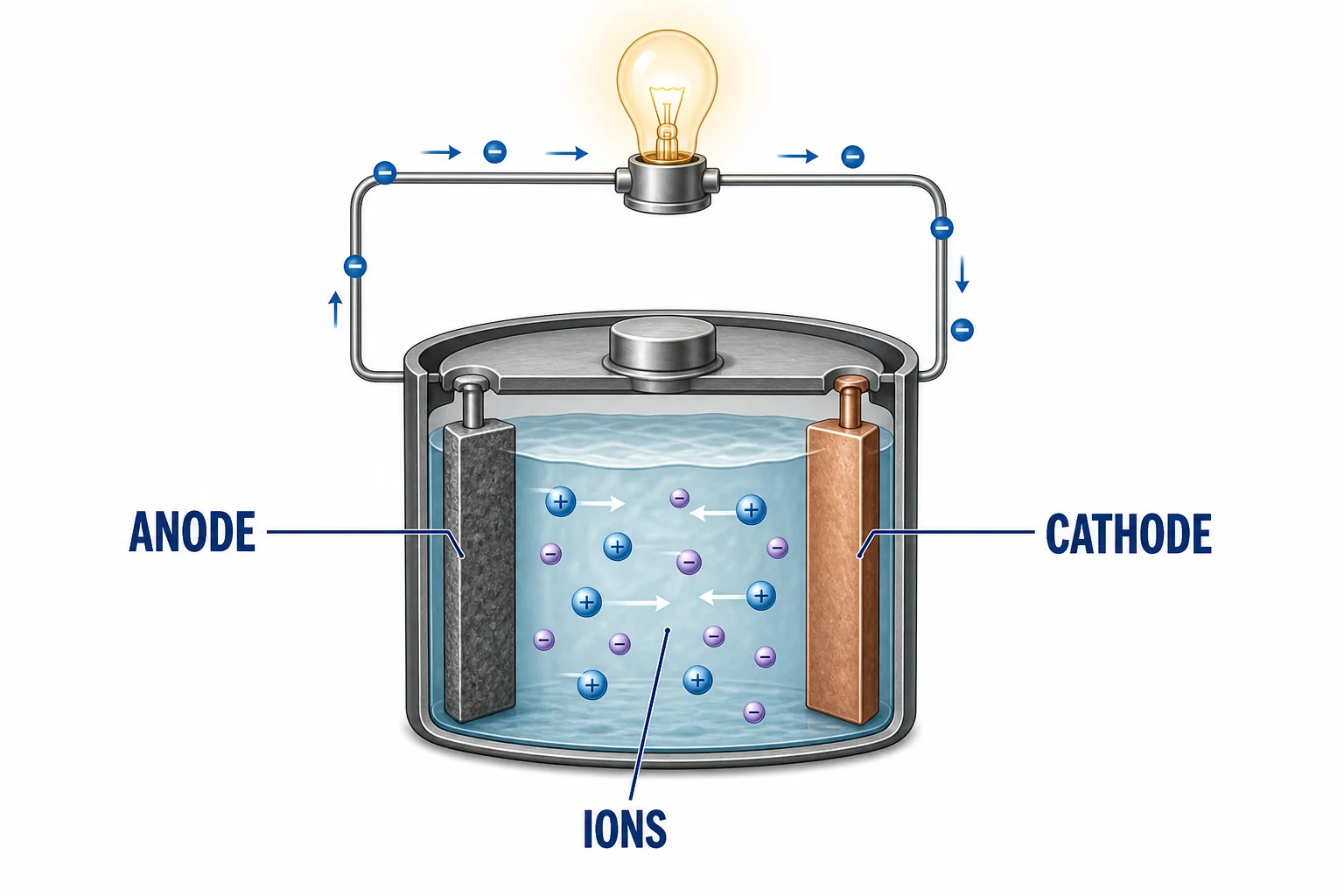
A battery works because its two electrodes do not have the same chemical drive.
Electrons move because atoms change
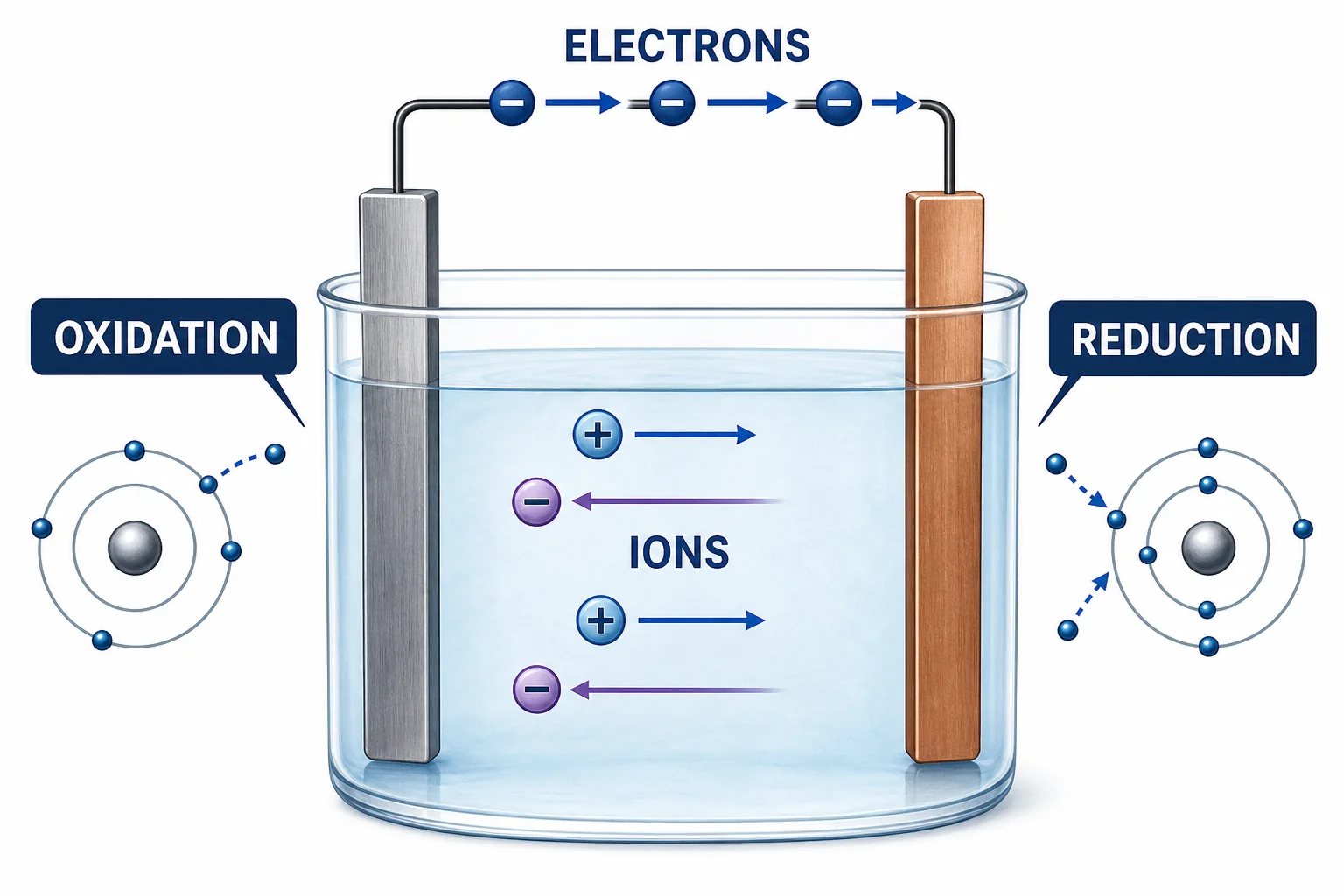
A battery reaction moves electrons outside and ions inside.
Running out means reactants run low
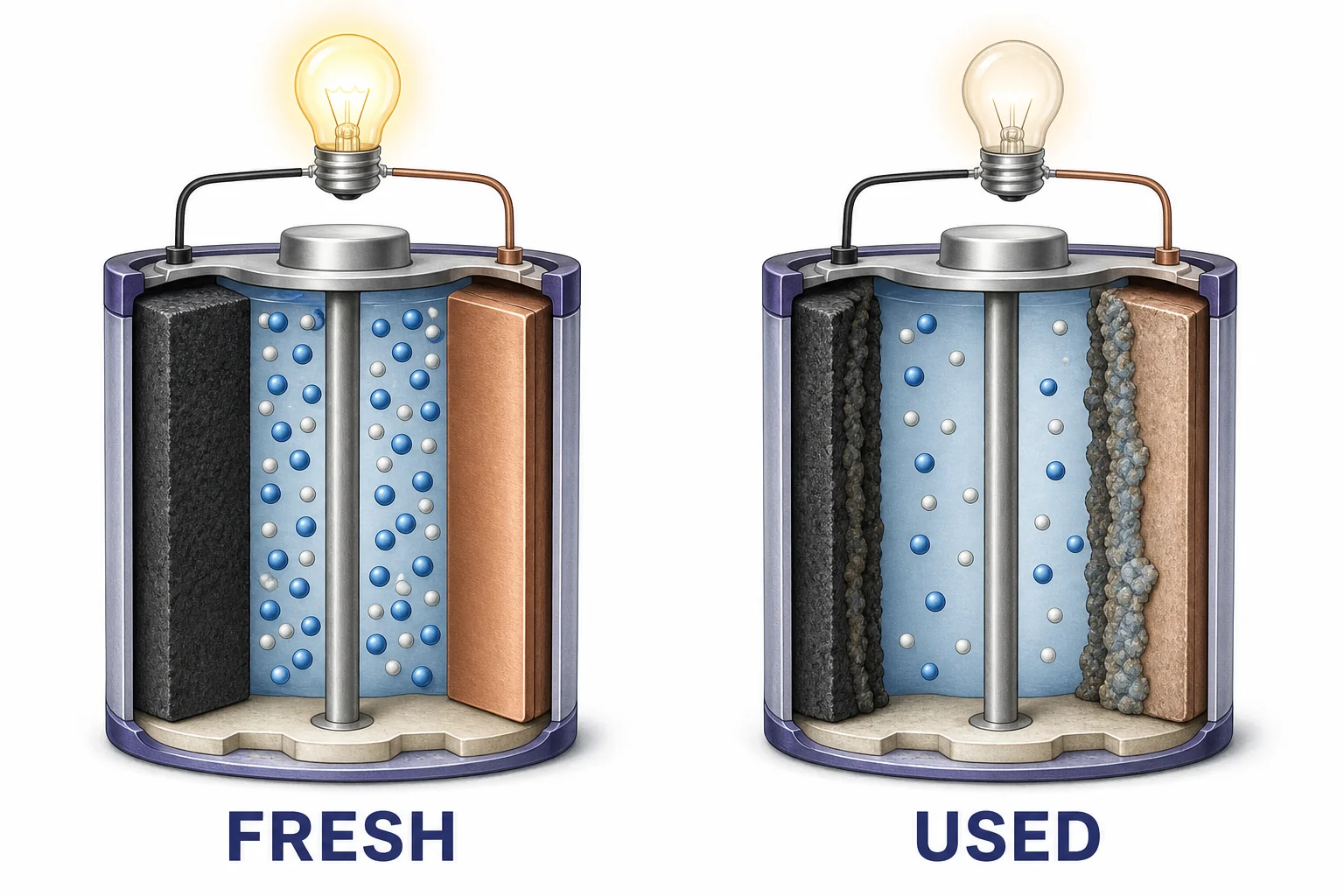
The battery runs down because useful reactants are changed into products.
Voltage drops as conditions change
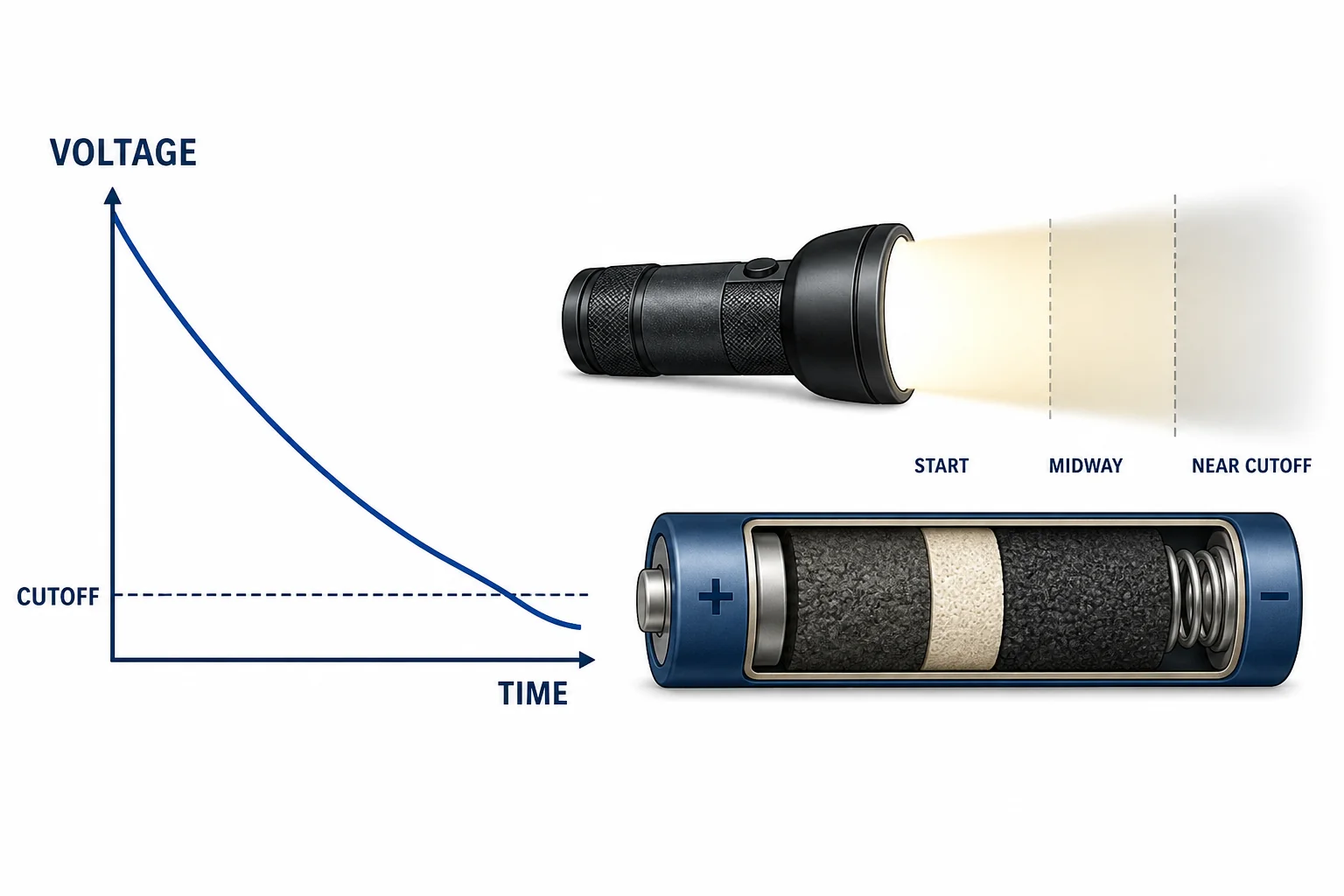
A battery can fail a device because its voltage is too low, not because every atom is used.
Rechargeable batteries reverse part of the change
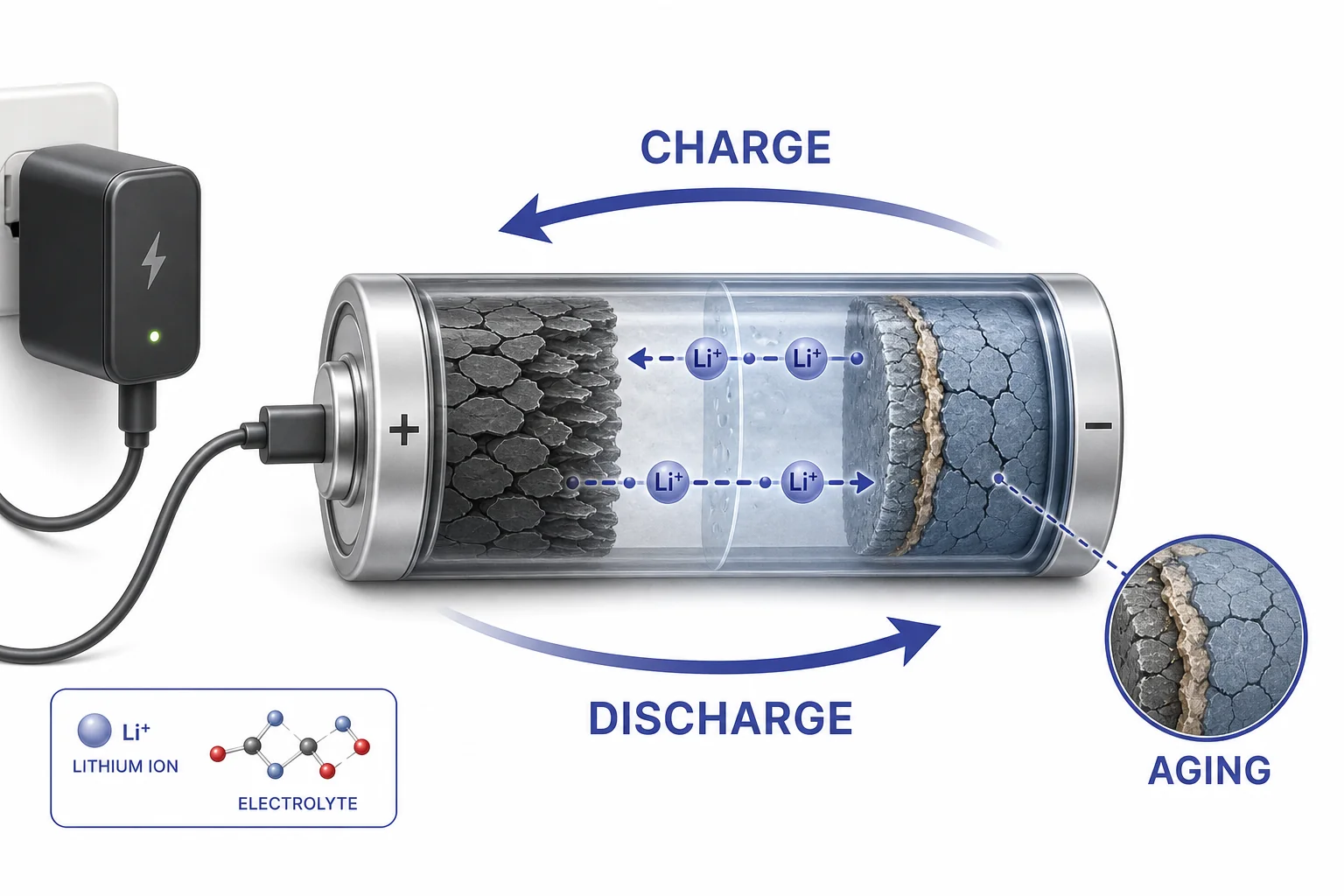
Rechargeable batteries last because their reactions can be partly reversed.
Vocabulary
- Electrode
- A solid part of a battery where electrons are released or accepted during a chemical reaction.
- Electrolyte
- A liquid, gel, or paste inside a battery that lets ions move between electrodes.
- Oxidation
- A chemical change in which a substance loses electrons.
- Reduction
- A chemical change in which a substance gains electrons.
- Voltage
- A measure of how strongly a battery can push electric charge through a circuit.
- Internal resistance
- Opposition to current inside a battery that turns some chemical energy into heat.
In the Classroom
Build a simple cell
30 minutes | Grades 9-12
Students make a simple battery using two different metals and an electrolyte such as saltwater or vinegar. They measure voltage with a meter and connect the result to electrode materials and chemical change.
Track voltage under load
25 minutes | Grades 9-12
Students compare the voltage of a fresh battery with and without a small bulb or resistor connected. They discuss why voltage under load gives a better picture of useful battery performance.
Model redox with tokens
20 minutes | Grades 9-12
Students use tokens to represent electrons moving from one half-reaction to another. The model helps them balance charge and see why oxidation and reduction must happen together.
Key Takeaways
- • A battery stores energy in chemicals, not as a pile of stored electricity.
- • Oxidation at one electrode and reduction at the other create electron flow through a circuit.
- • Ions move inside the battery so charge does not build up and stop the reaction.
- • A battery runs down as reactants are used and products change the electrodes and electrolyte.
- • Rechargeable batteries reverse much of the reaction, but side changes slowly reduce their capacity.