Practice identifying oxidation and reduction, assigning oxidation numbers, and understanding electrochemical cells and corrosion.
Read each problem carefully. Show your work and explain your reasoning when needed.
Oxidation, reduction, and electron flow in chemical systems
Chemistry - Grade 9-12
- 1
Define oxidation and reduction in terms of electron transfer.
- 2
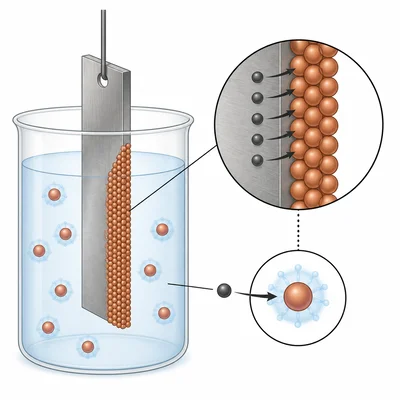
In the reaction Zn + Cu2+ -> Zn2+ + Cu, identify which species is oxidized and which species is reduced.
- 3
Assign the oxidation number of each element in H2O.
- 4
Assign the oxidation number of sulfur in SO4^2-.
- 5
Determine whether the following reaction is a redox reaction: 2Mg + O2 -> 2MgO. Explain your answer.
- 6
Write the oxidation half-reaction for magnesium in the reaction Mg -> Mg2+ + 2e-.
- 7
Write the reduction half-reaction for chlorine in the reaction Cl2 + 2e- -> 2Cl-.
- 8
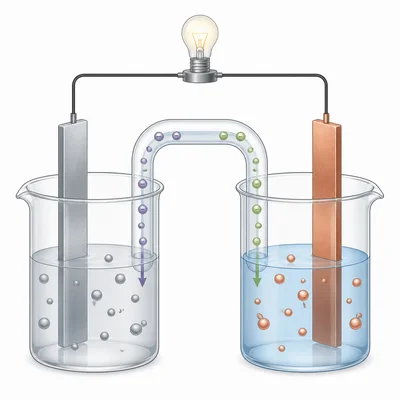
In a galvanic or voltaic cell, what is the function of the salt bridge?
- 9
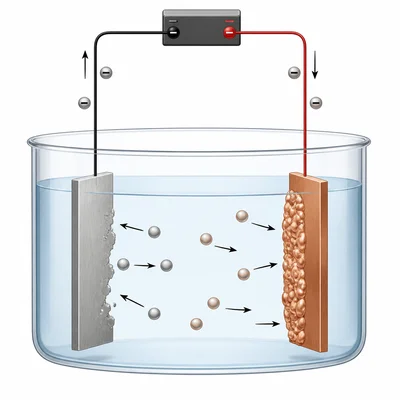
In an electrochemical cell, where does oxidation occur and where does reduction occur?
- 10
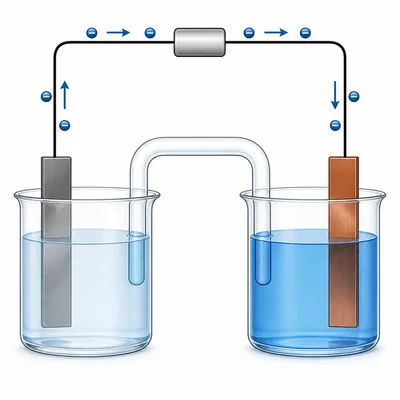
Describe the direction of electron flow in a galvanic cell.
- 11
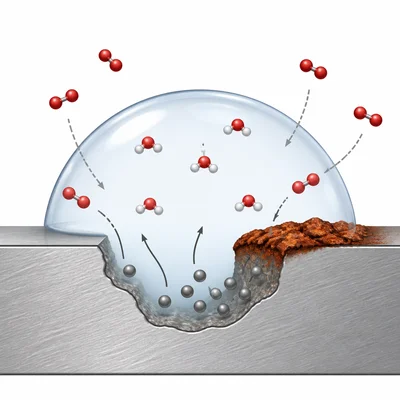
Explain why rusting of iron is considered a redox process.
- 12
A student says that the reducing agent in a reaction is the substance that gets reduced. Correct this statement and explain the role of a reducing agent.