Why Does the Moon Change Shape?
How sunlight makes moon phases

The Moon does not really change shape. The Sun always lights half of the Moon, and we see different amounts of that bright half as the Moon moves around Earth. Those changing views are called moon phases.
The Moon can look like a thin smile, a half circle, or a bright round disk. It may seem as if the Moon is changing shape, but the Moon is still the same rocky ball in space. What changes is the part of the sunlit side that faces Earth. The Sun lights one half of the Moon at all times, just as it lights one half of Earth during daytime. As the Moon travels around Earth, we see the lit half from different angles. That makes the repeating pattern called phases. This pattern is useful because students can observe it from home or school with no telescope. A moon journal over several weeks shows that the Moon changes in a steady order. The same idea helps students build a model of the Earth, Moon, and Sun system, which is part of NGSS 5-ESS1.
The Moon stays round

The Moon changes appearance, not shape.
Sunlight makes the bright half
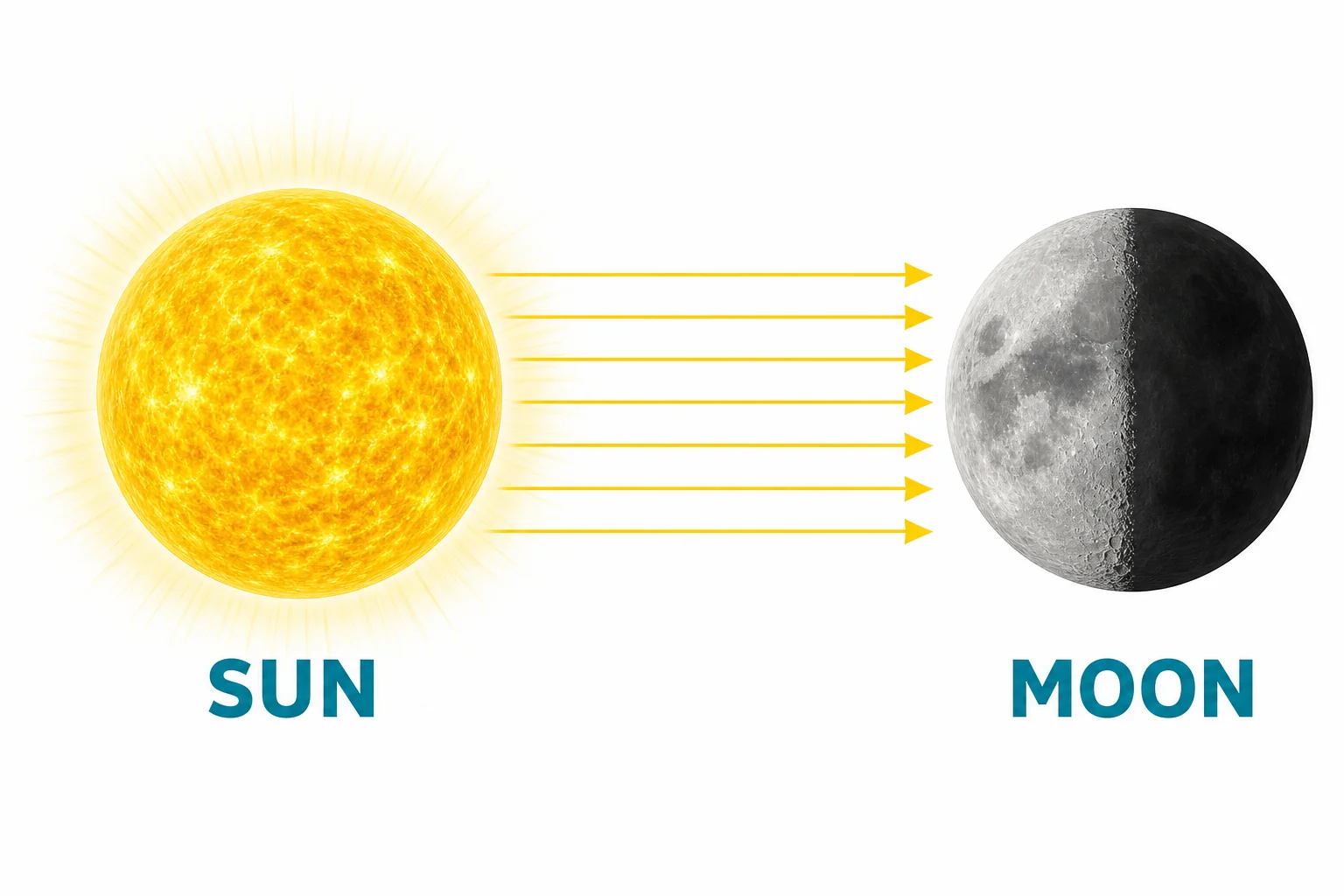
Every phase starts with the same fact, the Sun lights half the Moon.
Orbit changes our view
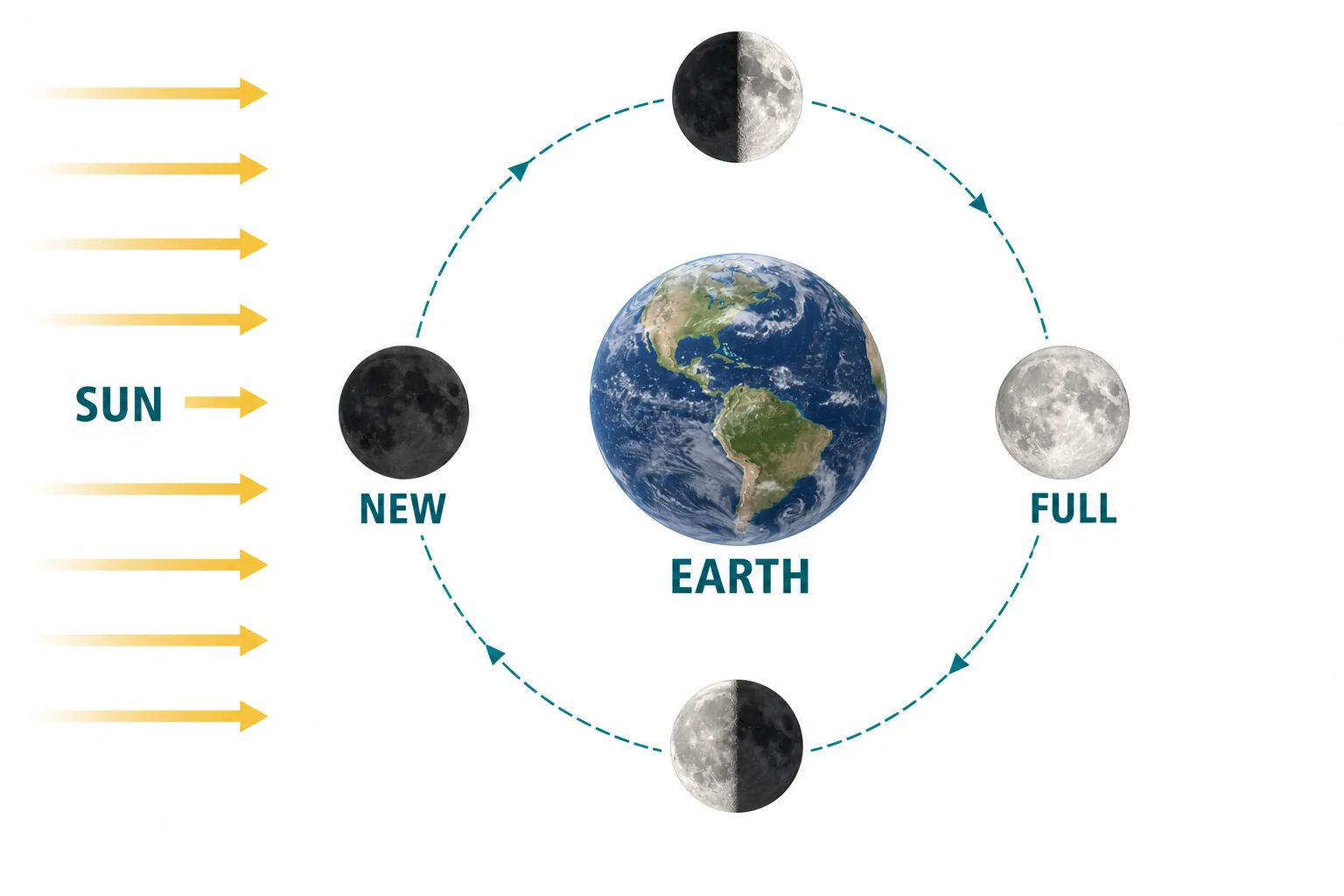
The phase is a view of the lit half from Earth.
The phase pattern repeats
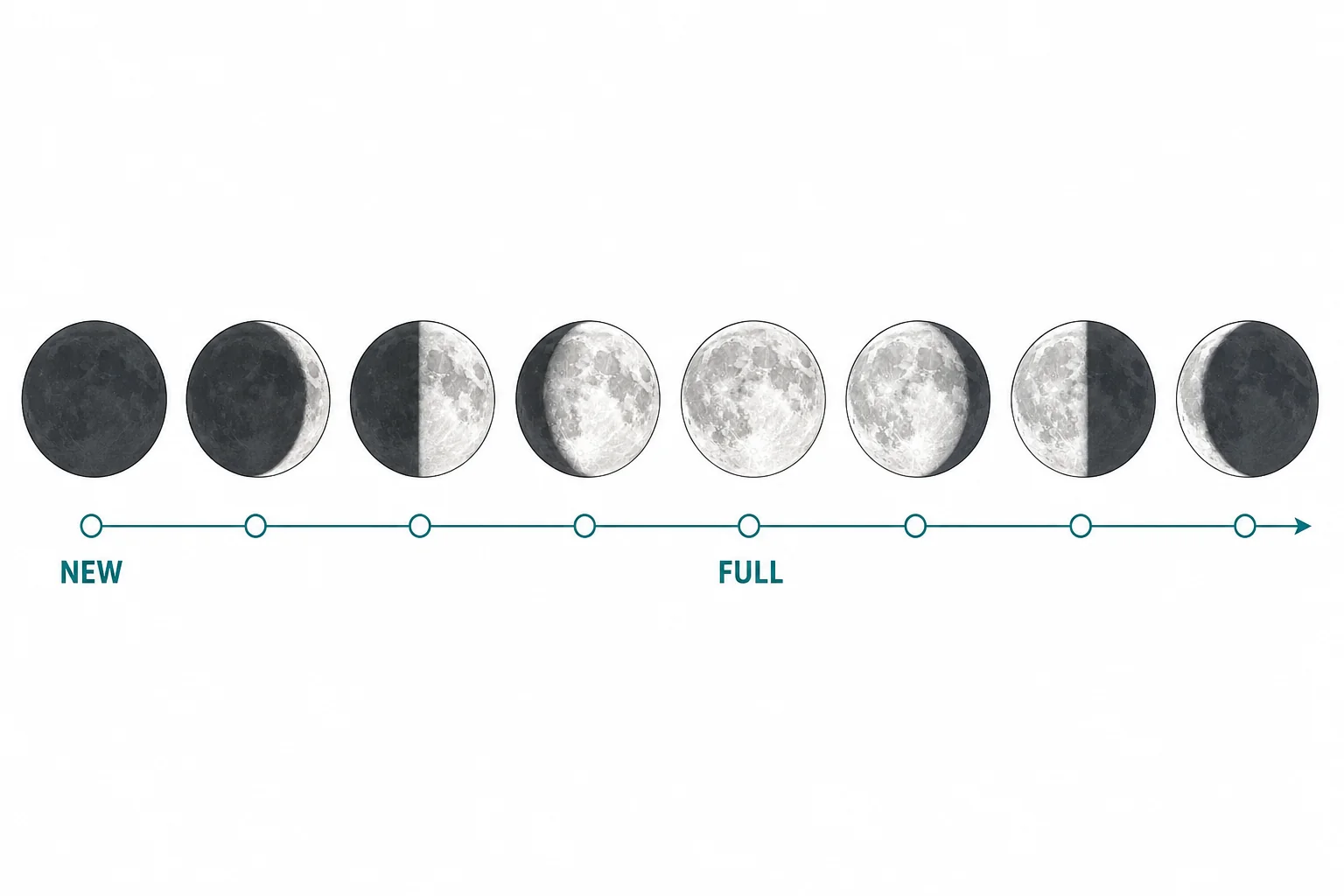
A moon phase cycle lasts about one month.
Earth's shadow is different
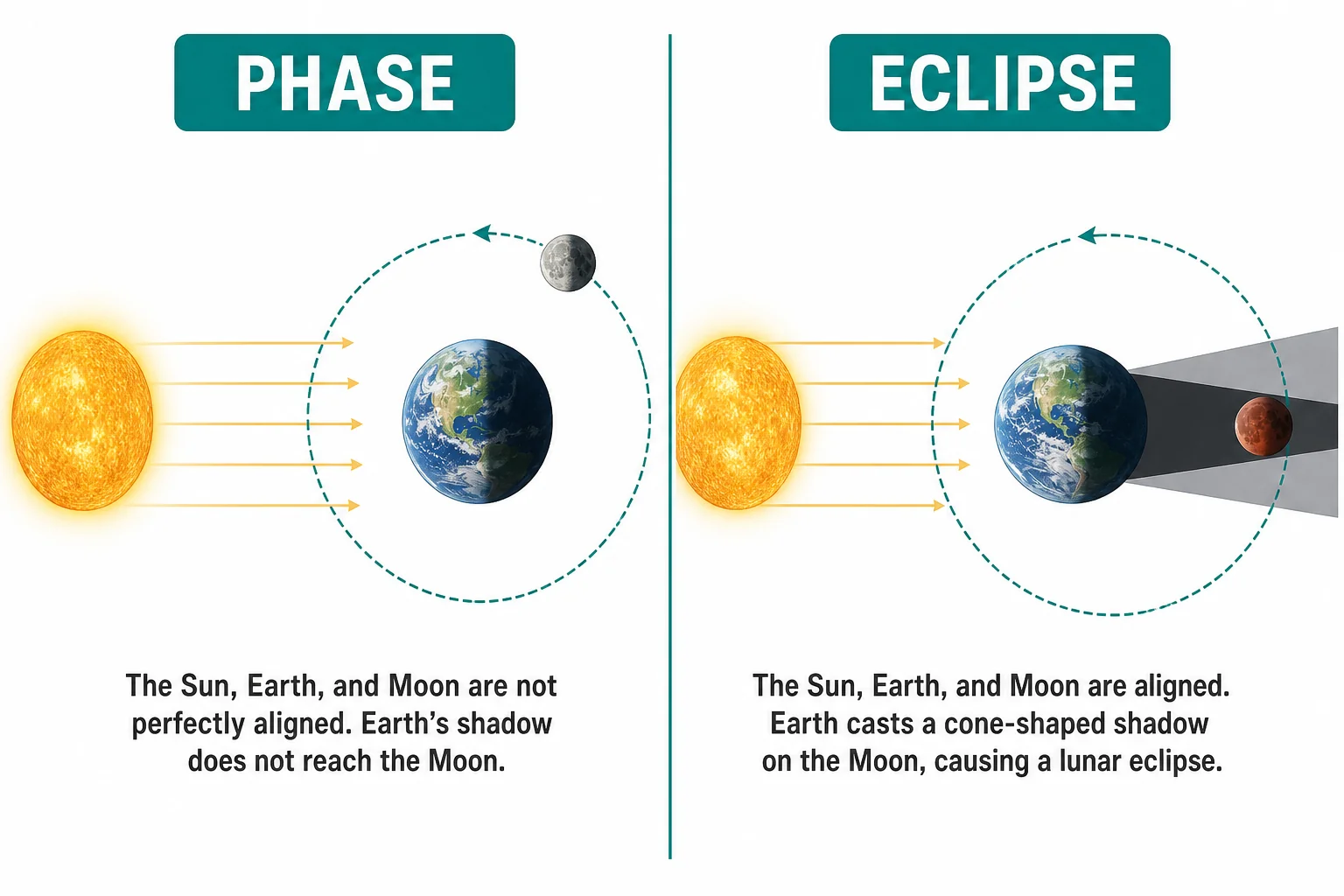
Earth's shadow causes eclipses, not the regular monthly phases.
Vocabulary
- Moon phase
- The shape of the bright part of the Moon that we can see from Earth.
- Orbit
- The path one object follows as it travels around another object in space.
- Reflect
- To bounce light off a surface. The Moon reflects sunlight.
- Waxing
- The part of the moon phase cycle when the visible bright part is getting larger.
- Waning
- The part of the moon phase cycle when the visible bright part is getting smaller.
- Lunar eclipse
- An event when Earth’s shadow falls on the Moon.
In the Classroom
Lamp, ball, and observer model
20 minutes | Grades 3-5
Use a lamp as the Sun and a foam ball as the Moon. Students rotate in place while holding the ball at arm’s length and sketch the lit shape they see.
Moon journal
10 minutes per observation | Grades 3-5
Students observe the Moon for three to four weeks and record the date, time, and shape. The class sorts the drawings into order and looks for the repeating pattern.
Phase versus eclipse sort
25 minutes | Grades 4-5
Give students cards showing normal phases and lunar eclipses. Students sort the cards, then explain which pictures show a changing view and which show Earth’s shadow.
Key Takeaways
- • The Moon stays round even when it looks like a crescent or half circle.
- • The Sun lights half of the Moon at all times.
- • Moon phases happen because the Moon orbits Earth and our view changes.
- • The moon phase cycle repeats about every 29 and a half days.
- • Earth’s shadow causes lunar eclipses, not the regular moon phases.